
 KB News Desk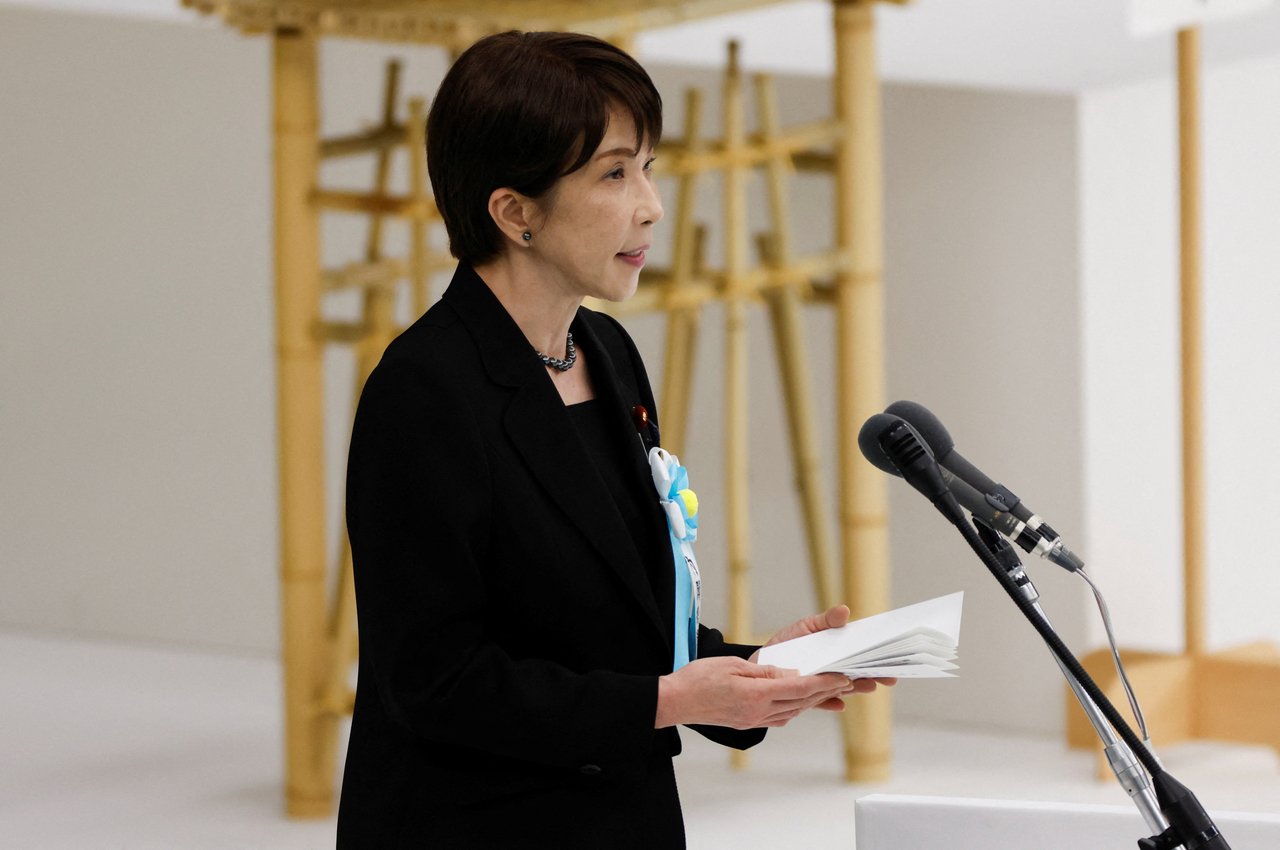
Seoul and Tokyo’s effort to keep historical disputes from derailing broader cooperation is facing a fresh test as Japan’s rightward political shift brings long-standing flashpoints back to the fore.
An analysis released by South Korea’s Institute for National Security Strategy last week warned that growing political instability in Japan, coupled with Japanese Prime Minister Sanae Takaichi’s conservative agenda, could weaken the momentum behind “shuttle diplomacy” and potentially spark a period of deterioration in bilateral relations.
The assessment comes as a series of recent developments — from Japanese politicians’ visits to the controversial Yasukuni Shrine to Tokyo’s repeated territorial claim to Dokdo — have again exposed the limits of the so-called “two-track” strategy pursued by Seoul and Tokyo.
Under the approach, the two countries have sought to separate “sensitive issues” that are difficult to resolve quickly, particularly those stemming from Japan’s 1910-45 colonial rule of Korea, from more immediate areas requiring cooperation, including security and the economy.
In an issue brief published Aug. 19, INSS research fellow Joo Dong-jin said the approach has allowed Seoul and Tokyo to significantly expand diplomatic and security communication through shuttle diplomacy since Takaichi took office.
But Joo warned that domestic political developments in Japan could increasingly upset that balance.
The report pointed to mounting criticism from opposition parties and the public over what it described as Takaichi’s increasingly unilateral governing style, along with an insular, Cabinet-centered decision-making structure and personnel appointments concentrated around the prime minister.
Prolonged tensions with China, the yen’s weakness and a series of right-leaning policy initiatives associated with Takaichi’s emphasis on rebuilding a “strong Japan” have also weighed on the ruling camp’s political footing, the report said.
“Such political instability could accelerate Japan’s shift to the right, fuel wariness among neighboring countries and ultimately weaken diplomatic coordination and the momentum behind shuttle diplomacy,” Joo said in the report.
Such concerns have gained greater resonance following events surrounding the Aug. 15 anniversary of Japan’s surrender in World War II.
Takaichi, who regularly visited Yasukuni Shrine before becoming prime minister, refrained from visiting this year, in an apparent effort to avoid provoking South Korea and China.
Instead, she sent a ritual offering in her capacity as president of the ruling Liberal Democratic Party. Japanese Defense Minister Shinjiro Koizumi and several other Cabinet ministers and senior politicians visited the shrine in person.
Yasukuni honors about 2.5 million Japanese war dead, including 14 Class-A war criminals convicted after World War II, and is regarded in South Korea and China as a symbol of Japan’s militaristic past.
Takaichi also omitted any reference to Japan’s wartime “remorse” in her address at the national memorial ceremony for the war dead later that day.
Her predecessor, Shigeru Ishiba, had revived the language of “remorse” the previous year after it had been absent from prime ministers’ Aug. 15 speeches for more than a decade. Takaichi instead said that the horrors of war must never be repeated and stressed Japan’s contribution to international peace.
The moves highlighted the delicate balancing act confronting Takaichi: avoiding actions serious enough to rupture ties with Seoul while maintaining support among conservative voters at home.
South Korea responded by lodging formal protests.
The Foreign Ministry here said it “cannot but deplore” what it called “anachronistic and historically oblivious acts” by senior Japanese officials who made offerings or visited Yasukuni, urging Japanese leaders to demonstrate sincere reflection on the past through their actions, in a spokesperson’s statement.
The Defense Ministry separately summoned Japan’s defense attache in Seoul to protest Koizumi’s visit, expressing serious concern that it ran directly counter to efforts by South Korea and Japan to build a future-oriented relationship based on trust while facing history.
President Lee Jae Myung, meanwhile, took a markedly calibrated approach in his own Liberation Day address.
While pledging to hold pro-Japanese collaborators accountable for assets illegally accumulated during the colonial period and acknowledging that victims and their families continue to live with the wounds of history, Lee emphasized that cooperation with Japan is “more important than ever.”
Experts say Lee’s carefully calibrated message reflects his administration’s efforts to uphold the two-track approach and sustain the momentum for shuttle diplomacy with Tokyo.
Lee Won-deok, a professor of Japanese studies at Kookmin University, said that Lee’s Liberation Day address placed relatively greater emphasis on future cooperation with Japan than on historical issues.
“This suggests that the Lee administration is placing greater weight on strategic diplomacy toward Japan,” he said.
Joo’s report also identified a broader range of unresolved “sensitive issues,” including Japan’s territorial claim to Dokdo, its portrayal of colonial and wartime history in school textbooks, the Sado Gold Mines memorial ceremony, stalled DNA identification efforts related to Korean victims of the Chosei coal mine disaster, and questions surrounding Hashima Island, also known as Battleship Island.
It warned that repeated diplomatic communication without tangible progress on those issues could eventually undermine confidence in the two-track strategy itself.
Dokdo remains one of the most persistent sources of friction.
Japan again asserted its sovereignty over the South Korean-controlled islets in its 2026 defense white paper, referring to them by the Japanese name Takeshima.
“The sustainability of shuttle diplomacy cannot be guaranteed without a price,” Joo said.
He said that South Korea and Japan need tangible results, both in addressing historical issues and in expanding substantive cooperation, if they are to restore balance to their two-track strategy and prevent short-term political turbulence from again dictating the course of bilateral relations.
In Japan, a political “shift to the right” generally refers to a political trend toward more conservative and nationalist positions, particularly on defense and historical issues. It can include support for expanding the role and capabilities of the Self-Defense Forces, revising the pacifist Constitution, easing restrictions on arms exports and taking a less apologetic stance toward Japan’s wartime and colonial past.
Such moves are closely watched in South Korea and China, where memories of Japanese colonial rule and wartime aggression remain politically sensitive.