
 KB News Desk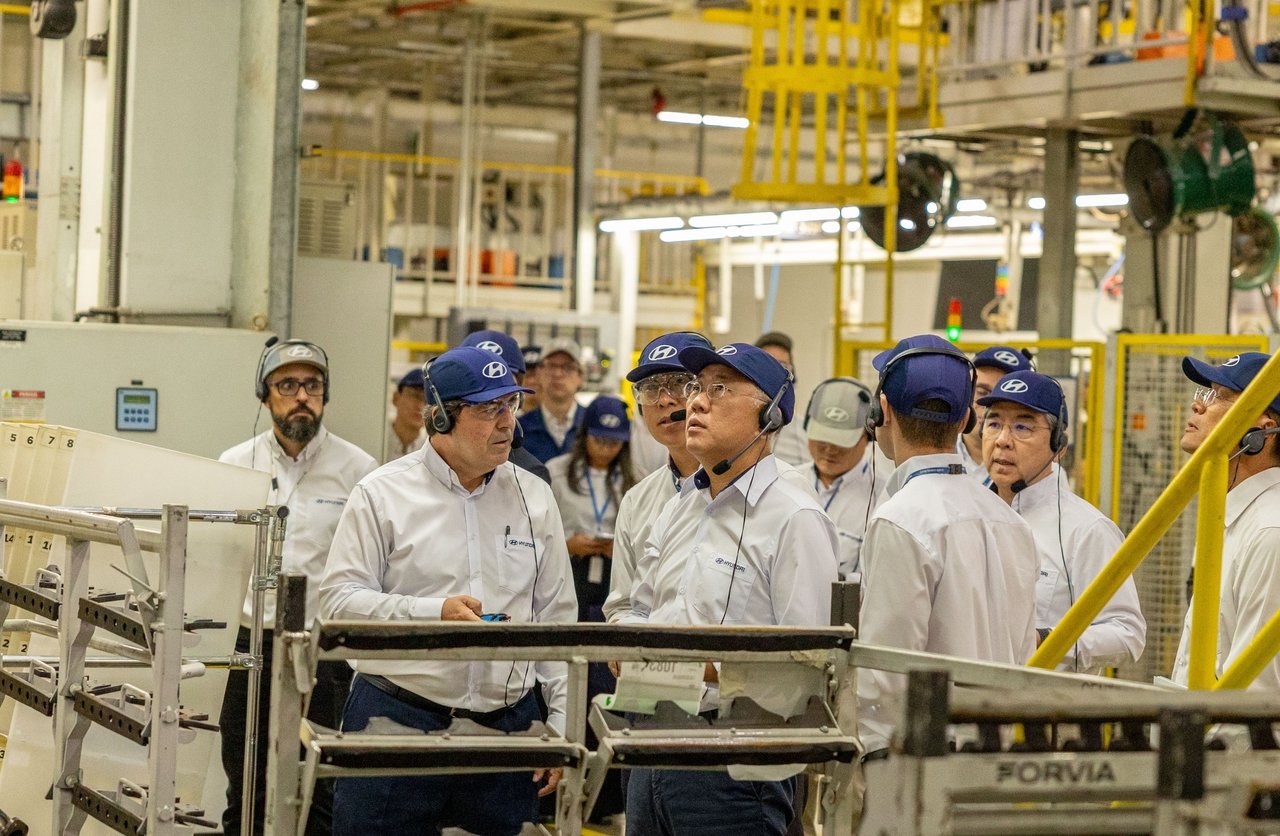
Hyundai Motor Group plans to expand its SUV lineup, pursue local production of electric vehicles and strengthen research and development in Brazil as Chinese automakers rapidly gain ground in Latin America’s largest auto market.
The strategy was reviewed during Hyundai Motor Group Executive Chair Chung Euisun’s visit Monday to Hyundai Motor’s plant in Piracicaba, Sao Paulo, where he inspected production operations and discussed the company’s regional sales, electrification and long-term growth plans, according to the group on Thursday.
Chung was part of the business delegation accompanying South Korean President Lee Jae Myung on his state visit to Brazil.
Hyundai has identified SUVs, electric vehicles and hydrogen-related businesses as its next major growth areas in the country.
Hyundai said it plans to strengthen the competitiveness of the Creta compact SUV and introduce additional SUVs in different size categories by 2030.
The company is also considering local production of a small electric vehicle and accelerating development of a flex-fuel hybrid powertrain that can use gasoline and ethanol.
The system, known as FFV-HEV, is being developed as a Brazil-specific electrification technology. Hyundai plans to apply it to SUVs, which are in high demand in the country, and introduce the vehicles as soon as possible.
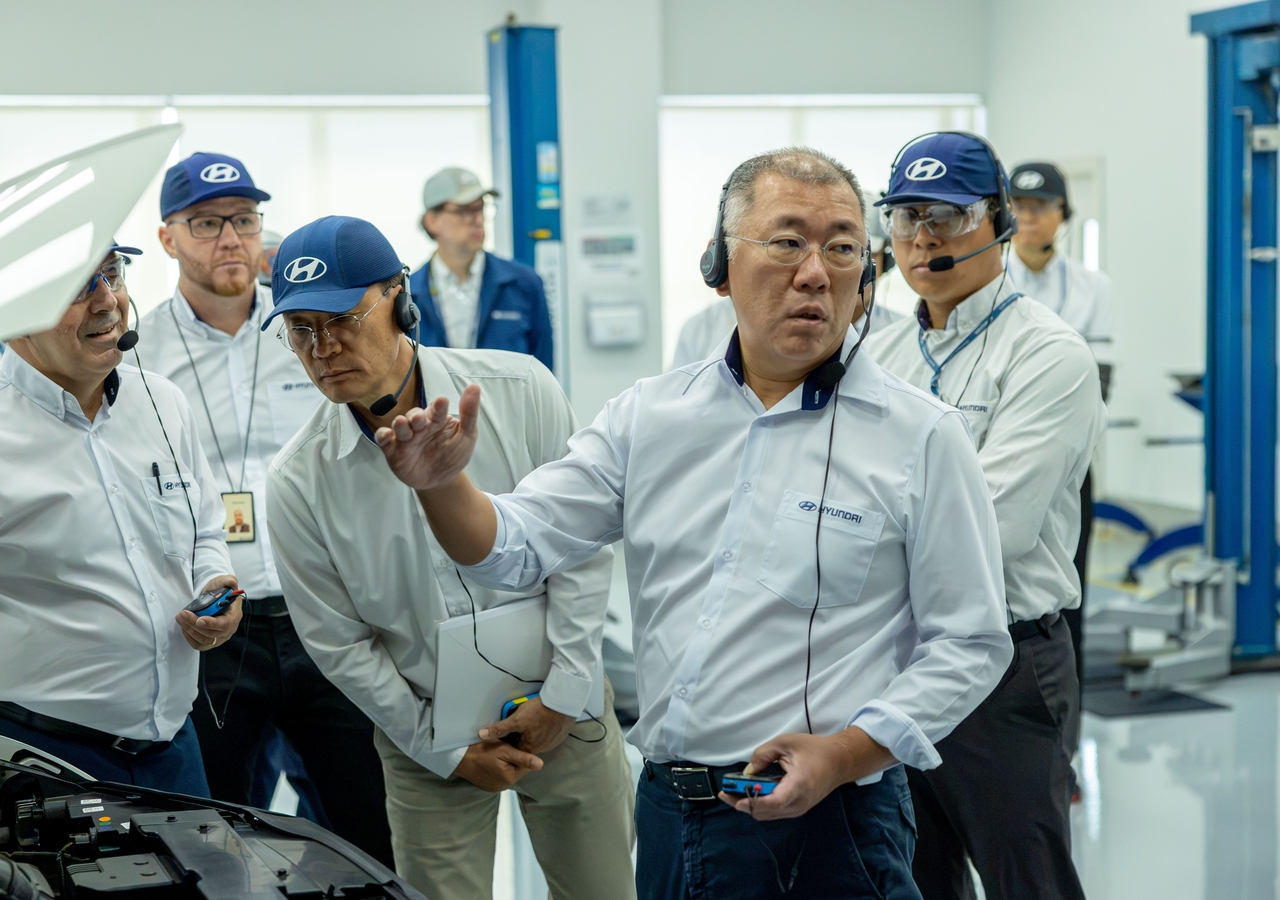
“Brazil is a very important market for Hyundai Motor’s global business,” Chung said during the plant visit, thanking workers for helping the company achieve cumulative sales of 2.5 million vehicles since the plant opened in 2012.
Brazil serves as the center of Hyundai’s Latin American business, home to both the company’s regional headquarters and its sole manufacturing plant in the country.
Brazil’s automobile market is one of the largest in the world, with annual demand of about 2.5 million vehicles, ranking it sixth globally. Annual vehicle production totals roughly 2.6 million units.
In recent years, Chinese automakers have been expanding rapidly in the market, with low-priced electric and hybrid vehicles, coupled with increased local manufacturing investments.
Chinese EV giant BYD acquired a former Ford manufacturing complex and began local vehicle production last year. Backed by aggressive investment and pricing, BYD ranked fourth in vehicle sales during the first half of this year, up from eighth place a year earlier, overtaking Hyundai, which ranked fifth.
Chinese investment in Brazil rose 45 percent last year to $6.1 billion, according to the Brazil-China Business Council.
Hyundai said it plans to respond by strengthening local research and development and improving the competitiveness of its Brazilian manufacturing operations.
“To secure sustainable, long-term business competitiveness, we need to reinforce our local R&D capabilities and pursue powertrain localization more aggressively,” Chung told researchers at Hyundai’s Latin America research and development center, located within the Piracicaba plant complex.
Established in 2016, the center initially focused on vehicle certification and regulatory compliance in Latin America. Hyundai has since expanded its engineering workforce and given the center a larger role in developing vehicles tailored to local markets
Chung later inspected production quality for the i20 hatchback, which began rolling off the assembly line in June, and the Creta compact SUV.
After receiving briefings from employees at the plant and Hyundai’s Latin America headquarters, Chung discussed the company’s long-term production and sales plans.
“Brazil’s changing industrial environment and the emergence of a new competitive landscape present a number of challenges,” Chung said. “But overcoming this period is essential for us to move to the next stage of growth.”