
 KB News Desk
Labor groups call for tougher private equity oversight, government intervention
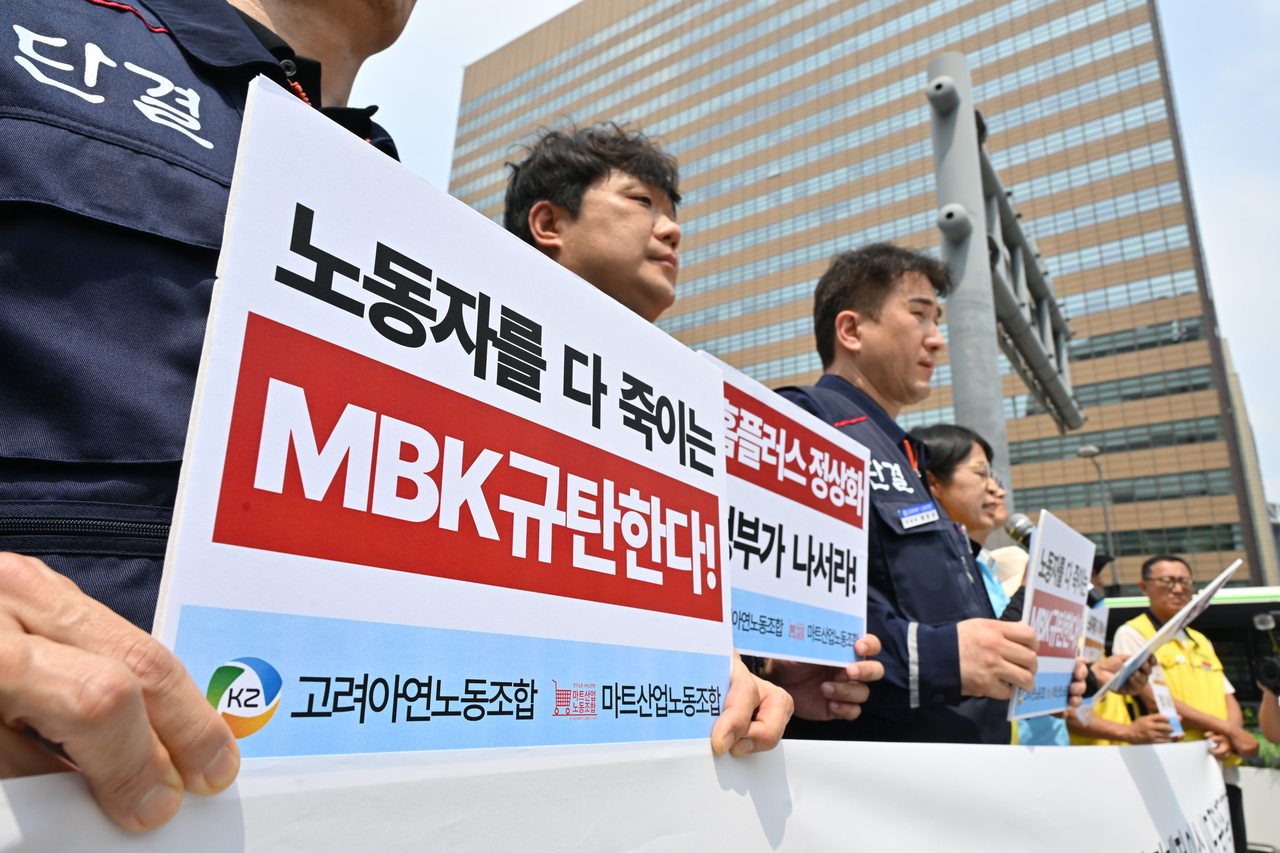
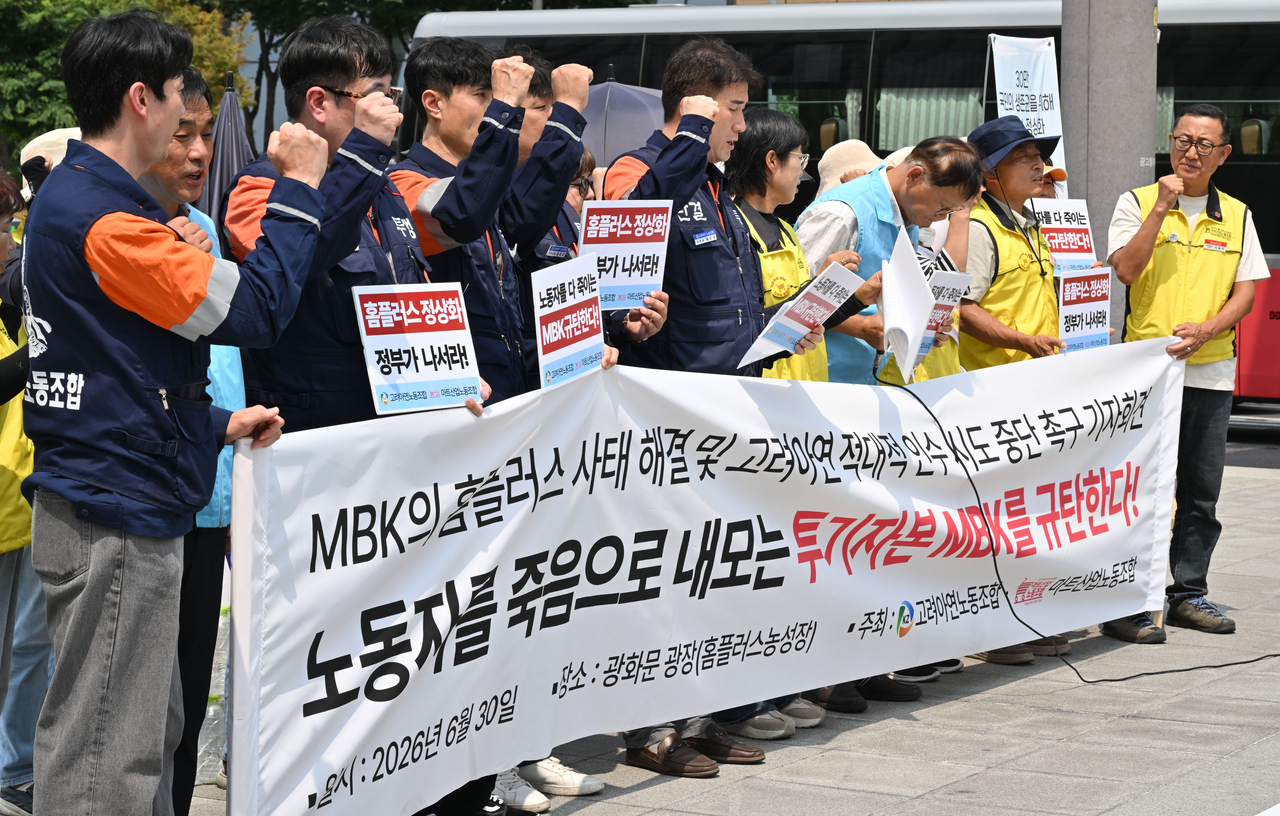
The labor unions of Homeplus and Korea Zinc have teamed up for the first time to intensify the pressure on private equity firm MBK Partners, accusing it of prioritizing profits over workers and long-term corporate sustainability.
The two groups stressed that Homeplus’ ongoing corporate rehabilitation and MBK’s attempt to gain control of Korea Zinc are manifestations of the same problem during a joint press conference at a Homeplus hunger strike site in Gwanghawmun Square, central Seoul, on Tuesday. The groups called on the government to intervene more actively and tighten regulations on private equity funds.
“We work at different companies, but we are suffering under the same investment company’s greed,” said the Homeplus union chapter. “MBK has ignored its responsibility to foster companies and protect workers and local communities, pursuing only profit while pushing workers’ livelihoods to the brink.”
The union claimed that Homeplus has continuously sold off assets and real estate over the past decade since its takeover in 2015, leading to numerous store closures and forcing many employees to lose their jobs or relocate.
Urging the government to secure emergency financing and support Homeplus’ recovery, the labor group added that MBK has avoided taking responsibility while it undergoes court-led rehabilitation and faces the risk of liquidation.
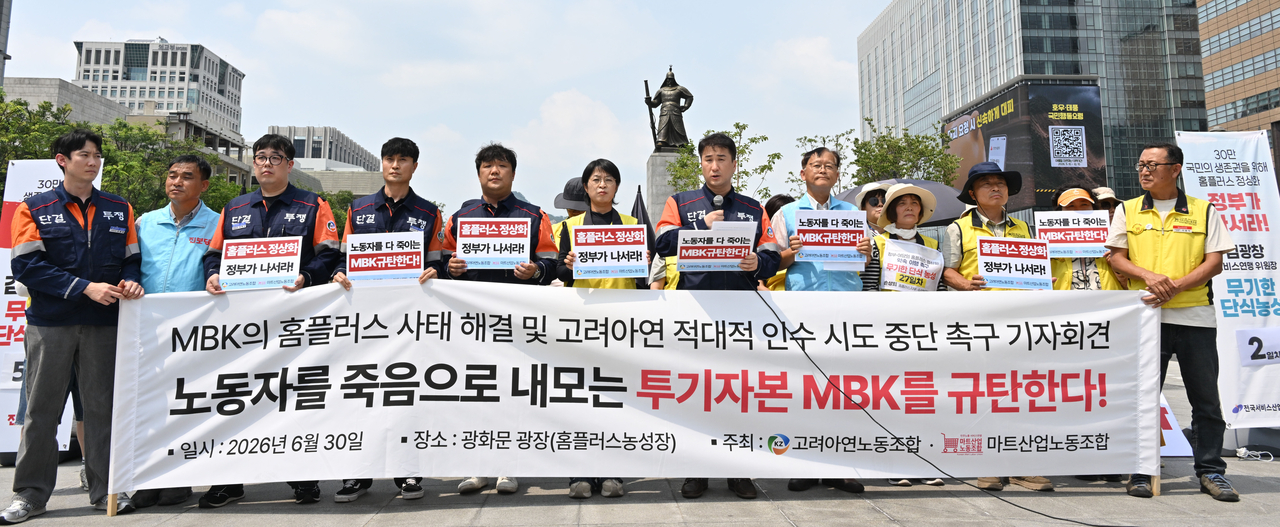
The Korea Zinc labor union argued that the Homeplus case illustrates the consequences of MBK’s investment approach and warned that Korea Zinc now faces a similar threat.
“The Homeplus tragedy is living proof of what happens when speculative capital targets a company,” said the Korea Zinc Labor Union. “Korea Zinc is now at a critical crossroads where it could become another playground for speculative capital.”
The group called on the government and the ruling party to follow through on previous commitments to resolve the Homeplus crisis and introduce effective measures to prevent private equity firms from engaging in what unions describe as predatory acquisitions and “grab-and-go” investment practices.
The two unions underscored that MBK’s bid to secure control of Korea Zinc would undermine the competitiveness of Korea Zinc, a core player in strategic mineral supply chains that serves an important role in one of Korea’s key industries as the world’s largest nonferrous metal smelter.
MBK has maintained that it is fully cooperating with Homeplus’ rehabilitation process and that its investment in Korea Zinc is a legally legitimate activity.