
 KB News Desk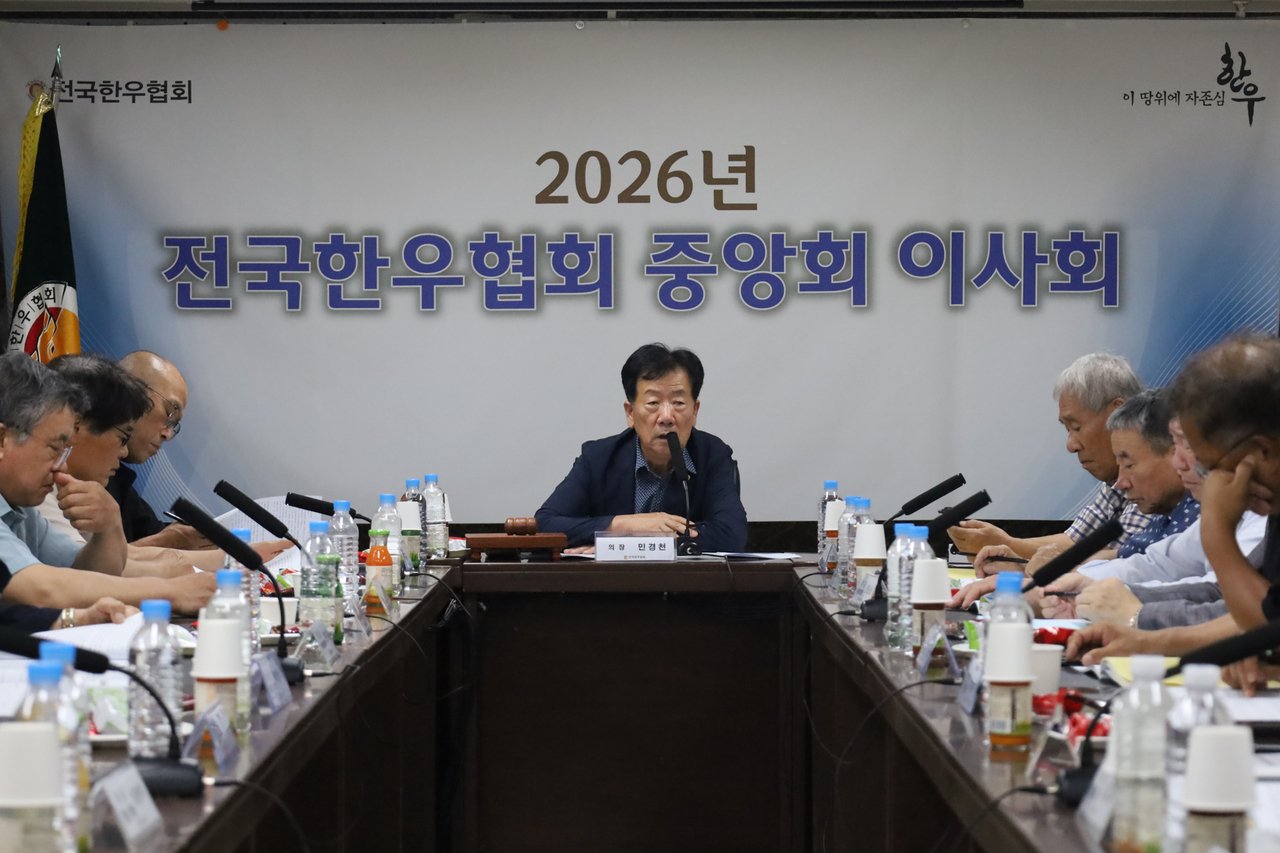
The Hanwoo Association has launched a campaign opposing the government’s push to expand beef imports through a possible Korea-Mercosur free trade agreement and the opening of the Brazilian beef market.
The association’s board of directors passed a resolution last week calling for phased action against what it described as the government’s “beef market liberalization” policy, warning that increased imports from South America could threaten the survival of Korea’s domestic hanwoo industry.
The government has recently stepped up efforts to expand Korea’s trade network, including moves related to the Comprehensive and Progressive Agreement for Trans-Pacific Partnership, the resumption of negotiations with Mercosur — the Southern Common Market, a trade bloc that includes much of South America — and efforts to establish sanitary conditions for Brazilian beef imports.
The association said the issue has become particularly urgent following the recent Korea-Brazil summit, where the two countries adopted a four-year action plan for economic cooperation. It said that beef imports were raised as part of the broader cooperation agenda, alongside discussions on critical minerals, defense and automobiles.
Hanwoo ranchers are concerned that opening the Korean market to Brazil, one of the world’s largest beef exporters, could further intensify competition in the domestic market.
South Korea’s beef imports have reached a record high this year, according to the association, with US beef entering without tariffs and Australian beef subject to a tariff of about 5.3 percent. Tariffs on beef from Australia are scheduled to be eliminated in 2028, while tariffs on Canadian and New Zealand beef are expected to be phased out in 2029.
The association warned that imports could rise further if Brazil’s sanitary requirements are approved and a Mercosur free trade agreement is concluded. It argued that the domestic hanwoo industry, already facing sharply higher production costs, could suffer severe damage from increased competition.
The association also criticized the government for what it described as a lack of communication with farmers and insufficient measures to address potential losses ahead of the market opening.
The association said it will intensify its campaign if the government continues to pursue opening the market without sufficient safeguards. Planned actions include press conferences and large-scale ranchers’ rallies aimed at mobilizing opposition to the opening of the domestic beef market.
“The foundation of the hanwoo industry cannot be allowed to collapse after farmers have devoted their lives to maintaining it,” the association said in the resolution, calling for the government to engage directly with producers before making further decisions on beef market liberalization.