
 KB News Desk
President Lee Jae Myung called for public discussion on whether South Korea should restrict children’s access to social media, as the country weighs safeguards against minors’ smartphone use.
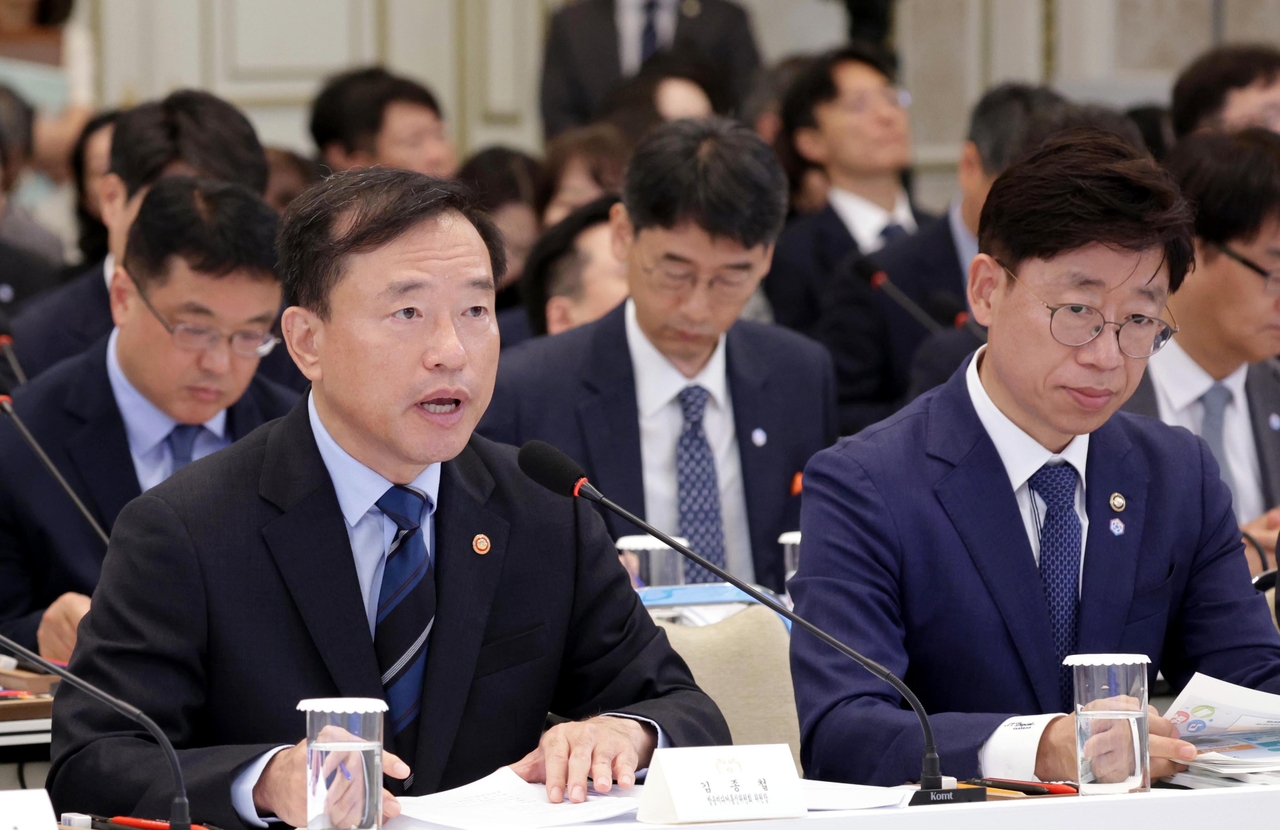
Kim Jong-cheol, chair of the Korea Media and Communications Commission, urged caution in introducing such measures after the issue was raised during a policy briefing presided over by Lee on Thursday.
During a public Q&A session, one participant asked whether South Korea should follow countries and regions such as Australia, the European Union and the United Kingdom in imposing age-based restrictions on social media access.
Kim described children’s addictive use of social media on smartphones as a “global phenomenon,” but said a “phased approach” was needed.
The media watchdog chief cited the public backlash and unintended consequences South Korea experienced after introducing the compulsory “shutdown law” in 2011, which blocked users under 16 from accessing online games at night.
Amid doubts over the law’s effectiveness in preventing gaming addiction and concerns about its impact on the gaming industry, South Korea abolished the measure in 2022.
“Rather than taking a rushed approach and repeating the consequences of the ‘shutdown law,’ a customized and phased approach based on public deliberation would be more appropriate,” Kim said.
Kim said seven bills are pending to revise the Act on Promotion of Information and Communications Network Utilization and Information Protection to limit minors’ social media use.
Lawmakers who have submitted revision bills since 2024 include Reps. Lee Yeon-hee and Youn Kun-young of the Democratic Party; Reps. Cho Jung-hun, Kim Jang-kyom and Ahn Cheol-soo of the People Power Party; and Rep. Hwang Un-ha of the Rebuilding Korea Party.
The most recent bills were submitted by Lee of the Democratic Party and Hwang of the Rebuilding Korea Party. Both seek to limit minors’ exposure via personalized recommendation functions powered by artificial intelligence algorithms.
Based on the pending bills, the media watchdog has been exploring a phased, age-based approach, Kim said. Possible measures include barring children under 14 from creating new social media accounts and limiting exposure to algorithms and devices for those under 19.
Kim added that algorithms have been scientifically shown to be harmful to children.
In response, Lee said it was important to build public consensus rather than impose social media restrictions based solely on the administration’s assessment.
Lee also referred to a recent US court ruling in March that found US-based Meta, which operates Facebook, Instagram, WhatsApp and Threads, liable for misleading and endangering children through recommendation algorithms.
During the morning session, the policy briefing organizer conducted an online poll on a possible social media ban for children. A majority of respondents supported age-based restrictions.
“Generally speaking, that would mean the side effects of algorithm-powered social media are very serious for those under 16,” Lee said. “I will discuss this issue further at a later point.”