
 KB News Desk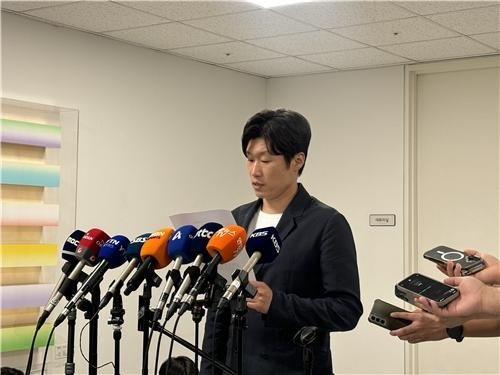
The next Korea Football Association presidential election, contested by an electorate expanded to about 20,000 voters, will likely be held within this year.
The K-Football Innovation Committee announced the plans Tuesday after a meeting chaired by co-chair Park Ji-sung at the National Museum of Modern and Contemporary Art, Seoul, where it laid out follow-up measures and the main points of its discussion on the election.
The committee had issued a recommendation on the electorate’s makeup at an online meeting Aug. 4. Its central proposal was to increase the electorate from about 200 to around 20,000. Based on 2025 figures, that pool would include 4,000 to 6,000 each of professional players, amateur club members and coaches, some 3,000 registered referees and about 1,000 others.
According to the committee, the association has accepted the recommendation and will move to revise its articles of incorporation and complete other procedures before holding the election within the year. The South Korean government and the Korean Sport & Olympic Committee plan to provide administrative and financial support.
Park acknowledged that “The process will require some preparation time, but the committee members and the association agree that it must not be pushed past this year. The association also wants to hold the election soon and is moving actively on it, so I expect it to take place within the year.”
He also noted the practical challenges behind running a vote on that scale.
“Given an electorate of nearly 20,000, the existing voting method has its limits, so we plan to discuss and decide on new systems such as electronic or online voting with working-level staff,” he said.
The committee will also gather views from inside and outside the football community. It will hold an open hearing, doubling as its seventh meeting, at 2 p.m. Aug. 19 in the main auditorium of KFA Stadium. Players and fans can take part, and the session will center on issues such as youth player development.
The committee also agreed that the national team coaching system needs reform to improve transparency and expertise, and it will review changes based on input from the field.
“The committee cannot be directly involved in the interim coaching appointment now underway. But for the body that will select a permanent head coach in the future, we will at least produce recommendations so it can build the best possible system within the rules,” Park said.
On overhauling the youth development system, the committee said it would treat players’ step-by-step growth as its priority. It also agreed to expand related infrastructure, factoring in a global sports environment shaped by heat waves and other effects of climate change.