
 KB News Desk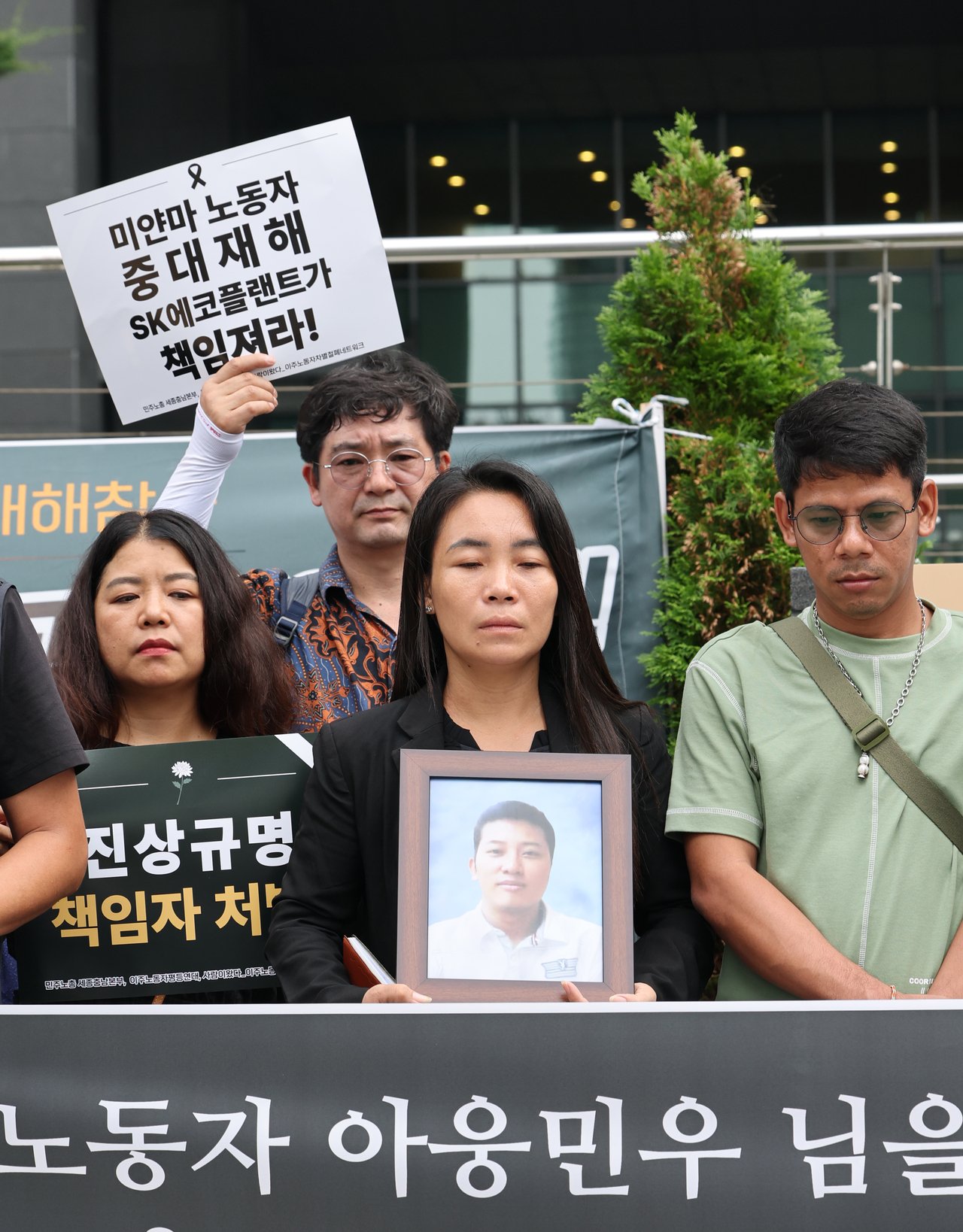
The remains of Aung Min Oo, a 37-year-old worker who died in an accident at a railroad construction site earlier this month, were sent to Myanmar on Tuesday following a farewell ceremony organized by the Korea Workers’ Compensation and Welfare Service at Incheon Airport.
The repatriation marked the second case under the state-run agency’s support program for the families and loved ones of foreign workers who die in workplace accidents in Korea.
The program assists the bereaved throughout the repatriation process, from bringing family members to Korea to helping return the deceased to their home country. It also provides administrative and psychological support during their stay.
Aung died on July 1 while working alone in a hazardous area at a KTX railroad construction site in Asan, South Chungcheong Province. The incident prompted protests from labor and civic groups and the bereaved family, with contractor SK Ecoplant ultimately issuing a public apology.
For Aung’s family, the agency prepared a memorial space and a waiting area at Incheon Airport and provided administrative assistance throughout their stay in Korea.
Agency President Park Jong-kil attended the farewell ceremony, and agency officials accompanied the family to the boarding gate before presenting them with a condolence payment.
The first case under the program involved Vu Tu Anh, a Vietnamese worker who died after falling from a building during an immigration authorities’ crackdown at a factory in Daegu.
The agency said it would continue to strengthen protection for foreign workers’ rights as their presence in Korea’s workforce grows. The number of foreign workers in Korea reached 1.1 million last year, up from 843,000 in 2022.
“As foreign workers play an increasingly important role at industrial sites across Korea, public institutions have a responsibility not only to protect their safety and rights but also to treat their bereaved families with dignity,” Park said.
“Building on this second support project, we will further strengthen our people-centered workers’ compensation services and fulfill our social responsibility as a public institution.”