
 KB News Desk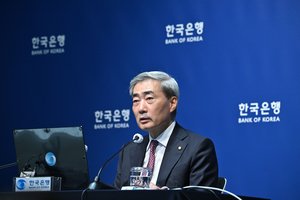
Central bank pivots to monetary tightening to curb inflation, signaling more hikes ahead
South Korea’s central bank raised its benchmark interest rate for the first time in more than three years on Thursday, as stronger-than-expected economic growth gave policymakers room to address mounting inflation pressures.
The Bank of Korea’s monetary policy board voted unanimously to raise the benchmark rate by 0.25 percentage points to 2.75 percent, ending a yearlong pause in its policy cycle.
The move marked the BOK’s first rate hike since January 2023, when it raised borrowing costs to curb inflation following the massive liquidity expansion and ultra-loose monetary policies introduced during the Covid-19 pandemic.
Much like the previous tightening cycle, the BOK’s hawkish stance reflects mounting inflationary pressures as surging global oil prices, fueled by the conflict involving Iran, continue to feed into domestic prices.
“Inflation is expected to remain above the target level for a considerable period,” BOK Gov. Shin Hyun-song said at a press briefing after the policy meeting, signaling more rate hikes could come in the near term.
“We will continue our policy response until we are confident that inflation is converging sustainably toward the target,” Shin said, referring to the central bank’s 2 percent inflation goal.
The steady acceleration in price growth underscores persistent inflationary pressures, with year-on-year inflation rising from 2.2 percent in March to 2.6 percent in April before climbing above the 3 percent mark to 3.1 percent in May and 3.2 percent in June. The 3.2 percent rise marks the fastest pace of inflation since December 2023.
“The pace and extent of further tightening will be determined based on incoming data, including second-quarter GDP figures,” Shin said, without indicating when the next rate hike might come.
Expectations that the semiconductor-led boom will continue have also eased concerns that higher interest rates could weigh on economic growth.
“The Korean economy is expected to maintain solid growth, with exports and investment continuing to post robust gains on the back of the semiconductor upcycle, while private consumption is gaining strength as household income conditions improve,” Shin said.
While the central bank had projected the economy to expand by 2.6 percent this year in May, Shin forecast the growth is likely to outpace the projection. The Finance Ministry also recently raised its 2026 growth forecast to 3 percent from 2.6 percent.
“Based on current assessments, the 2.6 percent forecast is too low,” Shin said. “It will likely be revised up by a significant margin in August.”
The shift in the monetary policy stance also came amid the won’s prolonged weakness against the greenback.
The latest rate hike narrowed the gap between Korea’s benchmark interest rate and the US Federal Reserve’s policy rate to 1 percentage point, marking the first time in more than three years that the differential has fallen to that level.
While the Korean won has strengthened in recent trading sessions, moving back below the psychologically important 1,500-won-per-dollar level following a decisive shift in the Federal Reserve’s rate outlook, the remaining interest rate differential continues to exert structural downward pressure on the Korean currency.
Market analysts expect the BOK to keep its benchmark interest rate unchanged in August before delivering another hike in October, allowing policymakers more time to assess the impact of Thursday’s increase and incoming economic data.
“We continue to expect the BOK’s next rate hike in October rather than a back-to-back move in August,” said Lim Jae-kyun, an analyst at KB Securities. “An August hike would require clearer evidence that higher oil prices are feeding into broader inflation through wages, services prices and inflation expectations.”
Kim Myoung-sil, an analyst at IM Securities, echoed the view, saying the BOK is likely to reassess the inflation and growth outlook in its updated August forecasts before raising the rate again in October.