

 KB News Desk
Doctor’s personal journey makes the case for medication as a primary treatment for severe obesity
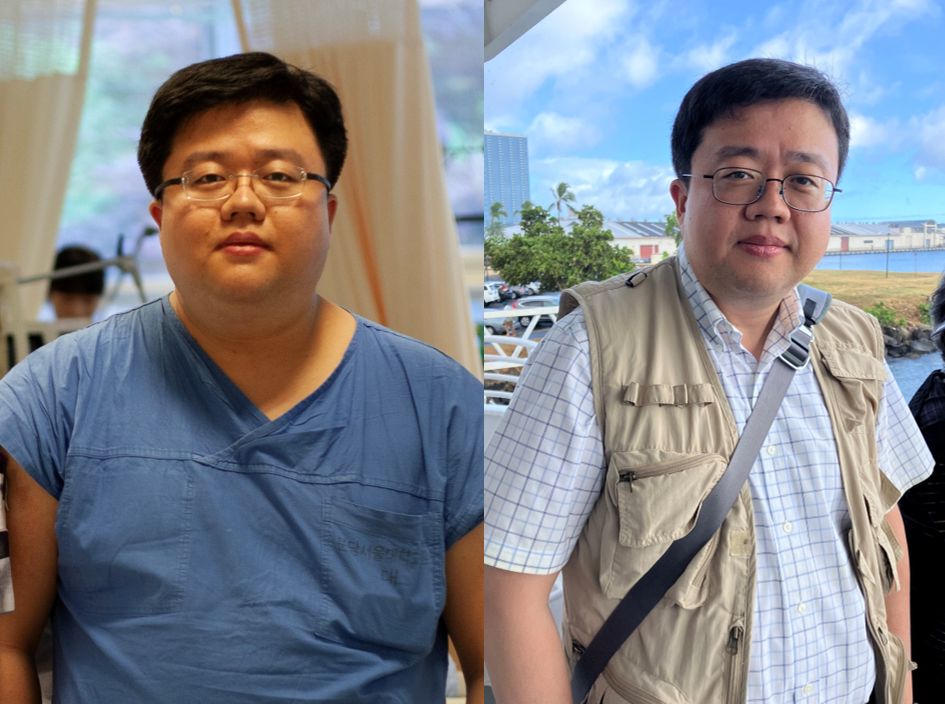
For most of his life, cardiologist Chang Hyoung-woo treated his obesity with the familiar prescription of diet, exercise and willpower. He even underwent surgery, losing 26 kilograms — only to regain nearly half of it.
After his experience with a new generation of obesity drugs, Chang, 46, now argues that people with severe obesity should be offered medication as a primary treatment rather than being expected to rely on lifestyle changes alone.
“For patients with severe obesity, diet and exercise alone are often not enough,” Chang said in an interview Wednesday at Seoul National University Bundang Hospital, where he works. “Medication should form the foundation of treatment, with diet and exercise supporting it.”
Chang said he had struggled with obesity since childhood, with his weight reaching 118 kilograms as an adult.
“There were health risks, so I tried to lose weight many times,” he said. “I would lose some temporarily, but it always came back.”
He eventually underwent sleeve gastrectomy, a weight-loss procedure that removes about 70 to 80 percent of the stomach. The surgery helped him lose 26 kilograms within six months, but he later regained 12 kilograms and began experiencing health problems again.
“As much as I hated the painful, seemingly endless process of losing weight, I had to confront it because I did not want to die young,” he said.
Chang eventually brought his weight down to 97 kilograms but found he could go no further despite what he described as his best efforts. Then, in October 2024, Novo Nordisk’s Wegovy became available in Korea.
After beginning treatment with the GLP-1 drug, Chang lost 16 kilograms over 10 months. He later switched to Eli Lilly’s Mounjaro because Wegovy caused nausea and lost a further 3 kilograms over the following year.
The experience changed how he understood obesity and its treatment. Chang came to view his repeated difficulty keeping weight off not as a failure of discipline, but as the result of powerful biological mechanisms.
“I was already doing everything I could when I reached 97 kilograms,” he said. “Diet and exercise alone were not enough to take me further.”
Biology, not simply willpower
Chang attributes repeated weight regain partly to what is commonly described as the body’s weight “set point” — its tendency to defend a certain weight through changes in appetite, energy expenditure and metabolism.
When someone loses substantial weight, he explained, the body can respond by increasing hunger and conserving energy, making further weight loss difficult and regain more likely.
“It is like a spring,” Chang said. “The farther you move away from the set point, the stronger the force trying to bring you back becomes.”
GLP-1-based drugs suppress appetite and slow digestion, helping patients manage those biological pressures. For Chang, their effects represent a fundamental shift from older obesity treatments.
He noted that medications available before the arrival of modern GLP-1 drugs generally produced far more modest weight reductions. He described the newer treatments as “revolutionary,” particularly for patients with severe obesity and related health risks.
Chang said such patients should consider medication under medical supervision instead of viewing it as an easy way out.
His argument is not that everyone who wants to lose weight should use the drugs. Rather, he believes patients whose obesity threatens their health should have access to medication as treatment for a chronic disease.
Chang also stressed that the drugs do not necessarily eliminate the body’s tendency to regain weight. If treatment stops, appetite and other biological responses may return, allowing weight to rise again.
He therefore views obesity medication similar to treatments for hypertension or diabetes: as potential long-term therapy rather than a short-term route to weight loss.
The experience has also made him more vocal about the stigma surrounding obesity.
The condition is still too often portrayed as the result of laziness, weak willpower or poor lifestyle choices, Chang said, overlooking the biological forces that can make sustained weight loss exceptionally difficult.
At the same time, he cautioned against treating GLP-1 drugs as cosmetic aids.
“People without clinically significant obesity should receive appropriate warnings about potential adverse effects and should not view these medications simply as a way to improve their appearance,” he said.
Cost remains a barrier
For patients who medically need treatment, Chang said the largest obstacle is cost.
A month’s supply of GLP-1 obesity medication in Korea generally costs between 300,000 won and 700,000 won ($215 and $510), depending on the product and dosage. By comparison, Korea’s median monthly wage was estimated at 2.85 million won in 2024.
With obesity drugs generally excluded from national health insurance coverage, long-term treatment can place a substantial financial burden on patients.
“My ultimate hope is that South Korea will eventually provide insurance coverage for obesity medications under criteria comparable to those used for bariatric surgery,” Chang said.
He suggested that clearly defined eligibility and reimbursement standards could discourage inappropriate cosmetic use while expanding access for patients with severe obesity.
For Chang, the argument is rooted in his own experience — years of losing weight, regaining it and blaming himself before finding a treatment that helped him manage what he now considers a chronic disease.
His message is straightforward: For patients with severe obesity, medication should not be dismissed as a shortcut or a matter of vanity, but considered a legitimate medical treatment.