
 KB News Desk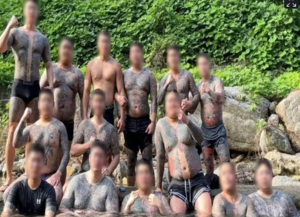
Police have apprehended 40 alleged members of four organized crime groups in Seoul on charges including participation in a criminal organization and violent assault, the Seoul Metropolitan Police Agency said Thursday.
The suspects included 21 members of the Dongdaemun gang and 19 members of three allied groups.
Thirty-two were referred to prosecutors, including 14 who were detained, while arrest warrants were issued for two members believed to be staying in the Philippines and Cambodia.
Most of the suspects were in their 20s and early 30s.
The Dongdaemun gang was formed in 1996 by figures who claimed to carry on the legacy of Lee Jung-jae, a notorious “political gangster” active during South Korea’s First Republic in the 1950s, police said.
The group allegedly expanded by recruiting at least 16 middle and high school students since 2017, including teenagers known as school fighters.
Despite the relatively young age of its members, the gangs maintained a rigid hierarchy based on unquestioning obedience to senior members. Recruits lived in shared dormitories in Seoul and western Incheon, where they were required to learn internal rules, perform rotating duties and visit imprisoned members in detention centers.
Police said recruits were also pressured to receive tattoos bearing the gang’s name and were assaulted for violating internal rules. Members were mobilized for confrontations with rival groups and other coordinated crimes.
In February, about 50 members of the Dongdaemun gang and its allied groups allegedly took part in a mass brawl at a restaurant in Gangnam after a dispute with another gang member.
In September 2023, members allegedly chased down and assaulted a rival gang member in Nonhyeon-dong, southern Seoul, after he bumped into a senior member and tried to leave.
A detained 33-year-old senior member was also accused of gathering four junior members for a violent clash with a rival group in Suwon, Gyeonggi Province, in 2020.
Police said the groups had also been involved in crimes including extortion, redevelopment-related racketeering, voice phishing and fraudulent investment schemes.
“Some young people mistakenly believe joining organized crime will make them rich and allow them to drive luxury cars,” a police official said.
“In reality, they are beaten in shared dormitories and must respond to emergency call-ups around the clock.”
The official said police would continue taking strong action to prevent young people from being drawn into organized crime.