
 KB News Desk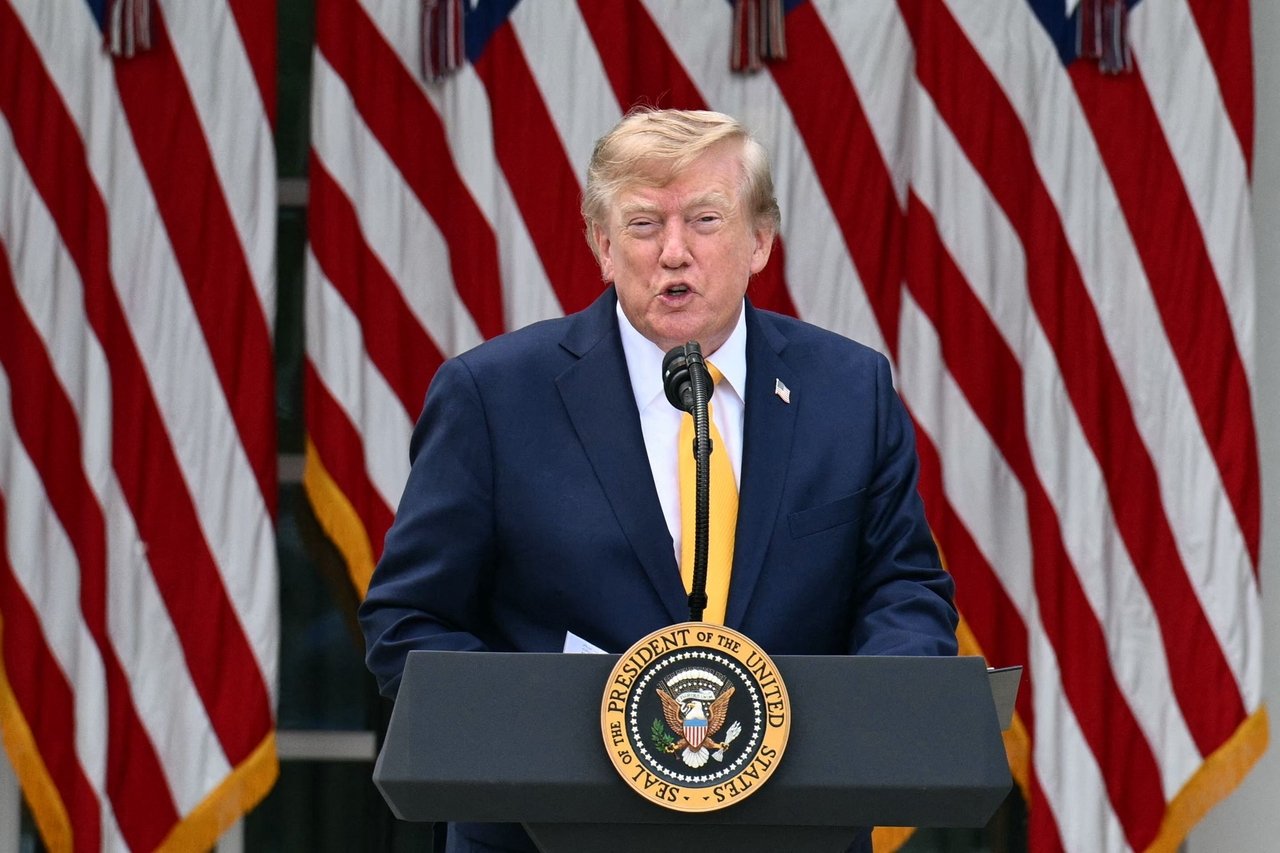
Skepticism is growing over the likelihood of a meeting between US President Donald Trump and North Korean leader Kim Jong-un, with the changing strategic environment looming large over Trump’s renewed push.
While Trump repeatedly indicated that a meeting was in the works, highlighting his relationship with the North Korean leader, analysts say the balance has shifted significantly since their first summit in Singapore in 2018.
North Korea now possesses a larger and more sophisticated nuclear arsenal, has dramatically strengthened its military relationship with Russia and has openly rejected the idea of denuclearization. Pyongyang has instead demanded that Washington recognize it as a nuclear-armed state and abandon what it calls its “hostile policy” toward the North.
Fox News offered a notably skeptical assessment Sunday. The outlet said in an article that Trump now faces “a North Korea with a larger nuclear arsenal, a powerful new partner in Russia and far less incentive to strike a deal than it had during his first term.”
It also contrasted North Korea with Iran, saying that Pyongyang possesses “a mature nuclear arsenal and multiple delivery systems,” limiting Trump’s military options and “a narrower path to a deal than he had eight years ago.”
Victor Cha, Korea chair at the Center for Strategic and International Studies, similarly assessed that there is effectively no military solution to the North Korean nuclear problem.
“There really isn’t a military solution for a country like North Korea that has 50, 60, 70 nuclear weapons and several delivery systems for those weapons,” Cha told Fox News.
The political circumstances surrounding Trump’s outreach are also drawing scrutiny.
Lim Eul-chul, a professor at Kyungnam University’s Institute for Far Eastern Studies, said the timing may reflect a desire to produce a visible foreign policy achievement before the November US midterm elections, particularly as the wars in Ukraine and the Middle East have yet to deliver the kind of diplomatic breakthrough Trump has sought.
Lim said Trump may be attempting to portray himself as uniquely capable of managing Kim through their personal relationship and to use a summit as evidence of his diplomatic prowess.
His “renewed focus on North Korea could also provide a way to shift attention from the continuing confrontation with Iran,” he pointed out.
Lim assessed that Trump’s immediate objective could be to secure a meeting with Kim by scaling back South Korea-US military exercises and softening the emphasis on denuclearization, allowing him to claim progress in managing the North Korean nuclear threat even without dismantling Pyongyang’s arsenal.
But such an approach could create difficult questions for Seoul.
Lim warned that Trump could seek political gains even at the cost of unsettling parts of the South Korea-US alliance, including by signaling greater acceptance of North Korea’s nuclear status while placing additional security demands on Seoul.
Cha raised a similar possibility in his interview with Fox News, saying Trump may see renewed diplomacy with Pyongyang both as a way to reduce the number of adversaries confronting Washington and to change the political narrative surrounding Iran.
“I think he frankly wants to take the headlines off of Iran,” Cha said.
Pyongyang, meanwhile, may see little reason to move quickly.
Lim said, “North Korea is likely aware that Trump is searching for diplomatic breakthroughs amid multiple international conflicts and domestic political pressures, giving Kim an incentive to wait for Washington to improve its offer.”
Kim has also learned from the breakdown of previous negotiations that even summit-level diplomacy can unravel abruptly, Lim said, making the North less likely to enter another meeting without substantial concessions in advance.
Pyongyang may instead calculate that its closer alignment with Moscow, expanding nuclear capabilities and heightened international uncertainty have strengthened its bargaining position.
Lim said North Korea could therefore hold out for far-reaching US concessions, potentially including an irreversible halt to policies Pyongyang considers hostile, such as major South Korea-US military exercises, or explicit acknowledgment of the North as a nuclear-armed state.
Yet Trump’s interest in engagement is unlikely to disappear even if his Republican Party performs poorly in the November midterm elections, according to another South Korean analyst.
Shin Beom-chul, a senior research fellow at the Sejong Institute, said in a recent report that Trump could continue pursuing talks with North Korea regardless of the midterm results because of his preference for top-down summit diplomacy.
If Democrats strengthen their position in the US Congress, Trump could have even greater incentive to turn to foreign policy — where presidents generally enjoy more room for maneuver — in search of a political breakthrough, Shin argued.
If Republicans perform strongly, meanwhile, Trump could first seek progress in negotiations with Iran before turning to North Korea as his next major diplomatic objective, he said.
That means Seoul should prepare for the possibility of renewed US-North Korea engagement regardless of whether a summit appears imminent, Shin said.
He called for close policy coordination with Washington before negotiations begin, arguing that South Korea should first establish with the US an acceptable range of objectives for talks with Pyongyang and then seek China’s cooperation so that Seoul’s interests are reflected in any eventual negotiating process.
“Rather than focusing on the immediate possibility of talks resuming, we need an approach that consistently maintains our position over the long term to improve conditions for inter-Korean relations,” Shin said.
Meanwhile, Foreign Minister Cho Hyun and US Secretary of State Marco Rubio agreed in phone talks Monday to maintain close coordination on North Korea while preserving a strong combined defense posture.
Seoul’s Foreign Ministry said the two sides would work together for peace on the Korean Peninsula and the “resolution of North Korea’s nuclear issue,” but notably did not say they reaffirmed the goal of denuclearization. A separate US State Department readout likewise stressed close alliance coordination without mention of North Korea’s denuclearization.