
 KB News Desk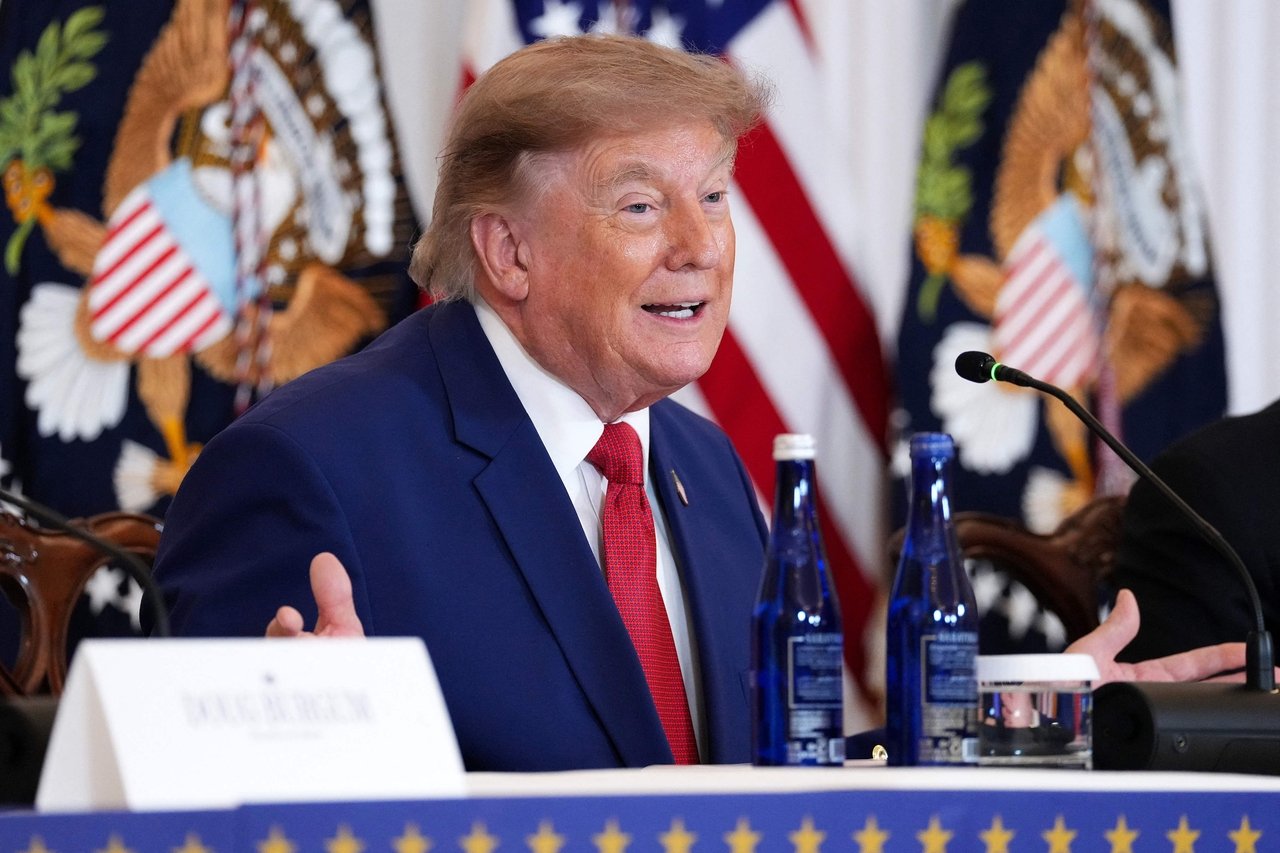
Korea Zinc, Posco gain strategic edge in US mineral push
Washington’s new $3 billion critical minerals initiative has put South Korean processors and miners in the spotlight as the US pushes to dismantle China’s dominance over strategic supply chains.
While Korea Zinc and Posco Holdings are not the direct recipients of the investment package, they are uniquely positioned to capitalize on the shift, solidifying long-term supply partnerships with US defense and technology leaders.
$3 billion in minerals projects
The US unveiled a $3 billion critical minerals package during a roundtable on the American mining industry at the Department of State in Washington on Friday. The move mainly focuses on strengthening US mining, battery and processing firms to secure domestic supply chains.
The rapid depletion of weapons stockpiles, particularly air-defense missiles, during military operations against Iran has added urgency to the initiative, reinforcing Washington’s broader push to break China’s dominance of global critical mineral supply chains.
Major investments include a $1.4 billion loan for Sila Nanotechnologies’ next-generation battery facility, $400 million for Sunrise Energy Metals’ Australian scandium supply, $150 million for Niron Magnetics’ US-made permanent magnets, over $85 million for Standard Bauxite’s bauxite supply, $1 billion for Ivanhoe Electric’s Arizona copper mine, and $25 million for Westwater Resources’ Alabama graphite project.
Korea Zinc’s strategic edge
Although the federal grant funding targets domestic firms, Korea Zinc stands to gain significant tailwinds from the broader protective tariff and regulatory environment created by Washington’s policy shift.
Speaking at the same event, US Commerce Secretary Howard Lutnick singled out Korea Zinc — the only foreign company mentioned — as proof that Washington’s aggressive tariff policies and incentives are successfully compelling world-class foreign tech leaders to relocate manufacturing to the US.
“Our Section 232 tariffs strengthened our steel, aluminum and copper industries, and look at what that’s created,” Lutnick said. “Through the CHIPS program, we gave Korea Zinc $7.4 billion to build a critical mineral smelter right here in the United States.”
The US Departments of War and Commerce committed to funding Korea Zinc’s integrated smelter project, dubbed Project Crucible, in Clarksville, Tennessee, last year. This was Washington’s strategic effort to secure a major smelting operator outside of Chinese influence as the country lacks domestic, large-scale processing capacity for strategic and nonferrous metals.
Key partners for Project Crucible include US defense contractor Lockheed Martin, which will contribute germanium and broader cooperation on critical mineral supply chains. Germanium is used in infrared sensing technologies for advanced military systems, including fighter jets and missile guidance equipment.
The US Defense Department will purchase the strategic minerals produced by the smelter after completion, which could contribute to US defense stockpiles.
An industry source noted, “While the US has abundant mineral resources, it has relatively limited capacity to refine and process them into materials suitable for industrial use, making cooperation with allied companies with proven technologies essential,” adding that Project Crucible can be viewed as an economic and national security partnership between the US and Korea.
The project is also expected to target growing demand from the US semiconductor industry.
“As Project Crucible is partially funded through the CHIPS Act, the facility is well positioned to benefit from the rapid expansion of domestic chip manufacturing,” another source said.
He noted that high-purity semiconductor-grade sulfuric acid is a key material in wafer-cleaning processes, making reliable local supplies increasingly important for large fabs operated by companies such as TSMC, Samsung Electronics and Intel.
Posco’s China-free lithium
Posco Holdings is also viewed as a potential beneficiary of the US’ strengthening decoupling from Chinese critical minerals.
Notably, Posco is building China-free supply chains for key battery inputs, such as lithium from Argentina’s Hombre Muerto salt lake and nickel from Australia.
In the US, the company is advancing its footprint through direct lithium extraction and clay-lithium development projects, marking the first such efforts by a Korean company. The technology enables lithium production from low-concentration brines, offering higher recovery rates and shorter production times compared with conventional evaporation methods.
Posco Holdings aims to complete and operate a demonstration plant by next year and will validate the technology using actual brine by 2028 before commercialization.
Industry watchers say the company’s ongoing technical demonstrations in the US could gain significant momentum as it moves toward a full-scale commercial facility, potentially benefiting from US federal financing, subsidies and expedited permitting.