
 KB News Desk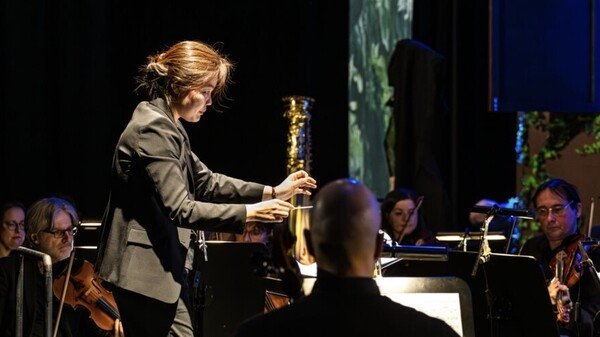
Former pianist returned to Korea for her first time conducting in her home country
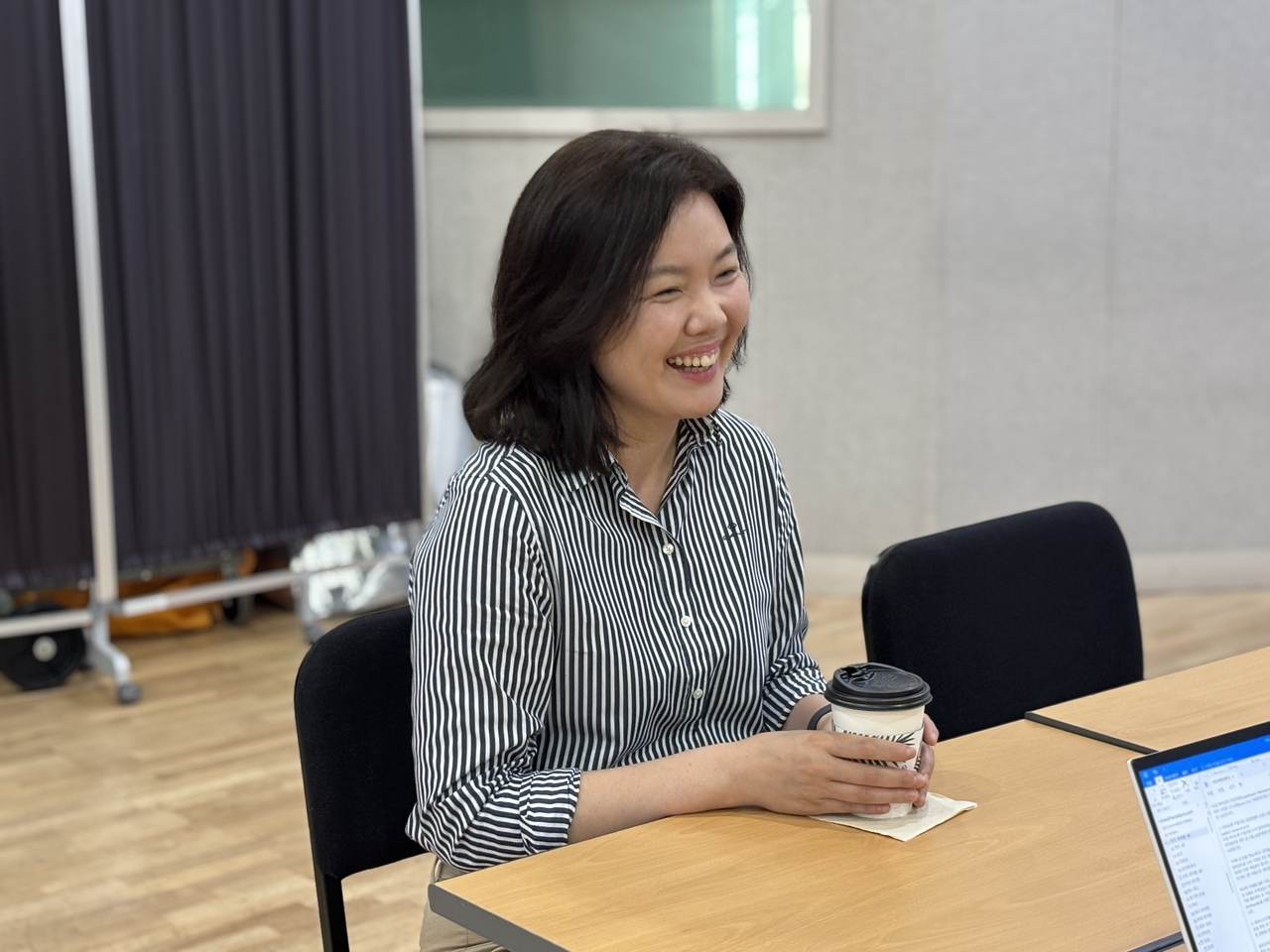
Cho Noori did not set out to become a conductor. She trained as a concert pianist — achieving competition wins, going to the top of her class at Dankook University, then winning the Kumho Prize, one of Korea’s most competitive classical prizes.
The switch came almost by accident, during a piano master’s program in Germany, when a required conducting class put a baton in her hand. What she felt — that music could come from a gesture instead of her hands on the keys — reset the direction of her career.
What came next was, in one sense, unremarkable: the standard track for staff musicians at Germany’s opera houses usually involves coaching work leading to conducting duties. What’s unusual is that Cho took that path at all — a decision about which she was never confident.
She took a leave of absence from her piano degree rather than dropping it outright. “I didn’t switch because I was sure of myself,” she told The Korea Herald in an interview on July 20 at the Korean National Symphony Orchestra Academy. “I just wanted to try it.”
Piano — practicing alone, performing alone — had always felt “lonely, and honestly, a little frightening,” even after her competition wins. Opera coaching, and later conducting, put her in a room with other people.
“Working with others suits me much better than doing something alone,” she said. “I didn’t even know I had it in me to stand in front of people and lead. There’s a saying that the position makes the person. I think that’s really true.”
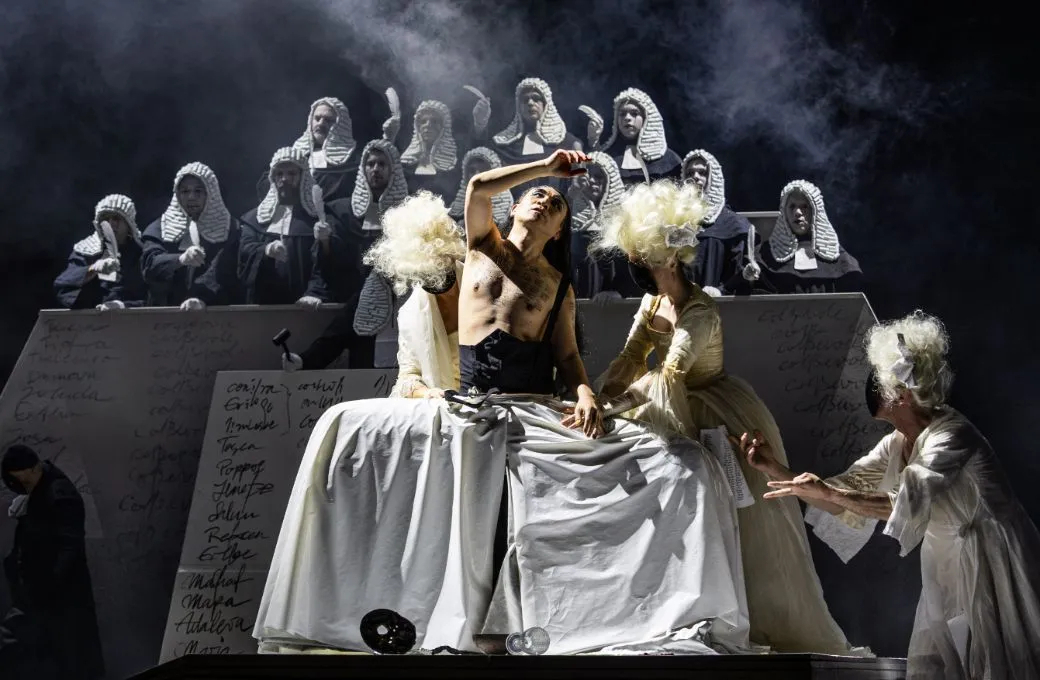
Her documented path runs through three German houses. She spent two years as a repetiteur, a rehearsal pianist who coaches singers on their roles, at Dresden’s Semperoper starting in 2016. Then she spent six years at Theater Bremen — first as a repetiteur, later as deputy chorus director, and from 2020 as a repetiteur with conducting duties — before arriving at the Meiningen Theater for the 2024-25 season.
For two seasons, she has served as the head of the theater’s music-coaching staff. She also has conducting duties that involve leading revival performances of productions premiered by the house’s general music director.
This month, she moves up to the role of staff conductor, which goes beyond rehearsing the orchestra and conducting performances to include helping the general music director coordinate the theater’s musical affairs. “The responsibility is significant,” she said, “but it’s also a great honor, and I’m taking on this new challenge gladly.”
The Meiningen Court Orchestra became one of Europe’s most admired ensembles in the 1880s under Hans von Bulow, the conductor who helped establish what is now standard conducting practice. Brahms premiered his Symphony No. 4 there in 1885, leading the orchestra himself. Bulow’s successor, Fritz Steinbach, became the era’s foremost interpreter of Brahms’s music, a tradition the house still maintains.
Cho described the relationship as a kind of symbiosis. “The fact that a composer as great as Brahms was willing to premiere his work there says something about the theater’s tradition and level,” she said. “And for Brahms, having an orchestra skilled enough to do the premiere justice helped him too. It benefits both sides.”
Cho’s own work has received validation, too. In a review of the Meiningen Theater’s guest performance of “Don Giovanni” in Furth in February, Bachtrack critic Michael Vieth wrote that she delivered “pure Mozartian bliss,” making the orchestra sound “dramatic yet theatrically transparent.” It was a repeat performance of a production the general music director had premiered the previous May. House conductors typically lead reruns, as Cho did.
A first homecoming
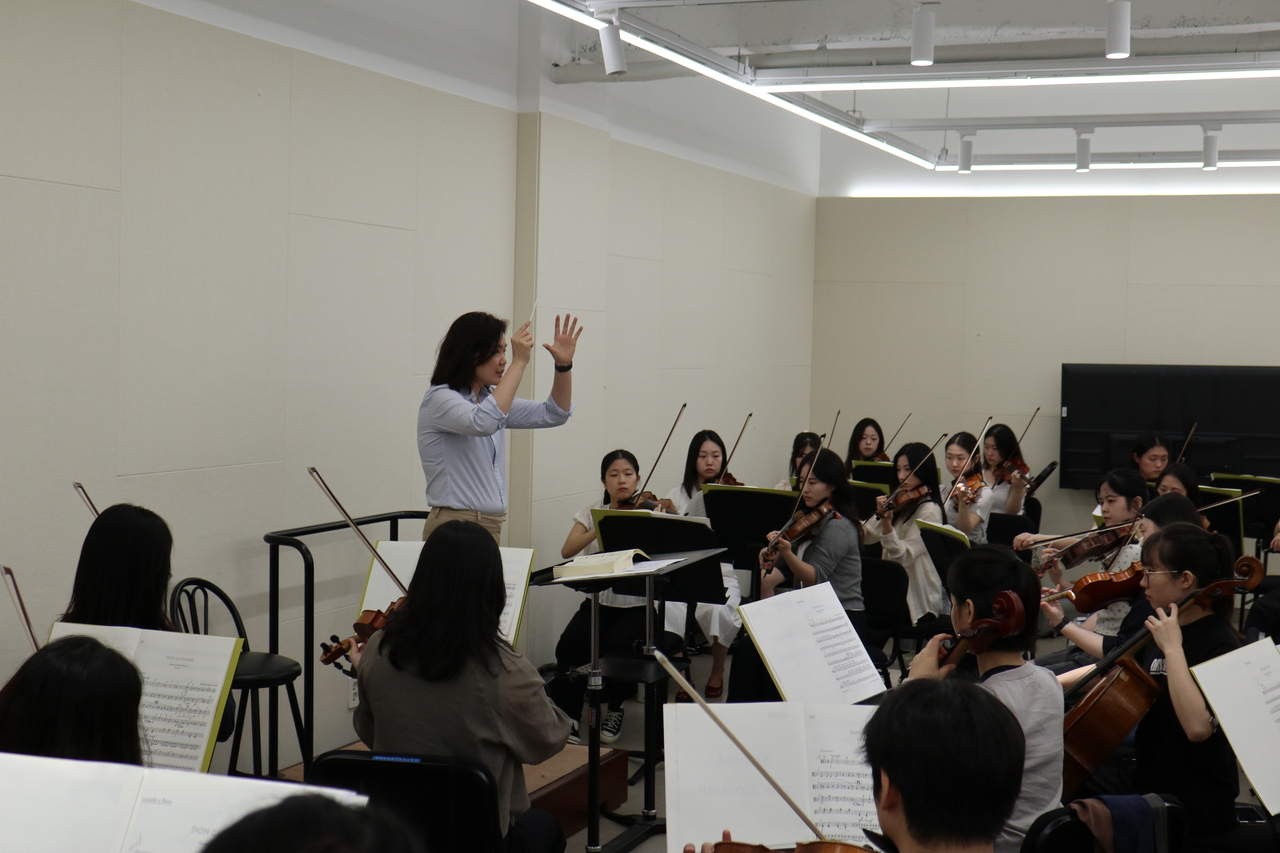
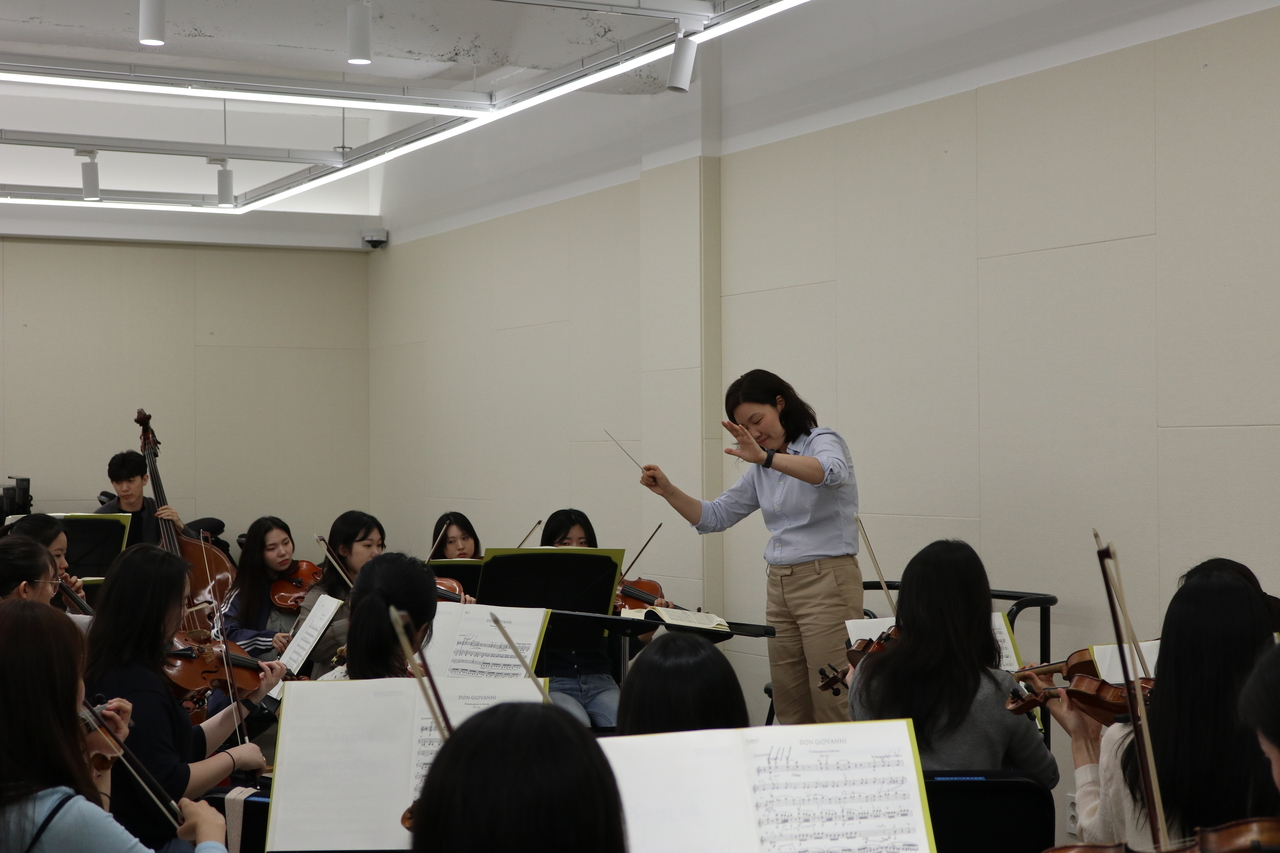
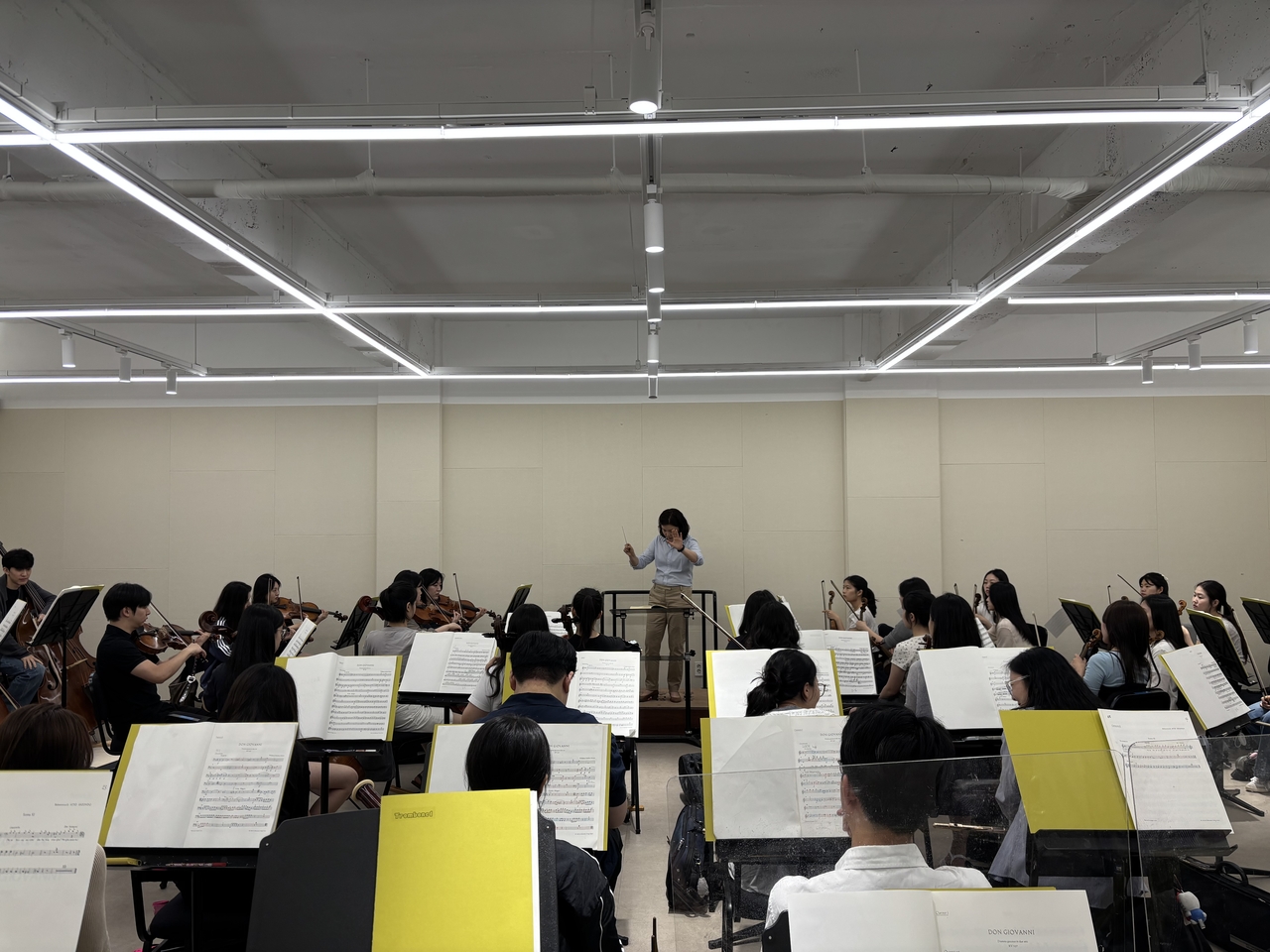
Cho’s turn at the podium had never included a stop in Korea — until last month. Cho returned to Seoul in July at the invitation of her former piano teacher, Yoo Mee-jung, now president and CEO of the Korean National Symphony Orchestra, to lead an orchestra-leading class at the KNSO Academy. Yoo said she picked Cho because academy trainees rarely get to work through opera repertoire with a specialist. It was Cho’s first time conducting in her home country.
For the session, Cho chose Beethoven’s Symphony No. 7, her favorite in his catalog by her own account, an attachment she traces to Carlos Kleiber’s recording with the Concertgebouw. “One critic said Beethoven must have written it drunk,” she said. “The joy in it goes all the way to the edge.”
“I always thought I’d like to conduct in Korea someday,” Cho said. “I just didn’t have the contacts, so I was waiting.” When Yoo called, she said, “it didn’t feel real. I’m just really, truly grateful.”
The relationship between Yoo and Cho goes back more than two decades.
Cho entered Dankook as a freshman in 2003, the same year Yoo joined as a professor, when the piano program had few students groomed since childhood. Cho wasn’t one of them either, Yoo said, but she had discipline: on campus by 6:30 a.m. every morning to practice, “a diligent student who completed everything asked of her, without refusal.” That work ethic carried her to a solo recital win, prevailing over conservatory-trained rivals from Korea and abroad, at the Kumho Cultural Foundation’s Young Concert Artist audition.
Cho says what she took from those years wasn’t really technique. It was what she calls a structural ear: the ability to hear a piece’s shape, its hidden melodies and harmonies, before deciding how to interpret it. She traces that directly to listening to Yoo perform.
“She played in a way that made the structure come through crystal clear, never vague,” Cho said. “Her playing itself was the biggest lesson.” Yoo describes her own teaching less as spotting talent than instilling it systematically — most students, she said, arrive at university having only crammed entrance-exam pieces, so she spends years training them to listen rather than just hear the music.
When Yoo was asked what she’d say now to a former student turned established conductor, her answer read like a definition of the career she hopes to see Cho build: “I hope she stays a musician who never stops studying, out in the field.”
Traditional methods can look outdated in a fast-moving era, Yoo said, “but think of the first generation of pianists — their music still lives in people’s hearts.” Art that lasts, she said, requires patience and a foundation built piece by piece, “even when it feels slow. That’s what sustains a longer performing life.”