
 KB News Desk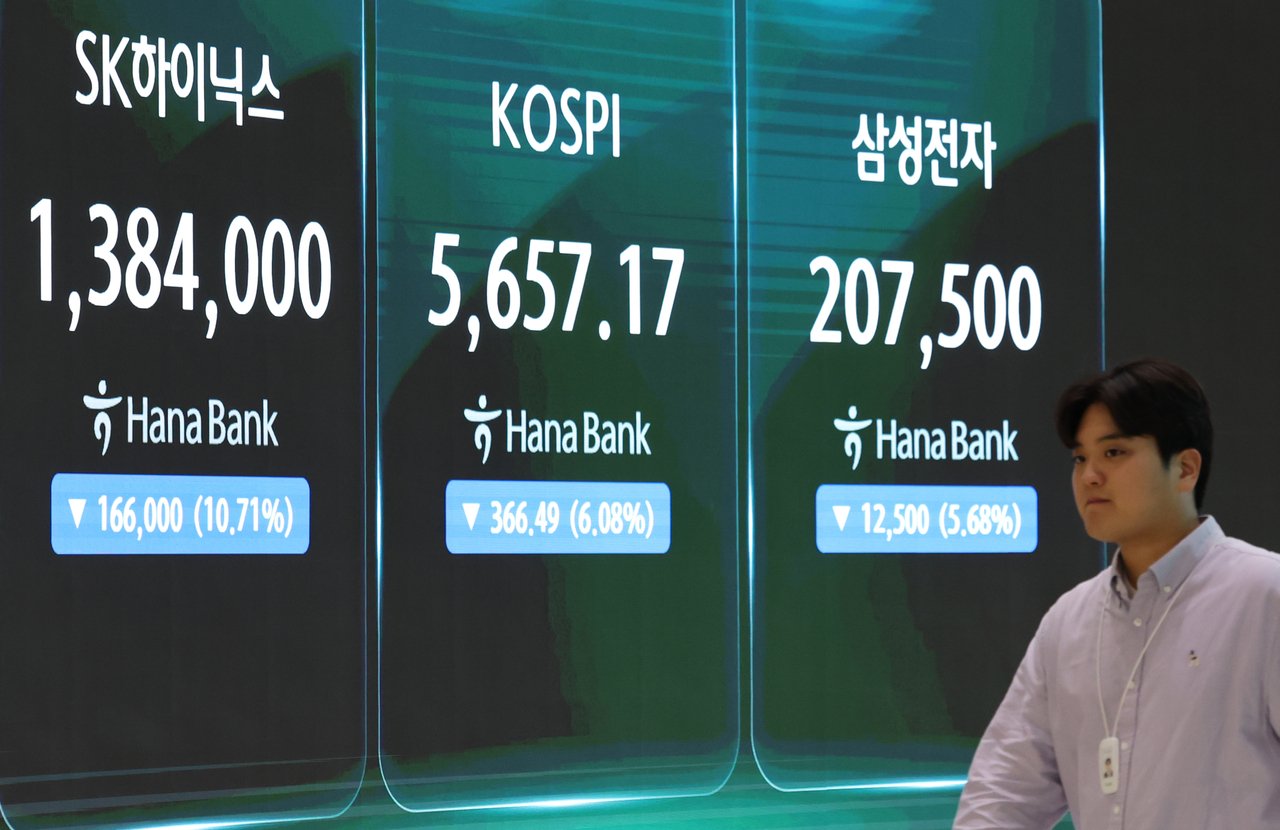
Tighter entry barriers risk shifting retail capital offshore while leaving volatility concerns unresolved at home
As South Korea tightens rules on single-stock leveraged exchange-traded funds, overseas markets are expanding their lineup of leveraged products tied to Korean stocks — and positioning themselves to capture demand from investors seeking alternatives.
The tougher domestic rules are expected to curb trading in Korea-listed products. But industry officials warn they may also create a “balloon effect,” shifting some retail demand toward the broader range of highly leveraged index and sector ETFs available in the US.
The Financial Services Commission said last week it would move up the implementation of new rules planned for August to July 31, citing concerns that single-stock leveraged ETFs were amplifying market volatility.
The measures raise the minimum deposit for investing in domestic and overseas single-stock leveraged ETFs to 30 million won ($20,800), increase the minimum trading unit and effectively halt new listings. Investors will also no longer be allowed to meet the deposit requirement with substitute securities, meaning they must hold the full amount in cash.
Overseas lineup grows
Even as Korea restricts the market, overseas exchanges continue to add leveraged and inverse products linked to Korean companies.
Eleven such products tracking Samsung Electronics and SK hynix are listed in markets including Hong Kong and the US, according to ETF Database. CSOP Asset Management operates leveraged products tied to the two chipmakers in Hong Kong, while similar funds have reached Britain and the US.
More US-listed products linked to Samsung Electronics, Hyundai Motor and Hanwha Aerospace are awaiting approval from the US Securities and Exchange Commission.
Korean investors will still be subject to the 30 million won requirement when buying overseas single-stock leveraged ETFs. But the rules do not cover leveraged products tracking broader indexes or industries, leaving highly leveraged US-listed sector and index ETFs as potential alternatives.
The US offers a far wider range of such products, many providing two or three times the daily performance of an index or industry. It imposes no uniform minimum deposit specifically for leveraged ETFs, with eligibility determined by brokers based on account type, margin privileges and product risk.
Britain also has no uniform minimum trading unit, while single-stock leveraged ETFs in Hong Kong are generally traded in lots of 100 shares.
Retail investors face higher hurdle
Analysts expect the new cash requirement to hit smaller investors hardest while having less effect on wealthy investors and active traders.
“Raising the deposit requirement could dampen trading demand in the short term,” said Kim Dae-jin, a professor at Sungkyunkwan University’s Graduate School of Business. “But it will not be much of a constraint for investors with sufficient capital or day traders, so it is questionable whether the measure will fundamentally reduce market volatility.”
“It could instead disadvantage small investors,” he added. “If retail participation declines, the market could become increasingly dominated by investors with ample cash.”
Asset managers also expect trading in Korea-listed single-stock leveraged ETFs to decline, though they question whether lower turnover will necessarily stabilize the underlying shares.
“The key change is not simply the higher deposit requirement, but that substitute securities can no longer be used,” an asset management industry official said. “The market will increasingly be left to investors with large cash holdings, which could reduce trading volume.”
“But it remains uncertain whether that alone will stabilize the market under highly volatile conditions,” the official added.
Demand may move, not disappear
Korean investors are already shifting more money into US markets. Net purchases of US stocks reached $2.6 billion from July 1 through July 24, about four times the $633 million recorded in June, according to the Korea Securities Depository.
Among the most heavily purchased securities were SOXL, which targets three times the daily return of the Philadelphia Semiconductor Index; SK hynix’s American depositary receipts; and KORU, which seeks three times the daily performance of the MSCI Korea Index.
SOXL and KORU are index- or sector-linked rather than single-stock products and therefore fall outside the new deposit requirement. That makes them possible destinations for investors seeking leveraged exposure without committing 30 million won in cash.
Industry officials said the rules may achieve their immediate goal of reducing activity in Korea-listed single-stock leveraged ETFs. But if speculative demand simply migrates to overseas products, the broader appetite for leverage — and the risks accompanying it — may remain.
A renewed increase in overseas investment could also draw attention back to the foreign exchange market. Single-stock leveraged ETFs were introduced partly to keep trading demand at home and reduce the need for investors to convert won into foreign currency.
If more money moves offshore, the resulting dollar demand could again become a factor for the won.
“The won faces both strengthening and weakening pressures, making it unlikely to sustain a one-way appreciation for long,” said Kim Seok-hwan, a researcher at Mirae Asset Securities. “For now, much of its recent strength reflects temporary supply-and-demand dynamics related to the conversion of SK hynix ADR proceeds into won.”