
 KB News Desk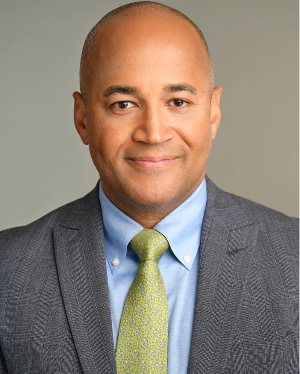
Circle strategy chief Dante Disparte says regulatory uncertainty is keeping Korean banks and fintech firms from moving beyond pilot projects
South Korea risks falling behind in stablecoins as regulatory uncertainty keeps banks and fintech firms from moving beyond pilot projects, according to Circle’s chief strategist.
“You can afford to be late to the regulation, but you don’t necessarily want to be late to the technology,” Dante Disparte, Circle’s chief strategy officer and head of global policy and operations, said in an interview with The Korea Herald in Seoul on Thursday.
Korea’s sophisticated banking and payments infrastructure may have dulled the sense of urgency, Disparte said. Yet stablecoins are “becoming a matter of economic competitiveness and, increasingly, national security” as more money and cross-border settlement shift onto digital networks.
“We may be looking at a world in which trillions and trillions of dollars are circulating and settling in stablecoin and international digital-asset markets,” Disparte said.
Yet the main obstacle is legal rather than technical. “Big institutions want legal clarity and regulatory clarity before they move from prototyping to production,” he said.
Korea has yet to finalize a framework for issuing and distributing stablecoins. Policymakers are still weighing the role of banks, reserve requirements and consumer protection, as well as the potential impact on monetary sovereignty, leaving banks and fintech firms largely confined to trials.
Disparte said Korea could turn its late start into a “second-mover advantage” by drawing on the US Genius Act and the European Union’s Markets in Crypto-Assets regulation, while tailoring its framework to the strengths of its financial and technology sectors.
“When it comes to regulation and policy, second movers are actually the countries or economies that can get the big advantage,” he said.
His comments came as Circle announced separate memorandums of understanding with Kakao and Toss, deepening its ties with Korea’s leading digital platforms. The agreements were signed alongside Current Seoul, an invitation-only gathering hosted by Circle for executives from Korean banks, crypto exchanges and payments companies.
Disparte described the MOUs as an initial phase of “deep understanding, deep integration and deep prototyping,” rather than commitments to launch specific services.
Circle has expanded its Korean partnerships over the past year, signing agreements with major commercial lender Hana Bank and crypto exchanges Upbit and Bithumb on stablecoin-related cooperation.
Dollar stablecoin activity in Korea remains largely concentrated on crypto exchanges, but Circle sees broader opportunities in cross-border trade and payments, corporate treasury management and consumer-facing mobile services.
To tap those markets, Disparte said the company plans to work through local partners and financial institutions rather than serve consumers directly.
“Stablecoins will eventually live on your mobile phone the way you and I might experience Kakao Pay or Toss,” Disparte said. “The technology of blockchain fades into the background, and what you now have is instant, user-directed financial services in your app.”
Circle is also positioning itself as a partner to banks rather than a competitor. Standard Chartered this month introduced a service allowing eligible institutional clients to mint and redeem US coin, or USDC, through the bank without opening an account directly with Circle.
“Partnerships with banks, as opposed to competition with banks, is the right operating model,” Disparte said. Korean banks could eventually adopt a similar structure or join Circle’s cross-border payments network, he added.
On concerns that greater use of USDC could weaken Korea’s monetary sovereignty, Disparte said isolating the domestic market would be less effective than building local entry and exit channels and linking credible won-backed digital money to global networks.
“It’s really time for South Korea to exert itself and not just to experiment with stablecoins, but to deploy,” he said.