
 KB News Desk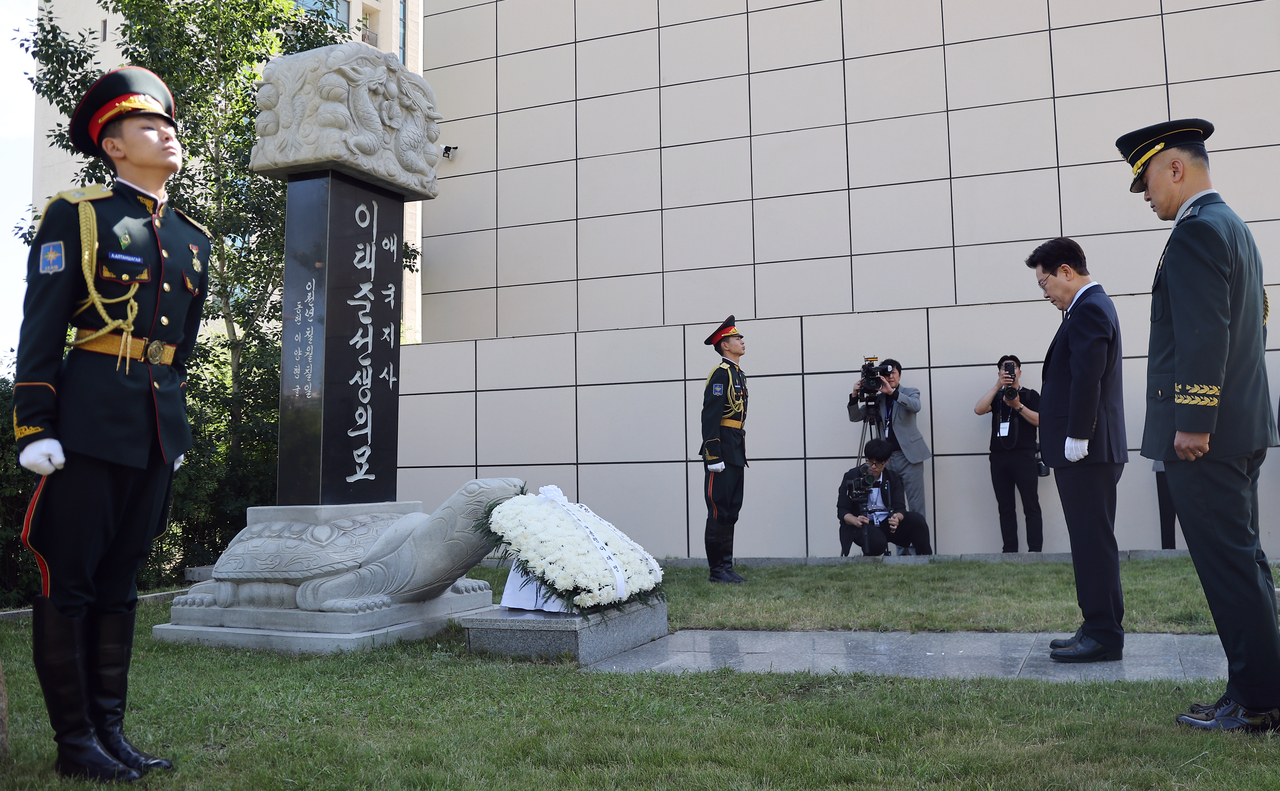
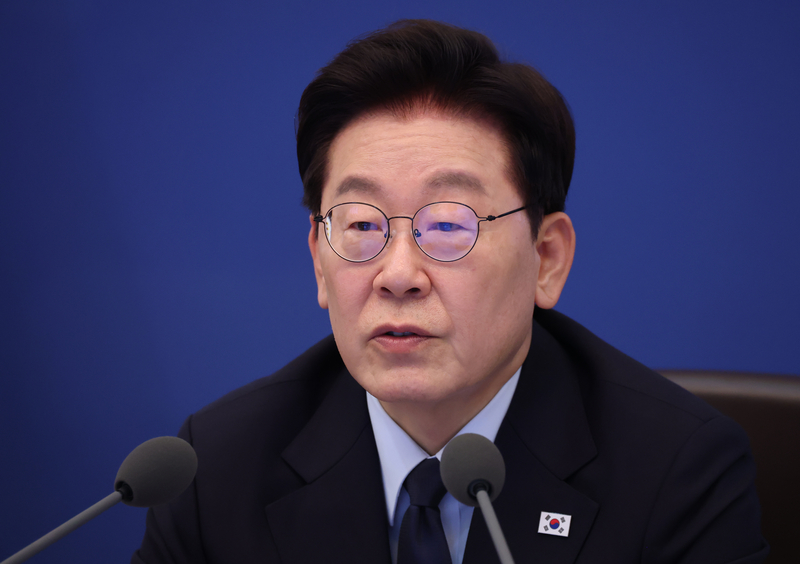
ULAANBAATAR, Mongolia — President Lee Jae Myung on Friday paid tribute to Lee Tae-Joon, a Korean independence activist and physician revered in Mongolia for introducing modern medicine.
President Lee also pledged to carry forward his noble legacy as the two countries seek to build a new “golden age” in bilateral relations, the vision he announced with Mongolian President Ukhnaagiin Khurelsukh during their summit the previous day.
Known in Mongolia as the “Schweitzer of Mongolia,” Dr. Lee remains one of the most respected Korean figures in the country and a symbol of the century-old ties between the two nations.
Arriving at the memorial park shortly after 10 a.m., President Lee laid a wreath at a symbolic grave dedicated to the activist and observed a moment of silence before touring an exhibition detailing Lee Tae-Joon’s life, medical work and independence activities.
The wreath bore a ribbon that read, “On the 105th anniversary of the martyrdom of Lee Tae-Joon, President Lee Jae Myung of the Republic of Korea.”
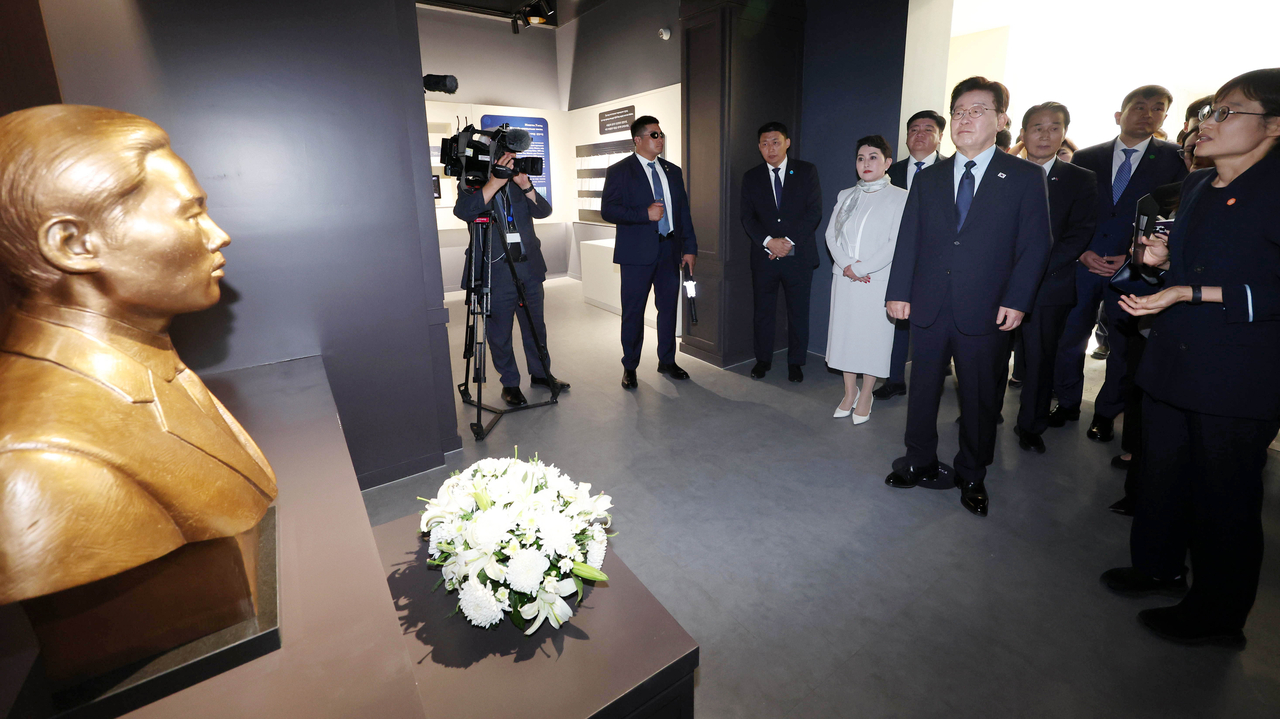
While viewing exhibits, the president engaged museum officials with questions about the activist’s life and legacy.
Looking at a bust of Lee Tae-Joon, he asked about the independence activist’s hometown of from Haman, South Gyeongsang Province. The president also inquired about Dr. Lee’s relationship with independence leader Ahn Chang-ho and the circumstances surrounding his activities in Mongolia.
At one point, after being shown records of donations Lee Tae-Joon made to support the independence movement, Lee remarked that publicly listing donors could have posed security risks at the time and suggested pseudonyms may have been used.
The president also showed interest in efforts to identify the activist’s burial site. After hearing that the exact location remains unknown, he asked whether historians believed it was located near the memorial grounds.
The grave at the memorial park is symbolic, as Lee Tae-Joon’s remains were never recovered after he was killed in Mongolia in 1921 by White Russian forces during the Russian Civil War. The site was created in 2001 using soil brought from his hometown.
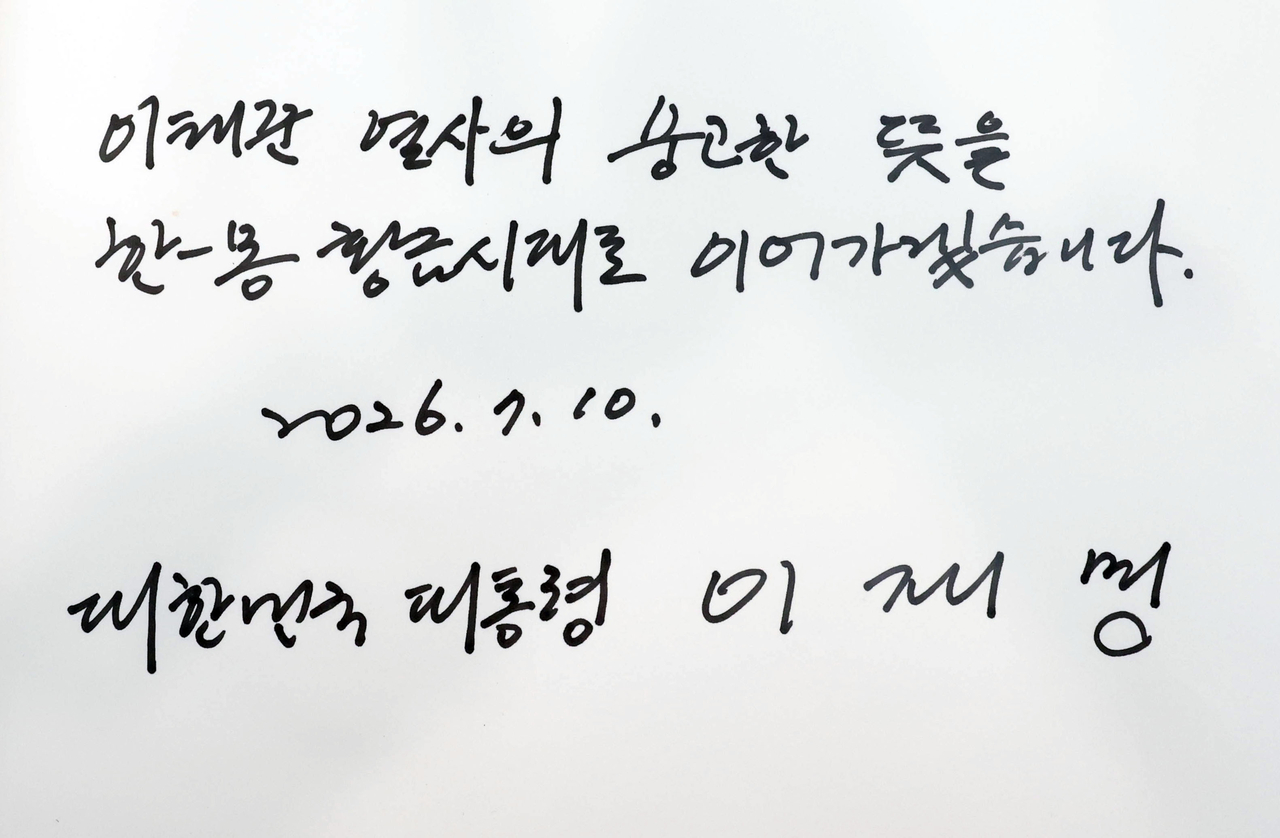
Before departing, Lee signed the guest book with a message pledging to connect the activist’s legacy to the future of bilateral ties.
“I will carry forward the noble spirit of Lee Tae-Joon into a golden age of Korea-Mongolia relations,” he wrote.
Born in South Gyeongsang Province, Dr. Lee graduated from Severance Medical School in 1911 and moved to Mongolia in 1914.
In Urga, present-day Ulaanbaatar, he established the Dongui Clinic, introducing modern medical practices and treating infectious diseases that were widespread at the time. His medical contributions earned him the trust of Mongolians, and he later served as personal physician to Bogd Khan, Mongolia’s last monarch.
Alongside his medical work, he actively supported Korea’s independence movement against Japanese colonial rule, providing financial assistance, shelter and logistical support to activists traveling between Mongolia and China. The South Korean government posthumously awarded him the Order of Merit for National Foundation in 1990.
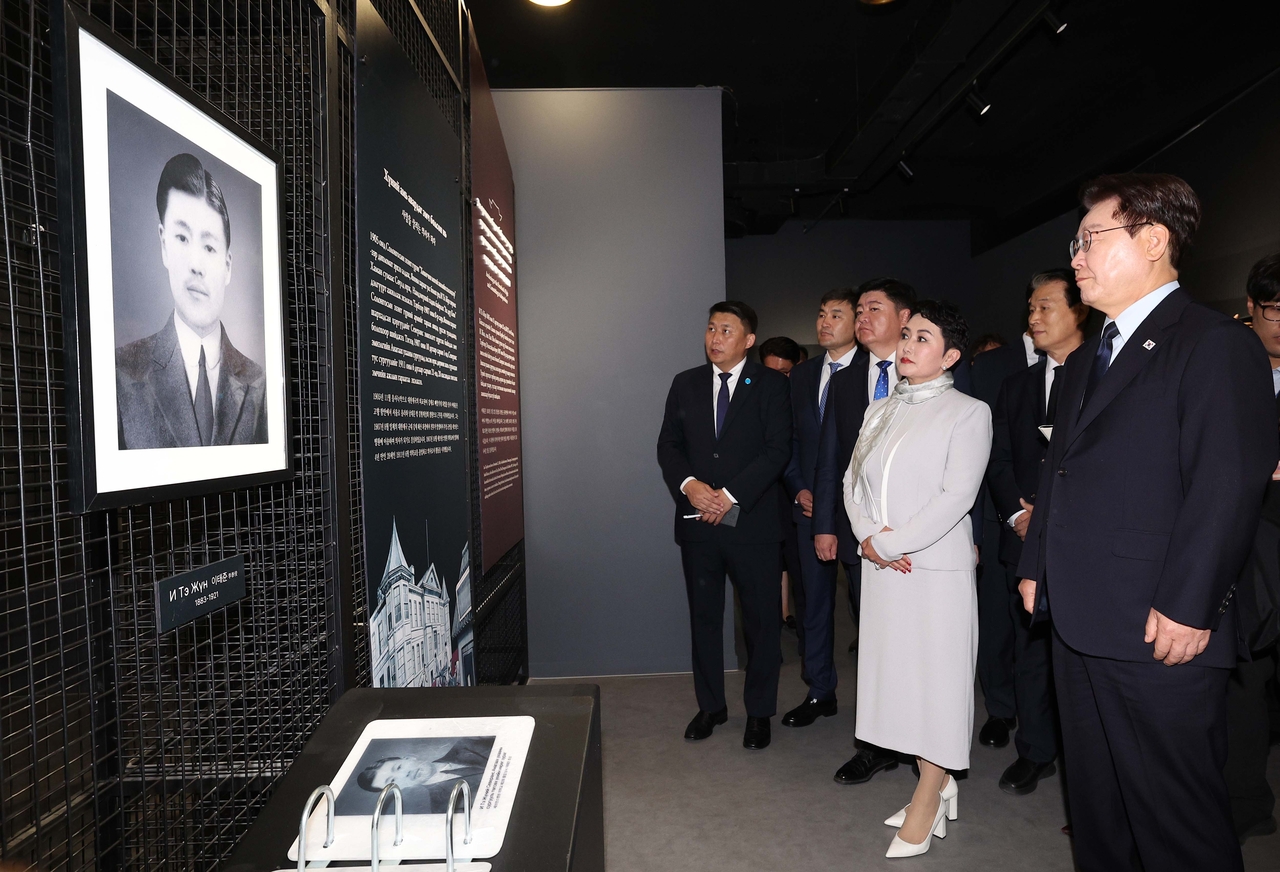
The memorial hall, opened in 2025 within the Lee Tae-Joon Memorial Park, displays photographs, documents and artifacts chronicling both his medical achievements and independence activities. The park itself was established in 2001 on land provided free of charge by the Mongolian government.
Lee’s visit followed Thursday’s summit with Mongolian President Ukhnaagiin Khurelsukh. During the meeting, the two countries signed a memorandum of understanding to jointly preserve and manage the Lee Tae-Joon Memorial Park and promote visits to the site as part of a broader effort to deepen people-to-people exchanges.
The two sides also signed an agreement related to the construction of Mongolia’s Second National Cancer Center in Ulaanbaatar, a project expected to expand bilateral cooperation in healthcare and facilitate the introduction of Korean medical technologies and AI-based healthcare solutions.
At a joint press conference following the summit, Lee highlighted the importance of preserving historical bonds represented by figures such as Lee Tae-Joon.
“By commemorating and preserving the historical assets of friendship between our two countries, including patriot Lee Tae-Joon, who devoted himself to the development of modern medicine in Mongolia, we will further strengthen the friendship and trust between our peoples,” the president said.
“I believe that passing on and developing these precious historical ties for future generations will serve as an important foundation for the sustainable development of Korea-Mongolia relations,” he added.