
 KB News Desk
Samsung, SK, LG, Doosan join Yeongnam push with W215tr for AI, robotics and data centers
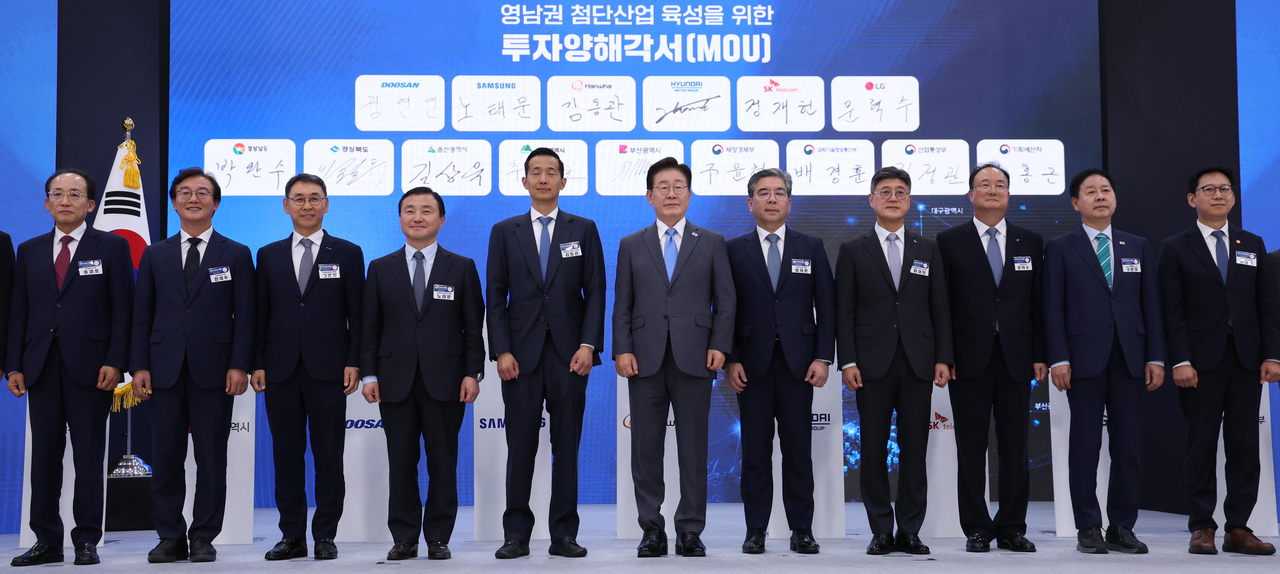
Major Korean conglomerates unveiled a combined 312 trillion won ($204 billion) in investment plans for the Yeongnam region in southeastern Korea on Friday, as the country pushes to build regional bases for AI-powered industries.
Hanwha Group and Hyundai Motor Group announced a combined 97 trillion won over the next decade, targeting aerospace, defense, future mobility and advanced manufacturing. Samsung Group followed with a 60 trillion won plan for AI transformation, robotics, batteries and shipbuilding, while SK Group committed 140 trillion won to AI data center infrastructure across the region.
LG will invest 9.4 trillion won by 2030 to strengthen AI infrastructure and advanced manufacturing, with LG Electronics expanding HVAC R&D in Changwon, LG Innotek boosting optical solutions and AI chip substrate capacity in Gumi, and LG Display reinforcing next-generation display production.
Doosan will invest about 5.1 trillion won to expand next-generation energy businesses, including small modular reactors, large nuclear power plants, and gas and hydrogen turbines.
The announcements were made Friday at a president-led briefing in Jinju, South Gyeongsang Province, the third regional session following similar events for Honam and Chungcheong after the government’s national report on three mega projects on Monday.
“Bold and active investments will be made in aerospace, defense and energy, including SMRs, batteries and displays,” President Lee Jae Myung said during the event.
“Through these investments, Yeongnam will move beyond being Korea’s top manufacturing base and take a step toward becoming the world’s leading manufacturing hub.”
Hanwha’s AI space vision
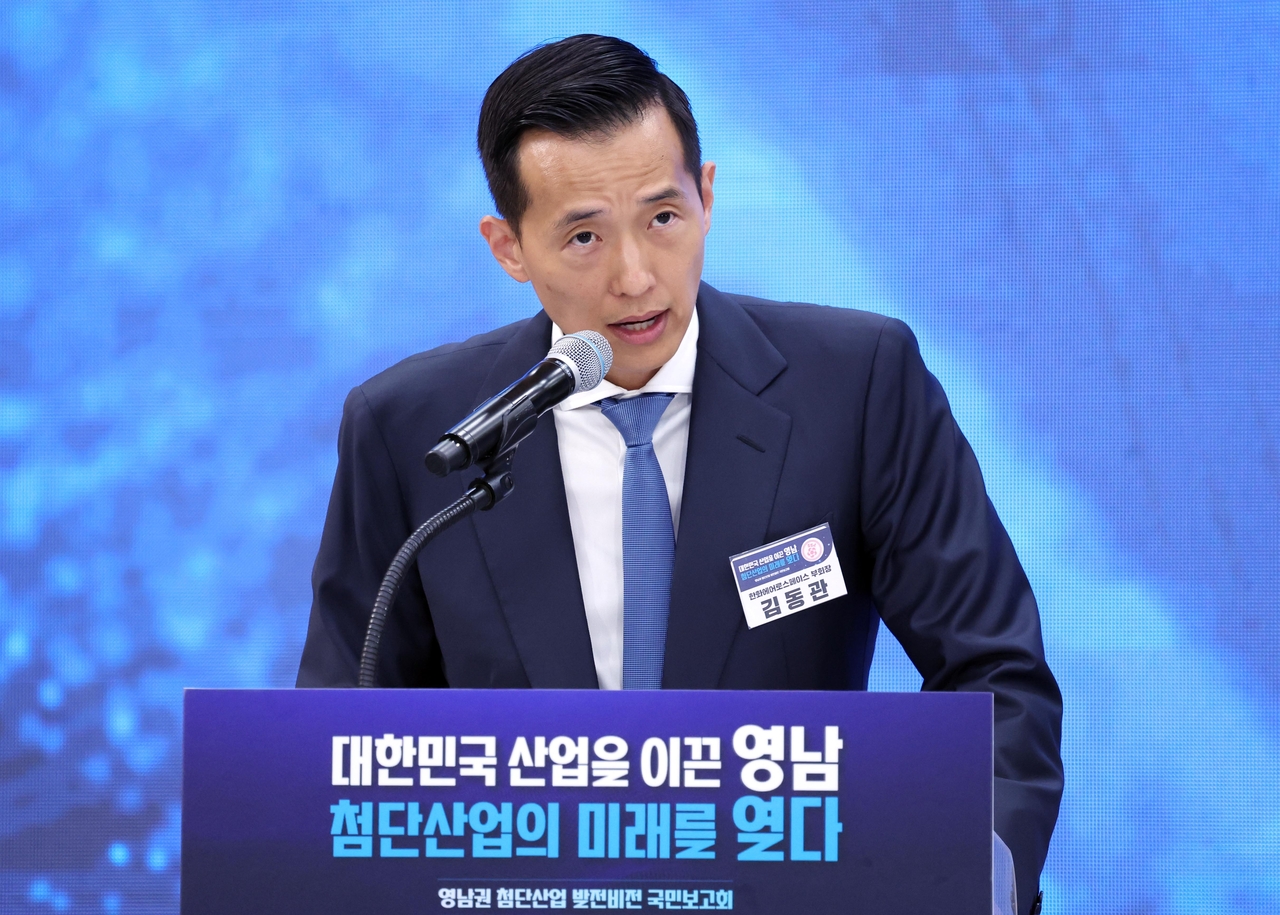
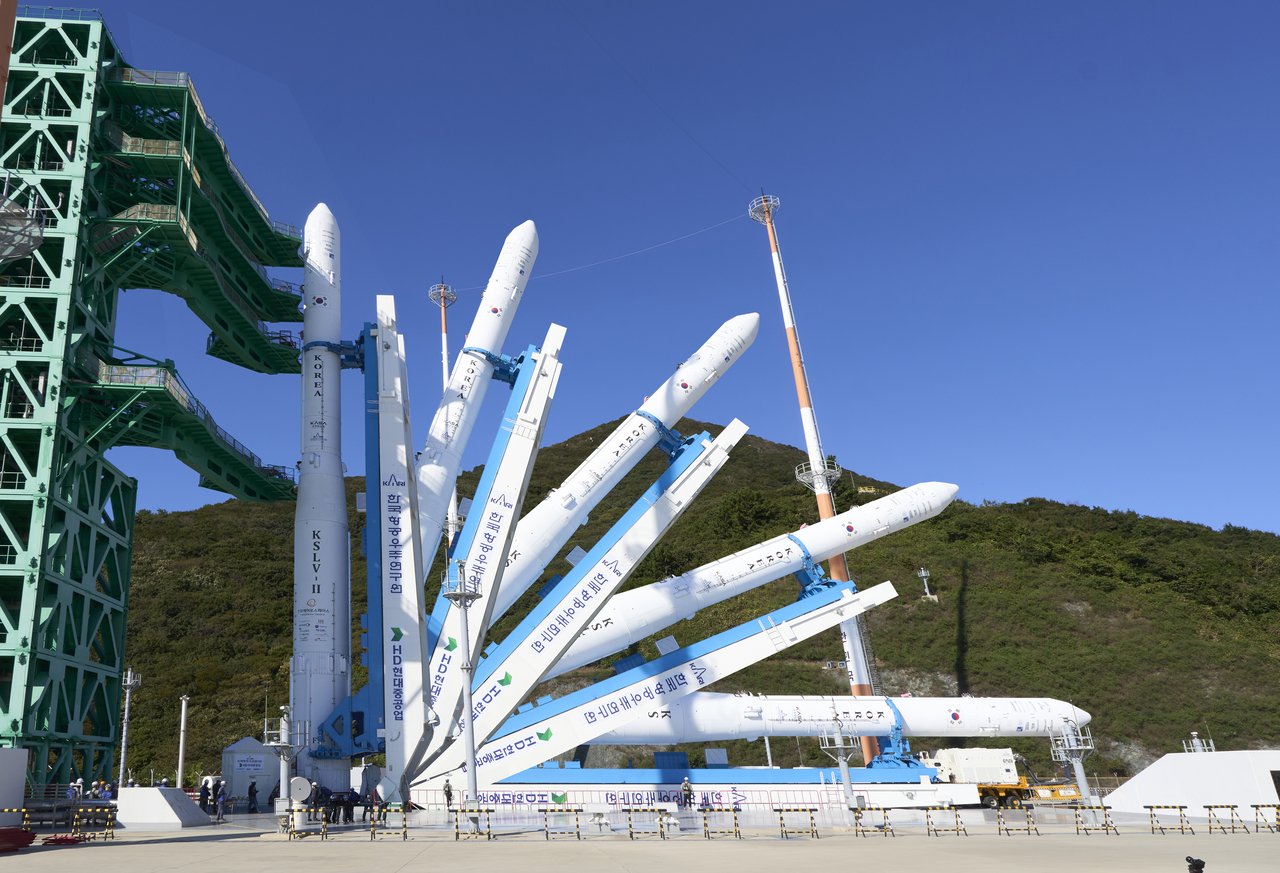
Hanwha pledged to invest 55 trillion won by 2040 to establish integrated AI space infrastructure that combines launch vehicles, satellite constellations and space-based data centers. Under the plan, AI will process and analyze the data collected in space and support the Korean military’s decision-making and operations.
“The first step toward securing ‘space sovereignty’ is developing our own launch vehicle,” Hanwha Group Vice Chairman Kim Dong-kwan said. Kim added that relying on foreign suppliers for satellite manufacturing and launches would leave the country unable to guarantee independent defense capabilities as space becomes an increasingly important military frontier.
Hanwha Aerospace plans to invest about 23 trillion won in homegrown launch vehicles, testing facilities and commercial launch infrastructure. Hanwha Systems will invest another 20 trillion won to build a low-Earth orbit synthetic aperture radar (SAR) satellite constellation, a space AI data center and a satellite communications network.
The company plans to build an integrated space network in which observation satellites collect intelligence, AI analyzes the data in orbit and communications satellites relay it in real time. Hanwha Systems aims to operate 64 SAR satellites by 2031 and deploy 192 communications satellites, with more launches planned to expand coverage and replace aging spacecraft.
Hanwha will also invest more than 10 trillion won in a secure defense AI data center in Changwon, South Gyeongsang Province, that integrates data from space, land, sea and air operations. The facility will support the development of 2 trillion won Defense OS, the company’s AI platform designed to power autonomous weapons systems, drones and manned-unmanned teaming capabilities.
Hyundai’s bet in future mobility
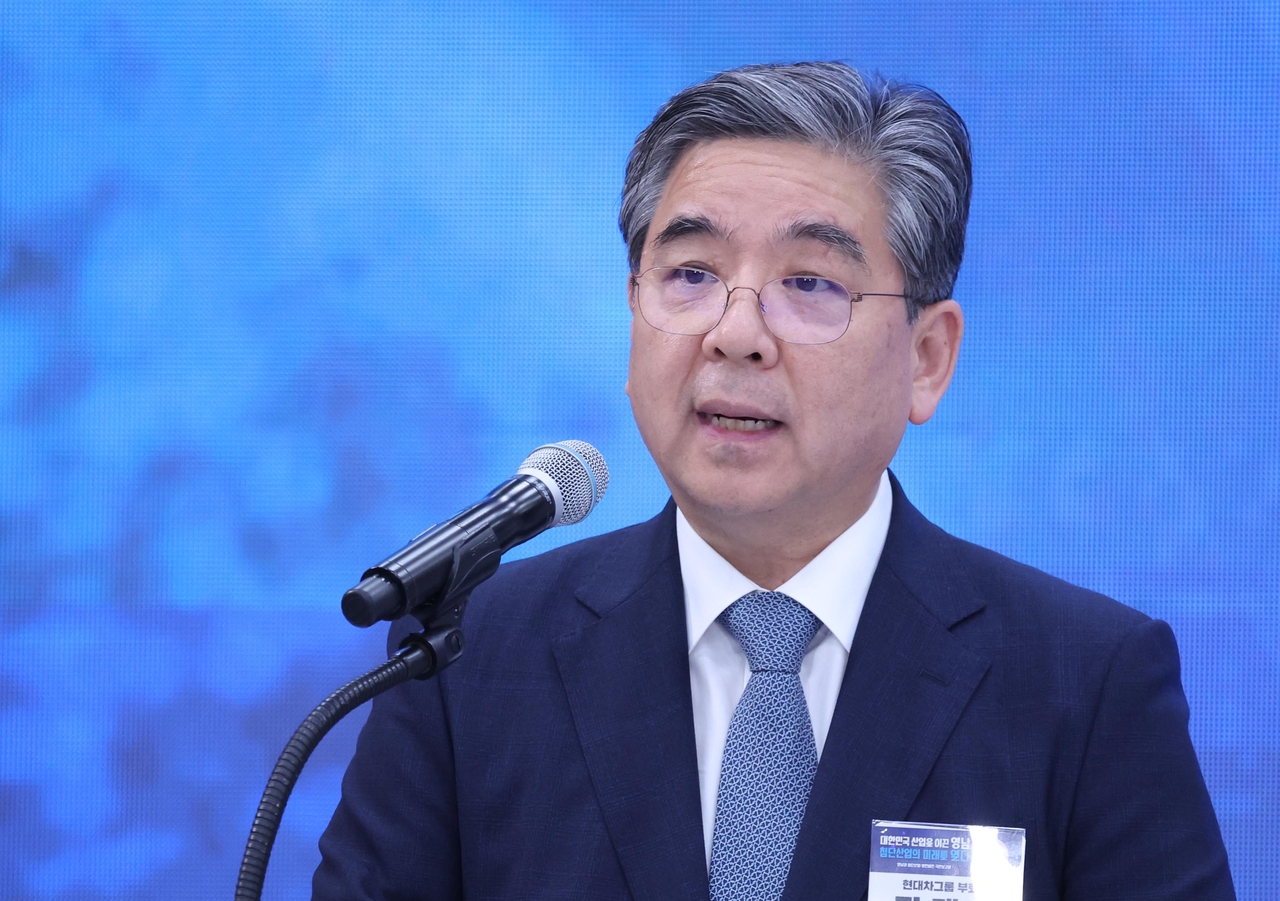
Separately, Hyundai Motor will invest 42 trillion won over the next 10 years to turn the Gyeongsang region into a hub for AI-defined vehicles, advanced manufacturing, aerospace technologies and clean energy infrastructure.
The automaker said it will build an AI manufacturing hub centered on its new Ulsan electric vehicle plant, scheduled to begin operations later this year. Hyundai aims to advance “AI-defined vehicles” that use AI to learn from vehicle data and make driving decisions autonomously, including Level 4 and higher autonomous driving technologies.
Hyundai also plans to expand production of key EV components through its affiliates. Hyundai Mobis will build a battery system assembly line in Ulsan and a motor and controller line in Daegu and North Gyeongsang Province. Hyundai Wia will establish an EV thermal management system plant in Changwon.
To speed up AI-driven manufacturing, Hyundai will deploy production-specific AI across its plants, using data from its global manufacturing network to optimize production, logistics and quality control, and strengthen its physical AI capabilities.
Beyond automobiles, Hyundai plans to develop advanced air mobility aircraft and launch vehicle technologies and AI-powered lunar rovers, drawing on its robotics and autonomous driving expertise. Supernal, Hyundai’s US-based advanced air mobility unit, will co-develop next-generation electric aircraft in Gyeongsang Province alongside its US operations.
The group also plans investments in small modular reactors, offshore wind and hydrogen production infrastructure to support Korea’s long-term energy security.
Hyundai Motor Group Vice Chair Chang Jae-hoon said the company aims to transform the Gyeongsang region, where the automaker has its roots, into a hub for future industries, contributing to Korea’s industrial competitiveness.
Samsung’s AI manufacturing vision
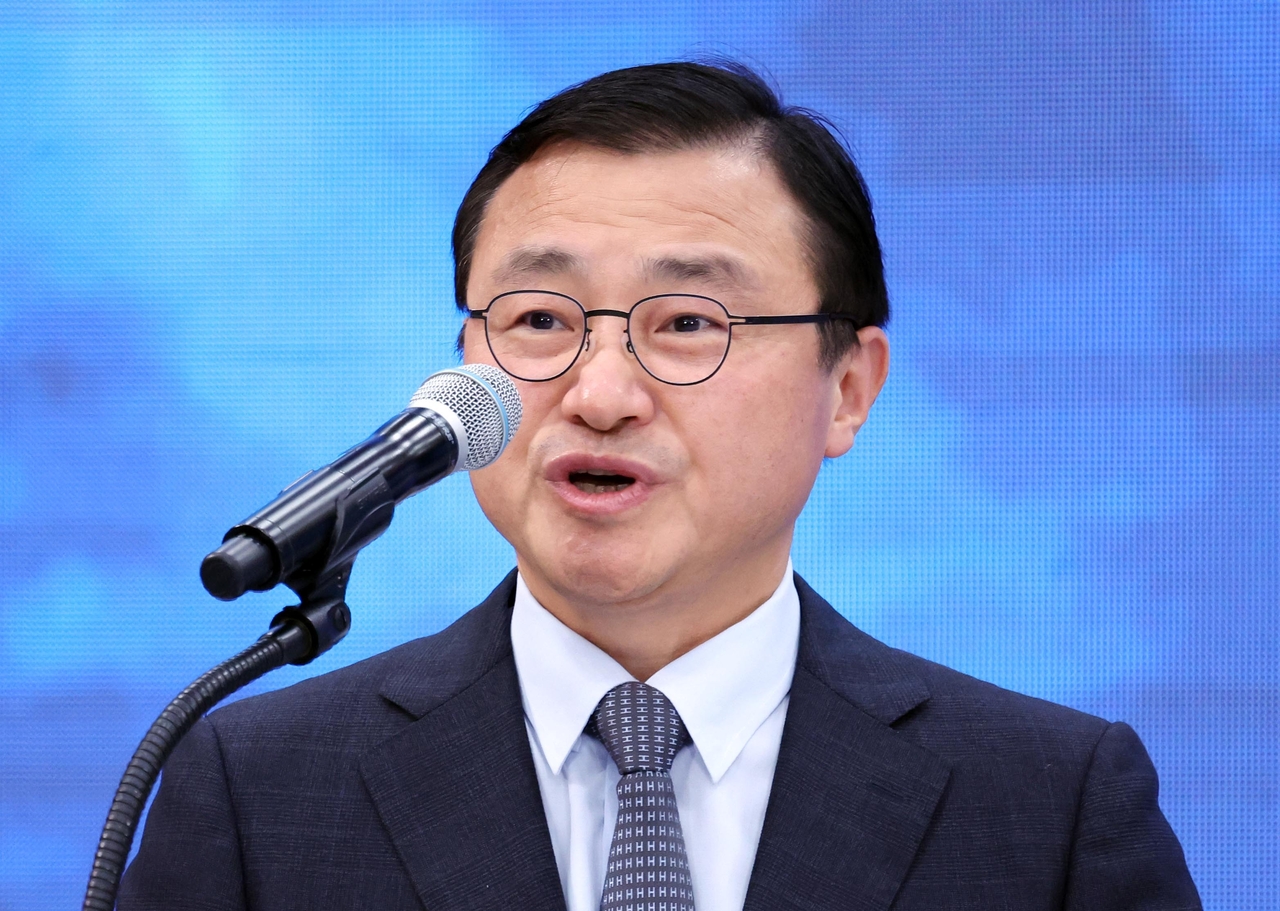
Samsung Group said it will invest about 60 trillion won to expand AI transformation, robotics, batteries, advanced components and shipbuilding infrastructure in Yeongnam.
In Gumi, Samsung Electronics and Samsung SDS will put 19 trillion won into humanoid robot production, AI-driven factories and data center infrastructure. In Ulsan, Samsung SDI’s 16 trillion won plan centers on all-solid-state batteries for humanoid robots and EVs, as well as ESS batteries.
Busan will receive 15 trillion won from Samsung Electro-Mechanics for AI server package substrates and Multi-Layer Ceramic Capacitor mother lines, while Samsung Heavy Industries’ 10 trillion won Geoje plan targets high-value ships and offshore infrastructure.
Unveiling the plan, Samsung Electronics President Roh Tae-moon said the group would apply AI transformation and robotics to Yeongnam’s key industries and turn the region into a global physical AI innovation cluster.
Roh also called for government support, including a specialized robotics zone, incentives and more state-led shipbuilding projects.
SK’s AI data center buildout
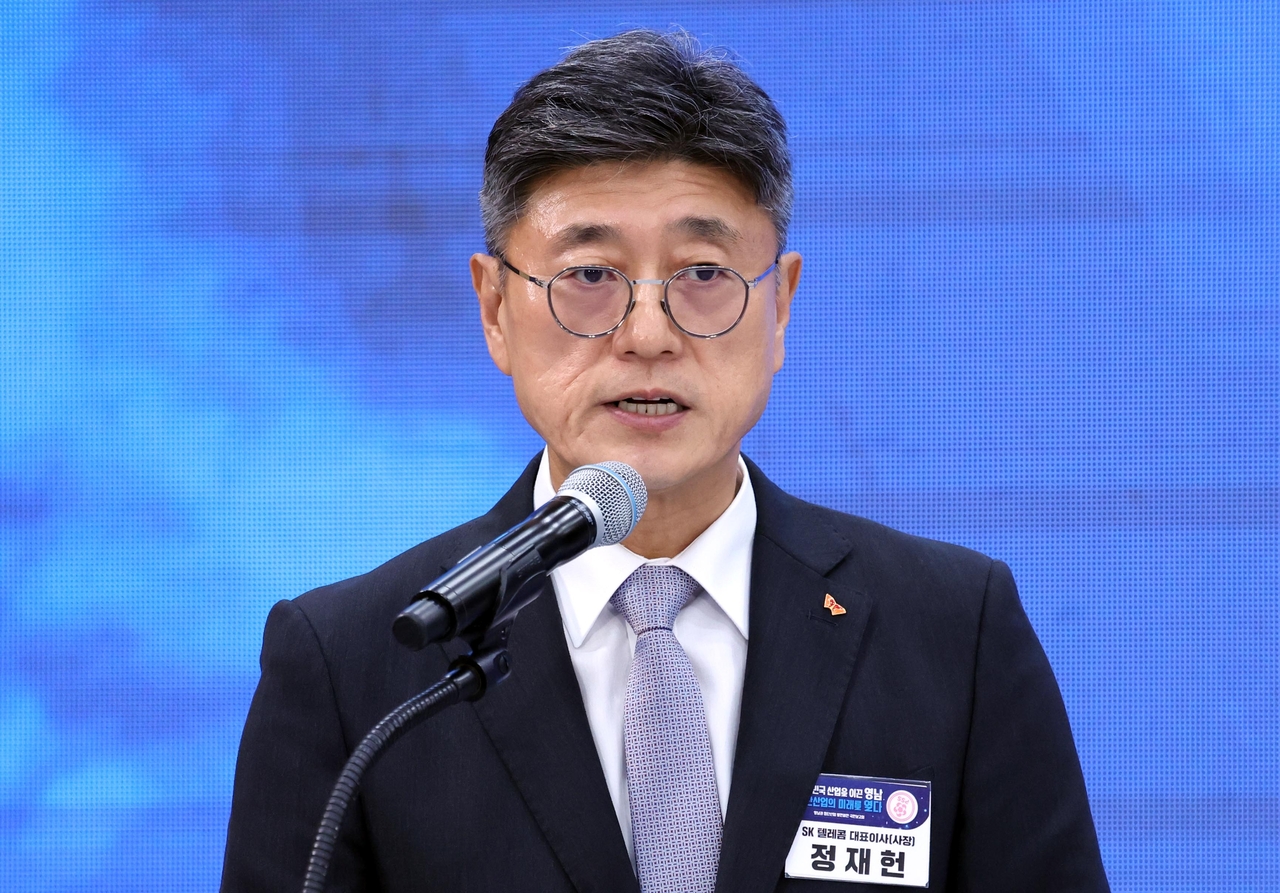
SK Telecom, the mobile carrier affiliate of SK Group, will invest 140 trillion won in Yeongnam to turn Ulsan into a gigawatt-scale AI data center hub.
The company has begun building a 100-megawatt hyperscale AI data center in Ulsan, aiming to start operations in the fourth quarter of next year. It plans to add 900 megawatts there and build more than 1 gigawatt of additional capacity elsewhere in Yeongnam in phases.
The project is the first step in SK’s broader plan to invest 1,000 trillion won nationwide to build 15 gigawatts of AI data center capacity. SK aims to bring 5 gigawatts online from 2029 before expanding to 15 gigawatts over the longer term.
SK Telecom CEO Jung Jai-hun said SK’s strengths in semiconductors, energy solutions and data center construction and operations would support the plan, adding that Yeongnam could become a global hub for manufacturing AI.