
 KB News Desk
Traditional perception of ‘normal’ family challenged, amid growing diversity in form of households
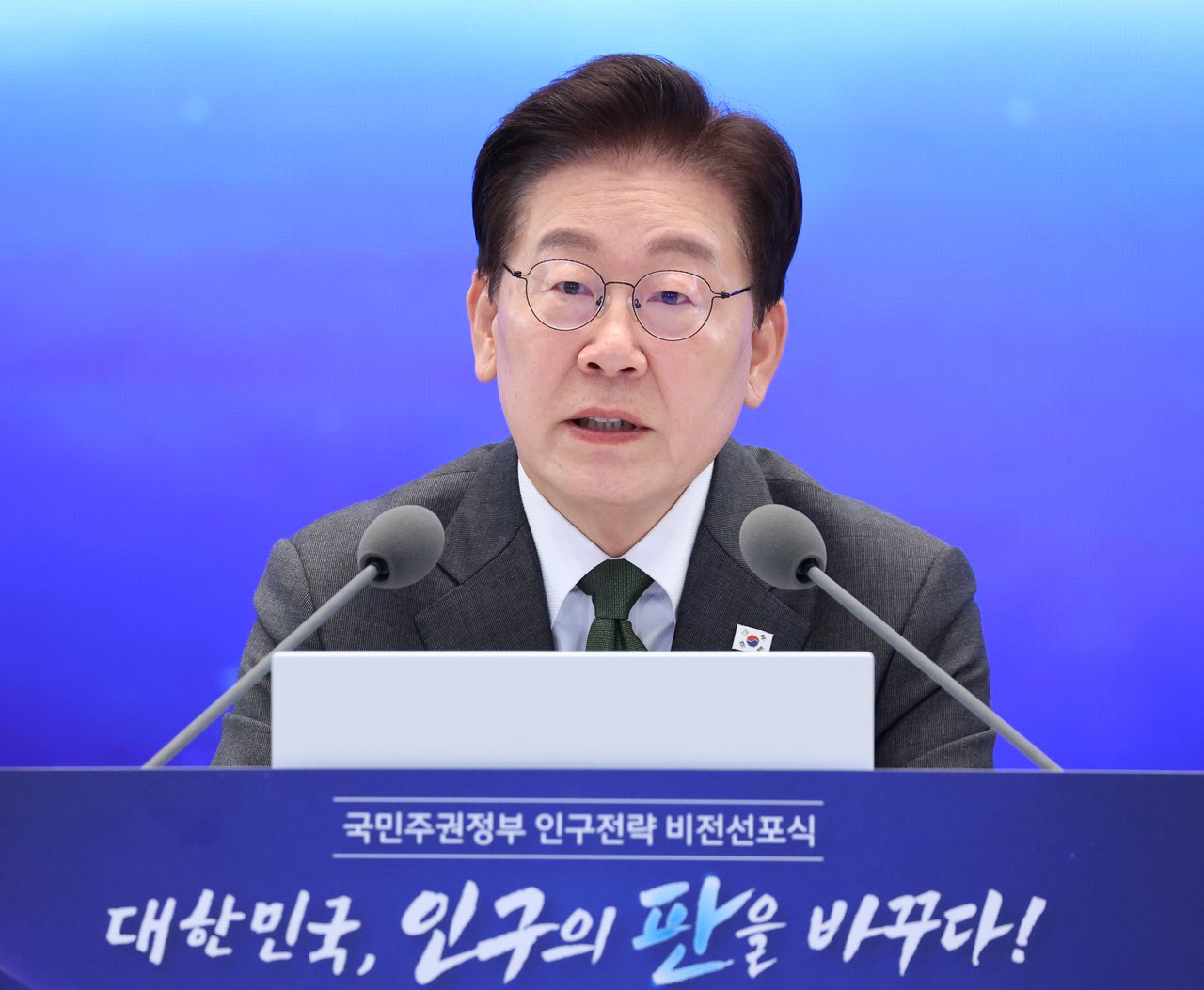
President Lee Jae Myung’s recent call for a broader discussion of family diversity has touched off talks over growing diversity in South Korea’s housholds, and how the social perception and legal protections are still mostly focused on the traditional form of the family.
Speaking Wednesday at an event unveiling the government’s population strategy, Lee questioned the practice of describing families formed through marriage between a man and a woman as “normal.”
He called for discussion of how far society should recognize and accept other family forms. This came amid public acceptance of diverse family forms has grown modestly, according to a Hankook Research survey conducted in May.
A majority accepted 10 of the 13 family types as “normal.” Alternative, same-sex and cohabiting families received less than 50 percent support. The survey used “normal” to explore public attitudes, not to judge families.
Acceptance of families headed by unmarried mothers rose from 56 percent in 2022 to 60 percent this year. For unmarried fathers, it increased from 54 percent to 59 percent.
Acceptance of same-sex families remained lowest at 28 percent among the family types surveyed.
“Attitudes toward unmarried mothers and fathers have improved, but there is still a long way to go, with some families still viewing their circumstances as a source of shame,” said Kim Min-jung, president of the Korean Unwed Mothers’ Families Association.
“At a time when the country is struggling with low birth rates, much more needs to change to ensure that these parents and their children do not face discrimination at school or in society,” Kim said.
Family by choice?
In South Korea, where blood ties and marriage have long defined family relationships, the idea of choosing one’s family remains unfamiliar. The rise of single-person households, however, has prompted calls to recognize relationships built on shared lives and mutual care.
South Korea had 8.24 million single-person households in 2025, accounting for 36.6 percent of all general households. Nearly 30 percent of those living alone were aged 65 or older.
An April report by the National Assembly Research Service highlighted the risks of social isolation and gaps in care among older adults living alone. It called for “legal changes to protect caregiving relationships beyond marriage and blood ties, covering medical care and housing.”
Public attitudes toward such relationships remain divided.
In the Hankook Research survey, 42 percent regarded people who share a home and livelihood without ties of blood, marriage or adoption — described as “alternative families” — as a “normal” family type. The share rejecting that description fell from 48 percent in 2022 to 41 percent this year.
Attempts to recognize such relationships have already reached the National Assembly.
In 2023, the country’s first life partnership bill was introduced, proposing that two unmarried adults who share daily life and care for one another be allowed to assume legal rights and responsibilities. But it failed to pass before the previous Assembly’s term ended in May 2024 and was discarded.
“Alternative family arrangements still require extensive discussion. We are strengthening support for unmarried mothers and fathers as part of our assistance for single-parent families, while continuing to study public attitudes toward increasingly diverse family forms,” an official at the Ministry of Gender Equality and Family told The Korea Herald.
Recognizing relationships outside marriage and blood ties would require discussions across several ministries, including those responsible for justice and health, the official added.
“Attitudes may appear more accepting, but conservative views persist. In a family-oriented culture, even choosing a spouse is still about how well that person fits into one’s family, not just personal compatibility,” Sung Miai, a professor at Korea National Open University.
“The idea of a ‘chosen family’ — people we choose to regard as family — remains less familiar in South Korea than in some other countries.”

![[단독] 한국외대, 베트남 외교아카데미와 복수학위 추진…연 20~30명 규모](https://korbiznews.com/wp-content/uploads/2026/10/news-p.v1.20261014.01b370138b1a4a5f9d748d831ca1480d_P1.png)