
 KB News Desk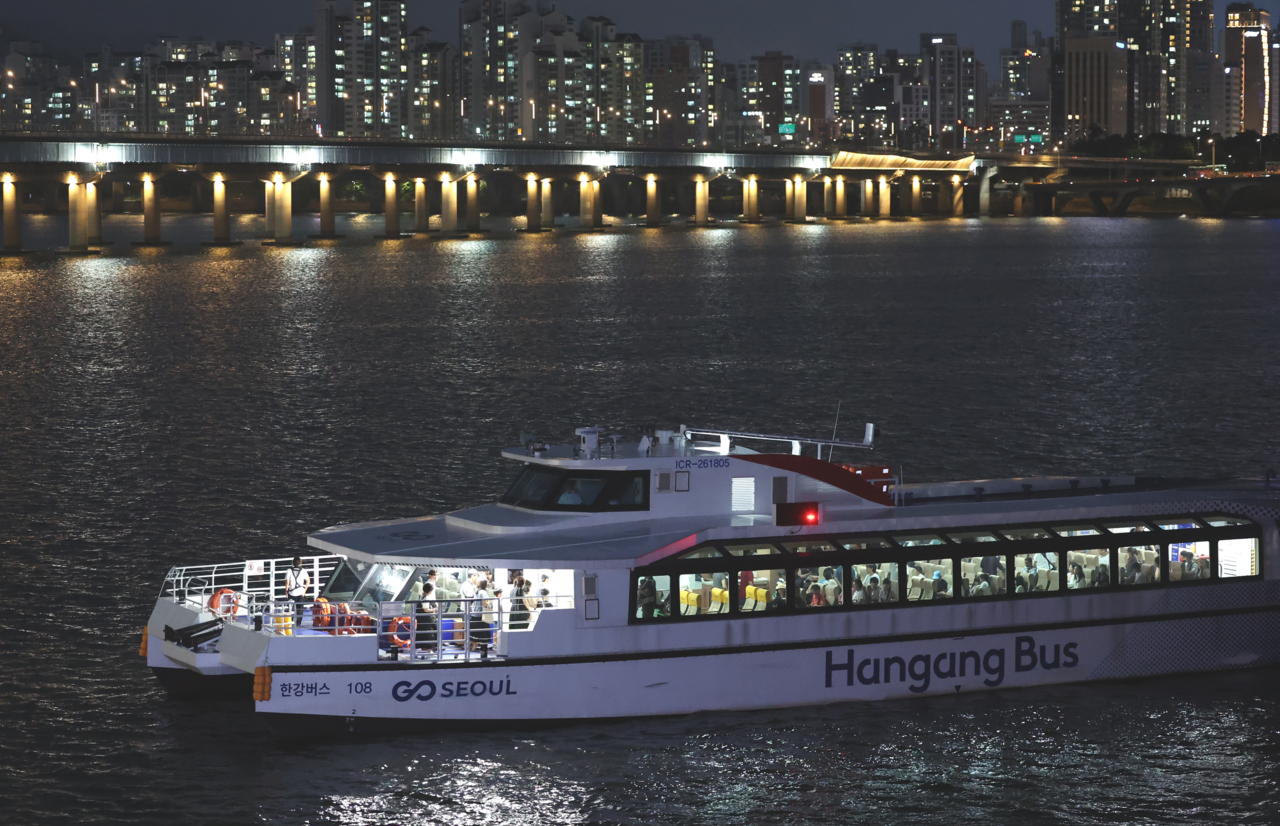
Seoul’s water transportation service Hangang Bus and the housing affordability crisis took center stage in the parliamentary audit of Seoul’s municipal government on Thursday.
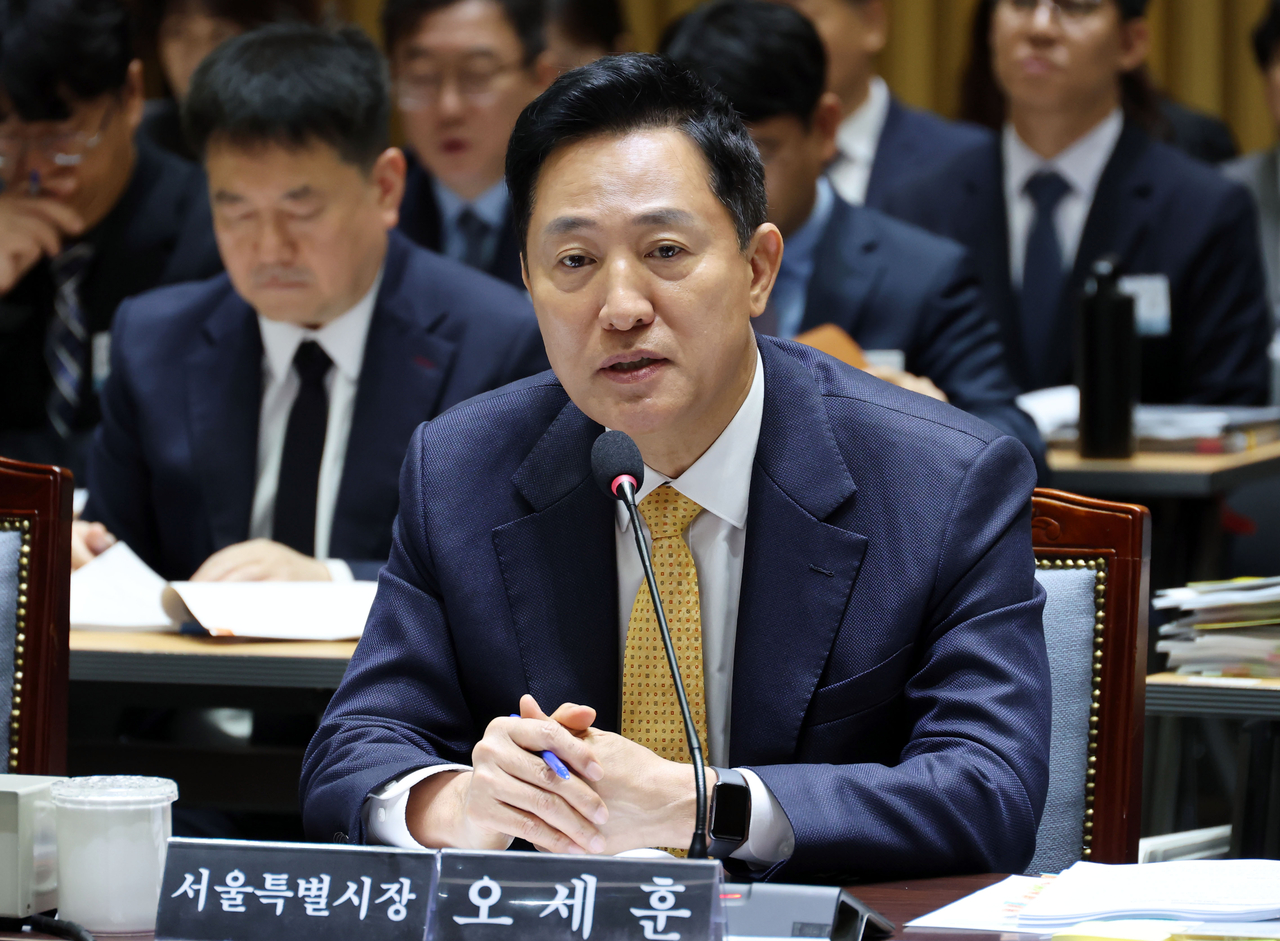
At the audit, ruling Democratic Party of Korea lawmakers targeted Seoul Mayor Oh Se-hoon, raising the possibility of his involvement in corruption allegations concerning Hangang Bus.
The main opposition People Power Party, of which Oh is a member, hailed the soft landing of the Hangang Bus operation, and instead focused on defending the mayor from attacks concerning not only personal corruption, but also over Seoul’s housing crisis.
Hangang Bus has faced a series of setbacks in fully launching its services. On Thursday, local media reports raised allegations of bribery related to the construction of its vessels.
According to the reports, an internal audit by the Seoul Metropolitan Government uncovered suspected bribery and prompted steps to request a police investigation. However, the city later attempted to destroy documents related to requesting the investigation in September 2025, according to the report.
The allegations center on claims that a vessel manufacturer paid 1.5 billion won ($1.11 million) in bribes to an official at Seoul Housing & Urban Development Corp., a shareholder in the Hangang Bus operator.
Oh said in the parliamentary audit at Seoul City Hall that he could not recall whether he had ordered the city government to file a request for a police investigation. Instead, he said the city chose to file for an audit of the Board of Audit and Inspection in October 2025, but the request was dismissed.
Rep. Park Ju-min of the Democratic Party, a longtime critic of the Hangang Bus project, said that should the allegations prove true, the matter “could escalate into a case of an administrative-level cover-up.”
“Given the circumstances, the possibility that Oh himself may have been involved cannot be ruled out,” he said.
Democratic Party Rep. Park Jeong-hyeon criticized Oh for his Hangang Bus project failing to deliver on its purposes of either public transit or tourism.
“The main goal is clearly to use Hangang Bus as a form of public transit … which is why the fares are relatively low,” she said. “However, the project has failed to meet its policy goals, and it is now facing allegations of bribery.”
A Hangang Bus ride is 3,000 won for an adult.
Oh said that he may “either request a police investigation or BAI audit as long as the allegations persist,” in response to People Power Party Rep. Kim Yea-ji’s inquiry as to what actions could be taken over bribery allegations concerning the vessel manufacturer.
Mayor blames president for Seoul housing prices
Oh, a longtime critic of the liberal Lee Jae Myung administration’s real estate policy aimed at cooling down the housing market with heavier taxes on homeowners and tightening loans on prospective homebuyers, used the parliamentary audit to repeat his call for the government to reconsider the direction aimed at pressuring homebuyers.
Oh said that the Lee administration’s patchwork regulations have rather undermined the predictability of housing policy, driving people to buy houses even at higher costs than normal, exacerbating the overheating of the housing market in the capital.
“I believe the key issue is whether people can have confidence in their own predictions,” the conservative mayor said in response to People Power Party Rep. Joo Ho-young’s inquiry. “Seoul residents lack such confidence, and the urge for speculative housing purchases before prices go up further emerges.”
This trend of Seoul’s overall housing price hike has also contributed to the shortage of rental housing in Seoul, he added.

![[Contribution] Harnessing the Korean Wave: Reflections on three years of strengthening Thai-Korean relations](https://korbiznews.com/wp-content/uploads/2026/10/news-p.v1.20261015.b6f00d1b72dc4cf7864cdda7f6e8b670_P3.jpg)