
 KB News Desk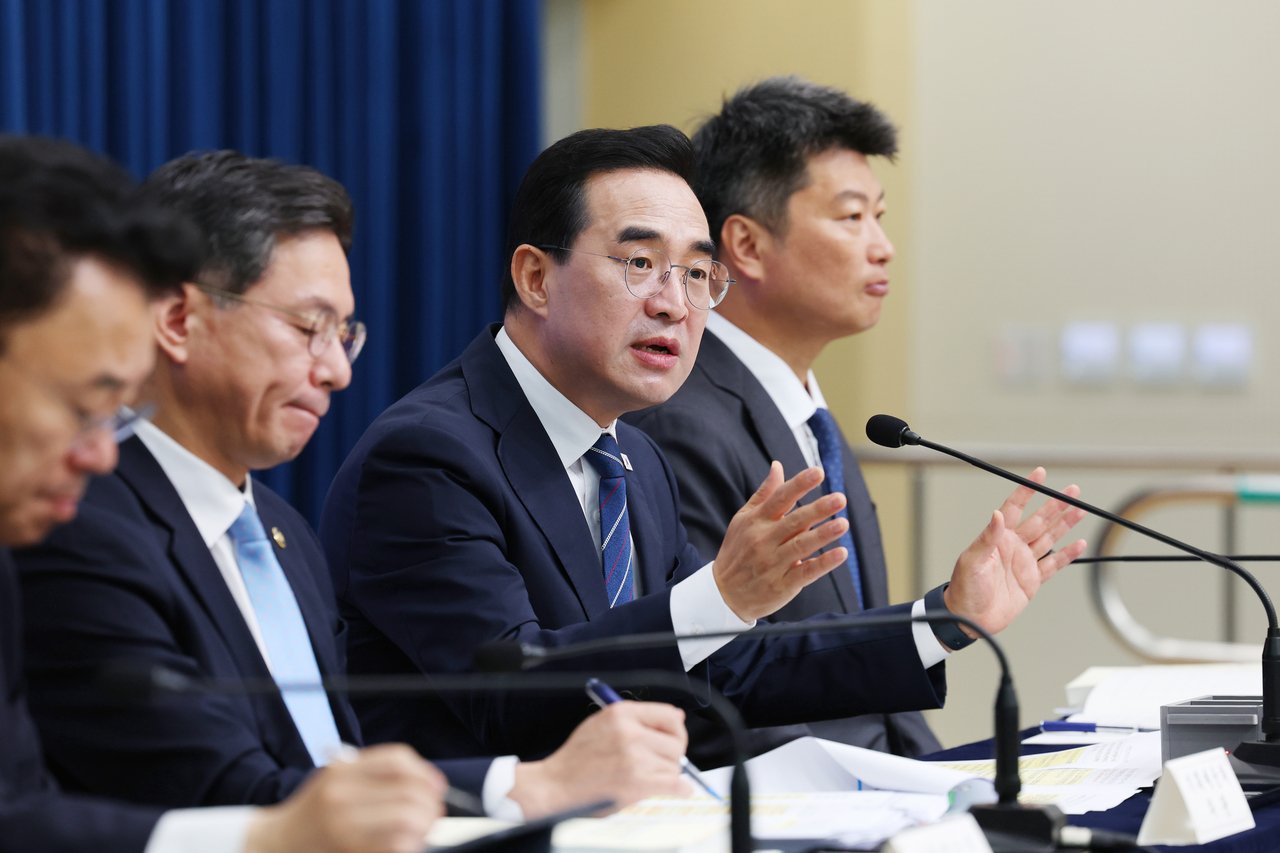
Expansionary fiscal plan pushes annual spending past W1,000tr by 2030
South Korea will raise government spending by 12.8 percent to a record 820.9 trillion won ($599.5 billion) in 2027, the fastest increase on record, as surging tax revenue gives Seoul room to expand investment in artificial intelligence, strategic industries and social programs.
Under the government’s medium-term fiscal plan, annual spending is projected to surpass 1,000 trillion won for the first time in 2030, reaching 1,005.2 trillion won, while national debt rises to 1,734.1 trillion won. The debt-to-GDP ratio, however, is expected to remain below 50 percent at 49 percent.
The Cabinet approved the budget plan Tuesday. Spending will rise by 93 trillion won from this year’s original budget of 727.9 trillion won.
“This is more than simply a plan for next year’s finances. It is a blueprint for where Korea should head as global competition for AI supremacy intensifies,” Planning and Budget Minister Park Hong-keun said during a press briefing in Sejong, Friday. “It is a strategic budget that puts tax revenue generated by the semiconductor boom into sweeping innovation across the economy and society.”
Tax surge reshapes fiscal spending
Total revenue is projected at 880.8 trillion won, up 205.6 trillion won from the 2026 original budget. National tax revenue is expected to jump 49.8 percent to 584.4 trillion won from 390.2 trillion won, driven by stronger corporate and income tax receipts from the semiconductor boom.
The newly created Future Response Fund will draw 162.3 trillion won from tax revenue projected to exceed the 10-year trend in domestic tax receipts. Of that, 45.4 trillion won will fund four areas: youth, growth engines, regions and education.
The government also plans to cut new government bond issuance by 12.5 trillion won from its initial plan, while keeping much of the remaining resources in reserve against future revenue swings.
“The remaining resources will be held in reserve to absorb sharp fluctuations in tax revenue or to reinforce fiscal capacity when tax revenue falls short,” Park said.
The government is also pursuing about 108 trillion won in spending on restructuring, including cuts and changes to discretionary and mandatory spending. More than 2,100 existing programs will be eliminated.
Where the money goes
The government identified five broad investment priorities: AI and three flagship projects, future growth engines, youth, inclusive growth aimed at easing disparities, and national safety and security.
Funding for semiconductors, physical AI and AI data centers, together with broader AI programs, will nearly double to 21.3 trillion won. Spending on future growth engines will rise 22.7 percent to 62.8 trillion won, covering strategic technologies, research and development and the energy transition.
Youth-related spending will jump 53.5 percent to 43.3 trillion won, including job experience and training for 720,000 young people and funding for 106,000 homes.
The largest package, aimed at spreading growth more broadly, will increase 36.6 percent to 117.1 trillion won, covering regional development, small businesses, vulnerable workers and welfare.
Safety and security spending will rise 24.8 percent to 38.3 trillion won, covering defense, disaster prevention and supply chain resilience.
Fiscal outlook beyond 2027
Despite the spending increase, the managed fiscal deficit is projected to narrow to 3.1 trillion won, or 0.1 percent of GDP, in 2027.
National debt will rise to 1,519.8 trillion won, but the debt-to-GDP ratio is projected at 48.3 percent.
“Despite the record level of fiscal spending, the managed fiscal balance will be the strongest in the past 20 years,” Park said, underscoring the government’s aim to pursue growth while strengthening fiscal soundness.
That improvement is not expected to last. Spending growth is projected to slow to 9 percent in 2028, 7 percent in 2029 and 5 percent in 2030, while the managed fiscal deficit widens to 1.5 percent, 2.5 percent and 2.9 percent of GDP, respectively.
The government said it does not assume the current semiconductor-driven surge in tax revenue will continue. National tax revenue growth is expected to slow to around 3 percent from 2028, while the medium-term debt outlook assumes real economic growth of about 2 percent.
“We will use bold fiscal investment today to spur growth and establish a virtuous cycle in which that growth, in turn, strengthens the fiscal base,” Park said.
The government will submit the proposal to the National Assembly by Thursday, with lawmakers required to pass the 2027 budget by Dec. 2.