
 KB News Desk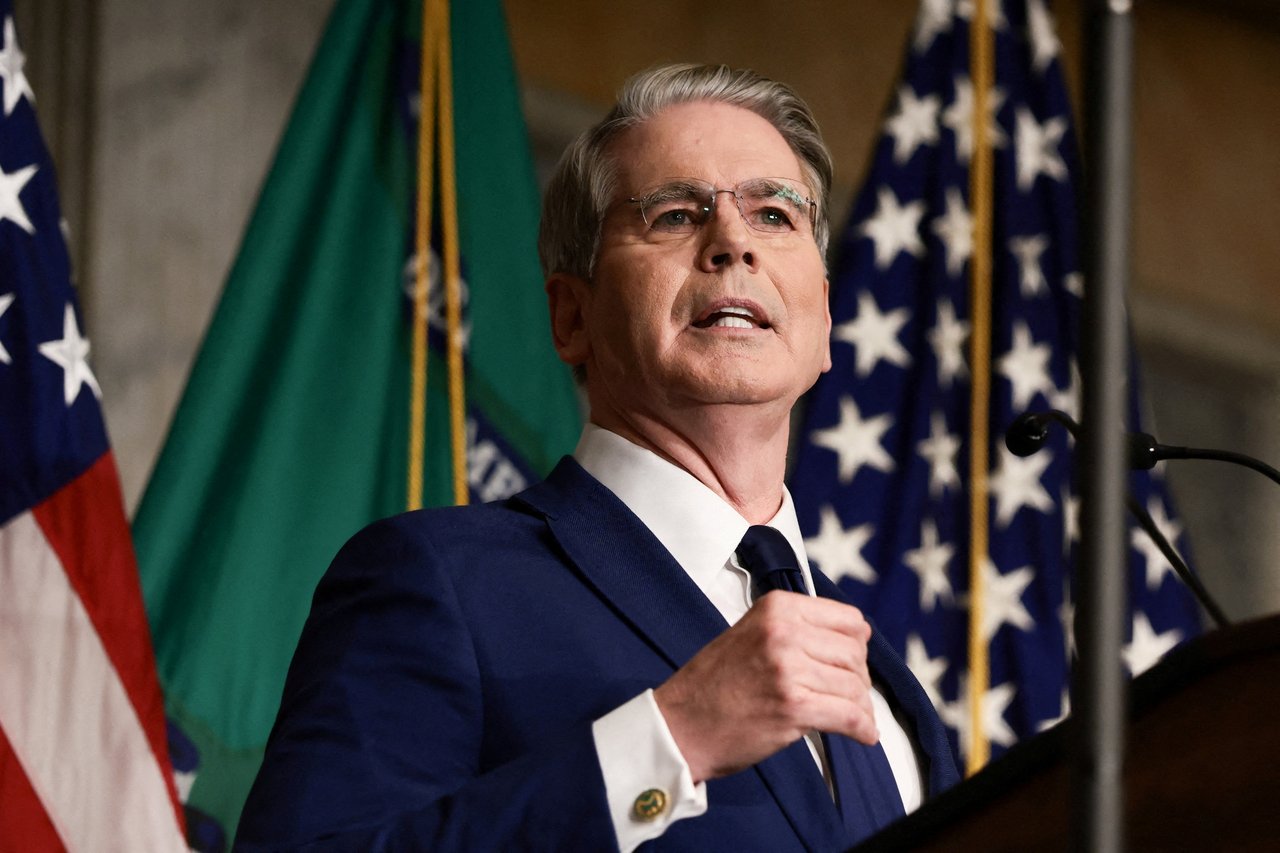
South Korea is assessing the potential impact of Washington’s sweeping new sanctions campaign against Iran, the Ministry of Foreign Affairs said Tuesday, as concerns grow that the measures could push up global oil prices and add another source of friction between the United States and China.
The US on Monday launched “Operation Economic Outcast,” expanding the risk of secondary sanctions for third parties doing business with Iran in five key sectors — digital assets, technology, gold, aviation and shipping — as Washington seeks to further isolate Tehran economically.
Asked how the expanded measures could affect South Korea, Foreign Ministry spokesperson Park Doo-soon said the government was closely following developments.
“The government is closely monitoring developments concerning the new sanctions against Iran announced by the US Treasury Department on Aug. 24,” Park said during a regular press briefing Tuesday.
“We plan to closely examine, together with the relevant ministries, the potential impact on our country of the new sanctions measures, including the five newly designated sectors,” he said.
The measures mark a significant expansion of Washington’s economic pressure campaign against Tehran, extending the threat of US penalties beyond Iranian entities themselves to companies and institutions in third countries that continue economic engagement with Iran.
Secondary sanctions are designed to deter non-US companies and institutions from doing business with sanctioned countries by threatening to restrict their access to the US financial system or market.
US Treasury Secretary Scott Bessent said Monday that any form of economic engagement with Iran could expose those responsible to the “full reach of American power,” saying that the goal is to “to sever every economic lifeline that sustains this tyrannical regime until Tehran stands alone.”
The US Treasury Department sanctioned nearly 60 entities, individuals and vessels across multiple jurisdictions over their alleged roles in Iran’s nuclear and missile technology procurement, cyber operations and oil revenue networks.
Washington is also stepping up direct pressure on other governments.
According to Bessent, US President Donald Trump has been calling world leaders with “specific requests” to end certain interactions with Iran, while officials from the Treasury and State departments and the US military are meeting their foreign counterparts to demand action.
“Every country has a defined timeline to shut down activities we have identified,” Bessent said. “If they do not take action, we will do so unilaterally through Treasury authorities.”
The expanded campaign is drawing particular attention to China, the dominant buyer of Iranian crude.
China purchases more than 80 percent of Iran’s oil exports, making Chinese refiners and other entities involved in the trade particularly vulnerable if Washington aggressively enforces secondary sanctions.
The US has previously demonstrated its willingness to target Chinese companies over such transactions, including by sanctioning independent Chinese refiners for purchasing Iranian crude.
Beijing, however, has consistently rejected unilateral sanctions that it says lack a basis in international law or authorization from the UN Security Council.
That has raised the possibility that Washington’s Iran campaign could develop into another point of confrontation between the world’s two largest economies, particularly if the Trump administration moves aggressively against Chinese entities involved in Iranian energy trade.
For South Korea, such an escalation could create risks on two fronts: energy prices and trade, an expert pointed out.
Kim Tae-bong, a professor of economics at Ajou University, said the most immediate concern would be further instability surrounding the Strait of Hormuz and its impact on international oil prices.
He noted that oil could climb above $100 per barrel if Iran tightens its control over shipping through the strategic waterway, with some projections reaching $120-$140 if the disruption spreads sufficiently to affect global crude supplies.
Higher oil prices would present a particularly difficult challenge for South Korea because of its heavy dependence on imported energy.
“An increase in oil prices does not simply cause inflation. It can also cause an economic downturn, potentially resulting in stagflation,” Kim said.
Such a scenario could complicate monetary policy by forcing policymakers to contend simultaneously with stronger inflationary pressure and weaker growth.
For South Korea, the economic fallout could become more severe if the US sanctions campaign develops into a broader economic confrontation with China, Kim said.
“In a worst-case scenario where this develops into a full-scale economic confrontation between the United States and China, South Korea’s current account would immediately take a significant hit,” he said.
China remains one of South Korea’s most important trading partners, meaning a sharp deterioration in US-China economic relations could weaken Korean exports and growth.
Heightened geopolitical and oil-market uncertainty could also put renewed downward pressure on the Korean won as investors seek the US dollar and other safe-haven assets, Kim said.
“If the exchange rate rises excessively, it becomes difficult to lower interest rates,” he said, pointing to another potential constraint on South Korea’s monetary policy.
The oil-price risk is particularly significant given the existing instability in the Middle East.
According to the Korea Institute for International Economic Policy, international crude prices could reach $117 per barrel if disruptions in the Strait of Hormuz persist. Under a worst-case scenario involving damage to energy infrastructure, prices could climb as high as $174 per barrel.
Higher crude prices would feed directly into production costs for South Korean industry.
Seoul has already begun preparing for possible energy supply disruptions.
The government issued the lowest-level “attention” alert under its resources security crisis warning system earlier this month and has been working to secure alternative import sources and prepare phased releases of strategic oil reserves.
The Ministry of Trade, Industry and Resources said Aug. 11 that it would continue supply stabilization measures until the situation in the Middle East had sufficiently stabilized.