
 KB News Desk
Former Teen Top member Bang Min-su saw a way to give idols more power against agencies, but fear, stigma and a lack of support stalled his efforts
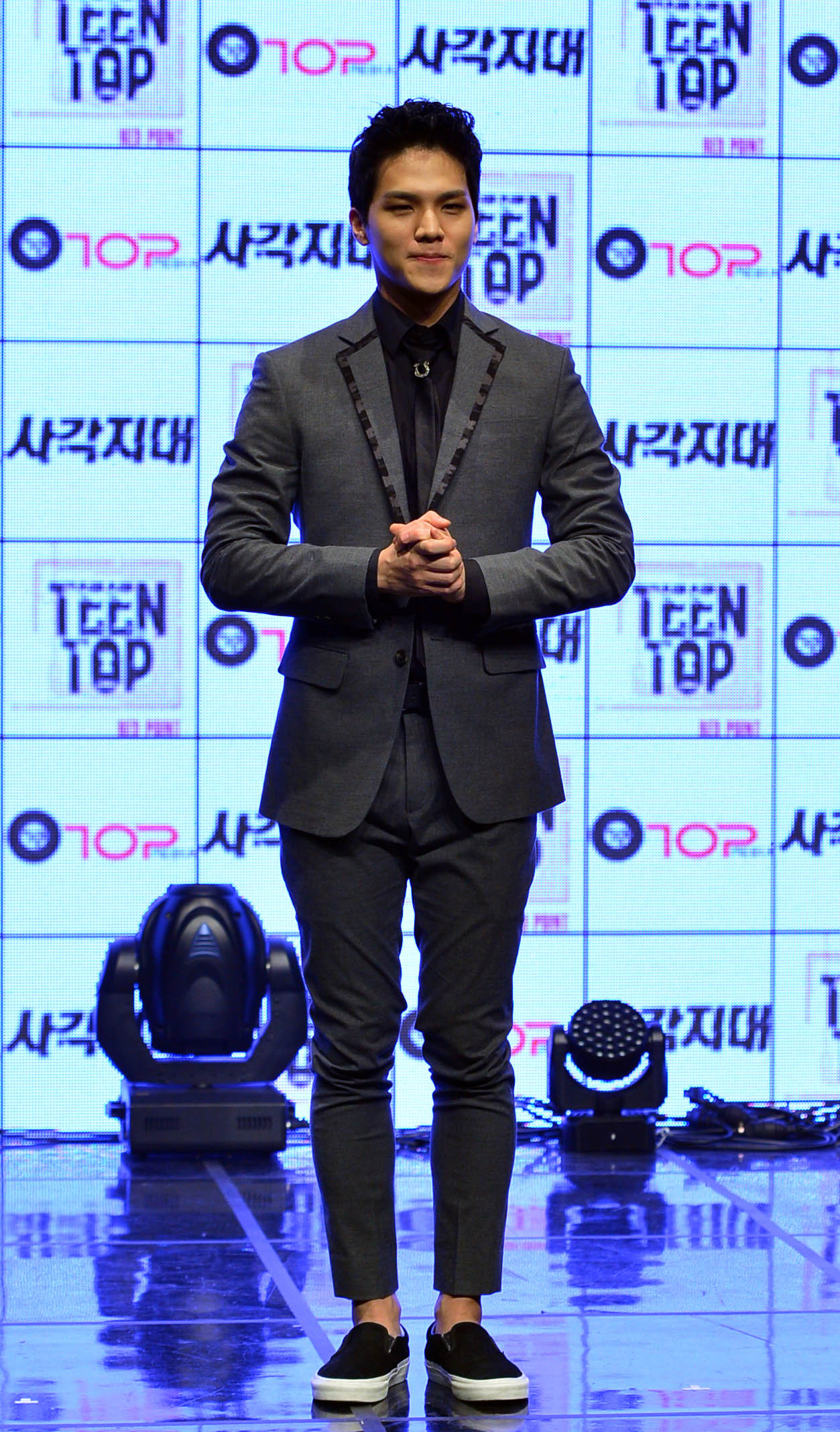
Bang Min-su, better known as C.A.P. from his days in boy band Teen Top, met Democratic Party of Korea youth policy researcher Seo Min-seon last year, when she approached him with an idea to form Korea’s first labor union for K-pop idols.
The 33-year-old former idol had already spoken publicly about labor and human rights issues in the K-pop industry. In September 2024, he testified at a National Assembly forum on the labor rights of child and teenage K-pop artists, raising concerns about unpaid work and calling for a minimum wage-like system for idols.
Seo said Bang was the only speaker at the forum who responded to her proposal to form a union. He joined the effort and became head of the Idol Labor Union Establishment Preparatory Committee.
In September, the two submitted a union establishment report to the Labor Ministry’s Seongnam office. But after a year of efforts, the plan fizzled. Only two people had signed up: Bang and Seo.
“The purpose was to improve treatment,” Bang told The Korea Herald on Wednesday. “That doesn’t just mean pay. It means treatment in every aspect.”
He pointed to harassment, unequal treatment and support in disputes with agencies as areas where collective action could make a difference.
The idea was hardly unprecedented overseas. In the US, SAG-AFTRA represents actors, singers and other media professionals, while Britain’s Equity represents performers including actors, singers and dancers. Both unions negotiate collectively over pay, working conditions and other protections.
The Korean initiative had a similar goal: to give performers a collective voice in an industry where individual artists can wield far less bargaining power than their agencies.
But the plan ultimately drew little support from the political establishment, entertainment industry or public.
Bang said one of the reasons that the plan was aborted was the reluctance of established entertainers to publicly join the effort, which further drained its momentum.
Several active performers contacted him after media reports about the union emerged. Some said they supported its goals but could not participate themselves.
The failed effort exposed a paradox. For rookie or struggling idols whose careers depend heavily on their agencies, publicly joining a labor organization can carry professional risks. Successful performers, meanwhile, have more independence but less immediate need for a union.
“Those who are already successful don’t need to do it,” Bang said. “Those who aren’t successful don’t have the power to participate.”
A negative public reaction also made some potential participants hesitant to join. Bang said comments questioning “why idols needed a union” discouraged supporters, while a “difference in values” between him and Seo was also a factor.
There were doubts over whether Bang was the right person to lead the union efforts.
After Bang left Teen Top, group member Niel said in a YouTube video with other idols that the band’s leader hit him so hard he needed stitches on his lip. Bang was leader at the time.
He also faced several controversies for things he said while he was an idol.
In 2012, while a member of Teen Top, he drew criticism after saying on Mnet’s “Wide Entertainment News” that he would give a son whatever he wanted but “hit” a daughter and keep her at home because “the outside world is dangerous.”
In 2023, he again faced criticism for swearing, smoking and complaining about fan criticism during YouTube livestreams. He also named TVXQ member Yunho, alleging that the senior singer had berated him for failing to greet him.
Asked whether she was aware of Bang’s past remarks, Seo said she had been a Teen Top fan in elementary school but had not followed Bang closely by the time they met.
“I liked Teen Top when I was in elementary school,” she said. “But at the time when I got in touch, he wasn’t active and had somewhat faded from the public eye, so naturally I wasn’t really sure what he had been doing during that period.”
There was also a lack of clarity about how the union would be funded, especially as trainees and rookie artists often have little or no income. One proposal even suggested that fans could pay for it.

Why union for K-pop idols?
On paper, the union’s goal was straightforward: to give newer and lesser-known idols a stronger voice when dealing with agencies that have greater financial and legal resources.
“If it is a company against an individual, the individual is at a disadvantage. That’s true across society,” Bang said.
He pointed to former NewJeans member Danielle’s ongoing dispute with Ador, the music label under Hybe and home to NewJeans, as an example of the imbalance in resources.
Bang said lengthy legal disputes can be particularly costly for young entertainers. An idol who enters a legal battle in their early 20s can lose several crucial years, even if they ultimately prevail.
For rookie and lesser-known idols, those years can be especially important. Their careers are often short, and they typically have little leverage in disputes with their agencies.
Recent research illustrates the short lifespan of many idol groups. A study by Kim Jeong-seop, a professor at Sungshin Women’s University, analyzed 1,182 boy and girl groups that debuted between 1996 and 2025. It found that an average of 39.4 groups debuted each year, while the average group remained active for just 4.12 years.
Idols also face a legal gray area over their status as workers, according to Lee Jong-im, a lecturer at Kyung Hee University’s Graduate School of Media and Communication.
“Contracts signed by child and teenage popular culture artists for entertainment services or management are often not regarded as employment contracts, meaning the Labor Standards Act often does not apply,” Lee said.
The issue came into focus in November 2024, when the Labor Ministry dismissed a workplace harassment complaint filed by then-NewJeans member Hanni, ruling that she did not qualify as a “worker” under the Labor Standards Act.
As a result, idols who are not legally recognized as workers under the act may not be entitled to protections tied to that status, including workplace harassment provisions.
The Korea Herald contacted several entertainment agencies for comment, but they declined. One agency official said the idea of an idol union was not something the agency was familiar with.
Fear, lack of support
Lee agreed with Bang that getting active idols and trainees to participate remains a major hurdle.
“Realistically, it is difficult for idols or trainees to speak openly about their circumstances and join,” she said.
She also said the effort went public too early and was driven by too few people. Organizers should have first built broader interest among idols, trainees and fans, in addition to initiating public discussion, before pursuing formal union status, she said.
Lee said the government should establish clearer standards for determining whether idols qualify as workers and strengthen legal protections governing relationships between agencies and artists. That includes making agency-artist contracts more enforceable and strengthening protections under the Labor Standards Act and the Popular Culture and Arts Industry Development Act, she said.
For Bang, what matters most is not establishing idols’ legal status as “workers,” but having enough members to form a union. He argued that the need for an idol union is even greater than for actors, who already have unions and generally have more freedom from their agencies.
Actors can often choose their projects and work with different production companies in addition to their management agencies, giving them greater autonomy and making them more akin to freelancers, Bang said. Yet they can still organize through unions.
Idols, by contrast, are generally tied to a single agency that arranges their work and directs much of their professional activity. In Bang’s view, that makes their case for collective organization even stronger.
“With idols, the company has the initiative,” Bang said. “There is clearly one side bringing them work and telling them what to do.”
So for Bang, what the attempt really lacked was stronger preparation.
“More participants, legal advisers, political support and, above all, greater involvement from established performers would be needed,” he said.
Asked whether he would try again, Bang said he would — but only reluctantly.
“I would, under enormous stress,” he said. “But if there were people who wanted to do it, I would.”