
 KB News Desk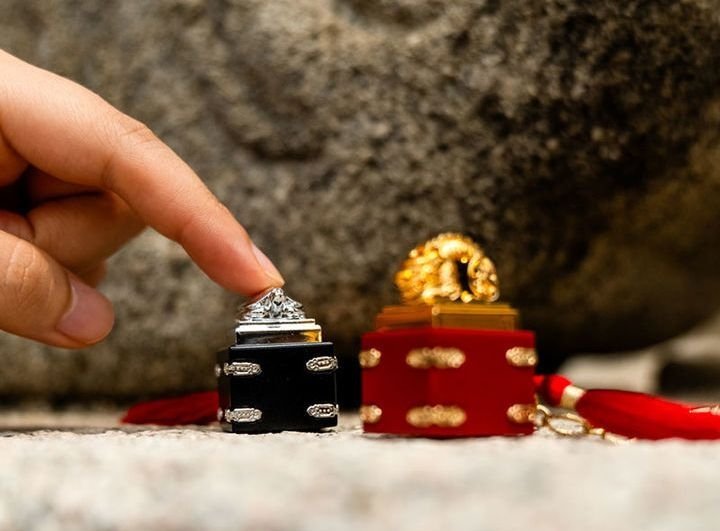
A keycap keyring modeled after two Joseon-era royal seals became the latest item from the National Museum of Korea’s merchandise line to sell out almost immediately after being restocked.
The National Museum Foundation of Korea said the second restock of the royal seal keycap keyring set went on sale online at 2:30 p.m. Thursday, and all 2,000 units were gone by around 3:30 p.m.
The set was selected through the 2026 Mu:ds design competition and reproduces two seals designated as treasures, Jegojibo and the gold seal bearing the posthumous title granted when the deposed King Danjong was reinstated. Both are rendered in metal and resin. The pieces can be fitted onto a computer keyboard as working keycaps or carried as a clicker-style keyring.
The set costs 38,000 won ($27), with a limit of one per customer. The foundation will continue selling small quantities on a first-come, first-served basis on weekends at the National Museum of Korea in Yongsan-gu, Seoul.
“Interest in our cultural heritage has grown, and I think people respond to how much of that traditional detail is carried in the design. It is also easy to carry around without feeling like a burden,” a foundation official said.
The format is part of the appeal. Keycap keyrings have been circulating among younger consumers in Korea for much of this year as small, portable stress-relief objects, alongside squishy toys.
The products deliver immediate tactile feedback and a clicking sound. They are also treated as accessories.
The royal seal reproductions follow the trend while doubling as heritage objects.
The brand name, a portmanteau of “museum” and “goods,” covers merchandise developed from the collections of the National Museum of Korea and its regional branches.
Earlier releases have drawn similar demand. A magpie and tiger badge, based on the folk painting motif that gained wider recognition alongside the Netflix animated film “KPop Demon Hunters,” crashed the foundation’s website last year and sold about 90,000 units. Meanwhile, a color-changing soju cup set modeled on the tipsy scholars in Kim Hong-do’s late 18th-century painting “Welcoming Banquet of the Governor of Pyeongan” sold 60,000 units.
Beach towels with the king’s dragon robe pattern and brooches based on the Silla-era gold crown have also drawn attention.