
 KB News Desk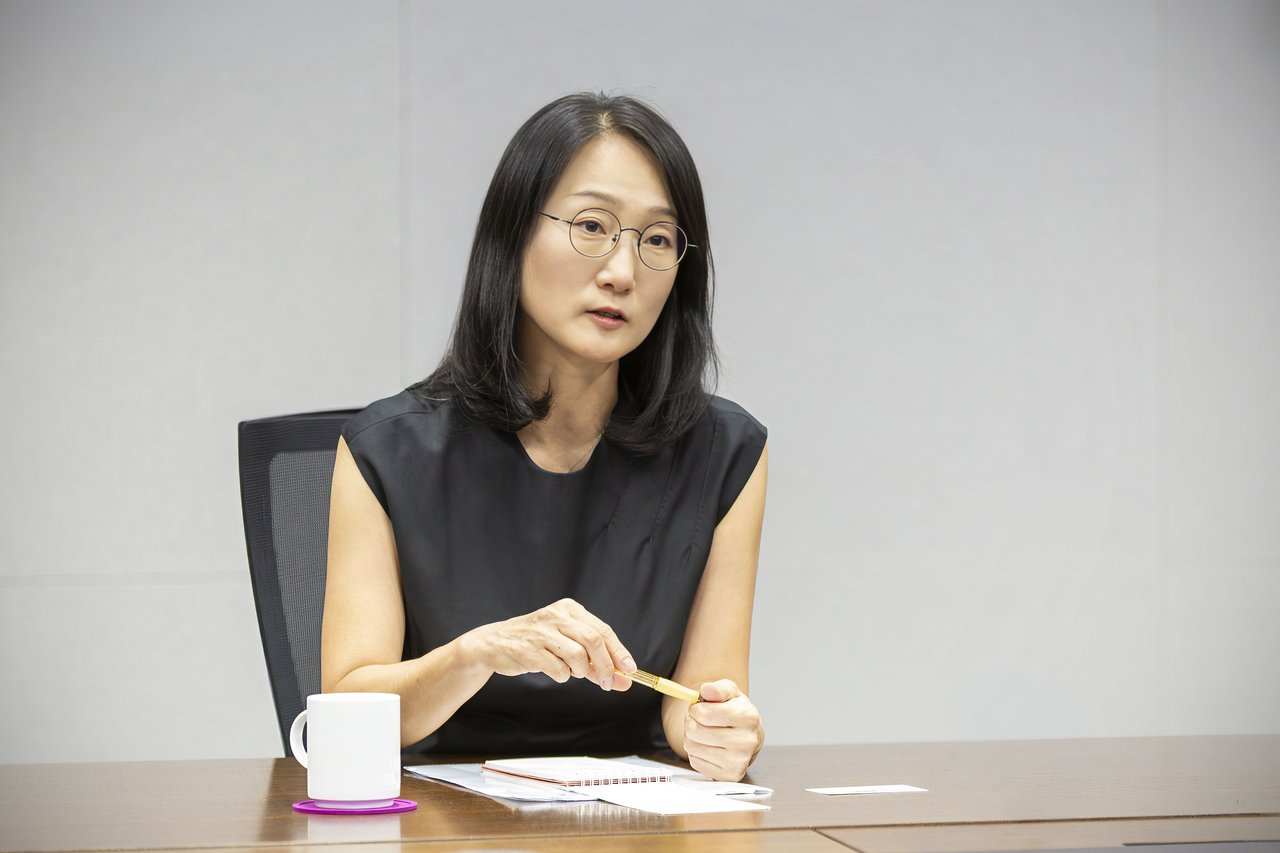
Specialist urges world’s third-largest pension fund to turn reform rules into action
South Korea still has a long way to go to eliminate the Korea discount, with the National Pension Service positioned to drive the next phase of corporate governance reform, governance specialist Park Yoo-kyung said.
Park spent 17 years overseeing responsible investment and corporate governance in the Asia-Pacific region at APG, the asset manager for Dutch pension fund ABP. She currently serves as a board member and audit committee chair at the Tara Climate Foundation.
She has also been nominated by MBK Partners and Young Poong as an audit committee candidate at Korea Zinc’s extraordinary shareholders meeting in September.
Park said the NPS should not focus simply on entering new markets such as fund-based retirement pensions. With 1,848 trillion won ($1.32 billion) in assets, the world’s third-largest pension fund should instead use its influence to lead Korea’s responsible-investment agenda.
“If you’re the world’s third-largest pension fund, you need to think like the world’s third-largest pension fund,” Park said in an interview with The Korea Herald in Seoul on Tuesday. “It is time to start setting the agenda. When the NPS moves, asset managers and companies will follow.”
The NPS should link its evaluations of outsourced asset managers directly to capital allocation, Park said, rewarding strong performers with more assets and withdrawing mandates from poorly rated firms.
She attributed the Kospi’s rise to 9,000 not only to strong earnings at Samsung Electronics and SK hynix and enthusiasm over artificial intelligence, but also to capital market reforms that encouraged investors to stay.
“AI lifted the Kospi, but capital market reform kept investors from leaving,” she said.
For the rally to produce a lasting rerating, governance improvements must extend beyond a handful of large companies and become standard practice at least across the Kospi 200, Park said.
She identified subsidiary listings and weak shareholder returns as major sources of the Korea discount, calling the listings “the pinnacle of the valuation discount.”
Boards must also become more transparent and play a meaningful role in balancing investment, dividends, employee compensation and shareholder returns, she said.
She rejected the business community’s characterization of stronger shareholder rights as an infringement on management control.
Park also called on the Financial Services Commission to take direct responsibility for the stewardship code and corporate governance reform, while creating a safe harbor for legitimate shareholder activism.
“The FSC needs to drive this directly,” she said.
Korea has already built much of the institutional framework needed to improve its capital market, Park said. The priority now is execution.
“When the NPS moves, asset managers move, and companies move,” she said. “It is time to stop making new systems and start executing them.”