
 KB News Desk
Government officials are weighing greater flexibility for chipmakers even as Samsung Electronics and SK hynix make limited use of existing exemptions
A debate over whether South Korea should loosen its 52-hour workweek for the semiconductor industry is intensifying as the government pushes a major chip project in the country’s southwest.
At the center of the debate is a striking gap between calls for greater flexibility from parts of the business community and the government, as well as the limited use by major chipmakers of an existing scheme that already allows them to exceed the 52-hour limit.
According to Rep. Lee Yong-woo of the ruling Democratic Party of Korea on Wednesday, the Ministry of Employment and Labor has received only four applications from semiconductor companies for a special overtime scheme allowing extended working hours for up to six months.
Under a 2018 revision of the Labor Standards Act, workers are generally limited to 40 hours of regular work and up to 12 hours of overtime per week, creating a weekly limit of 52 hours.
However, a special overtime scheme introduced for semiconductor research and development workers in March 2025 allows employers to extend working hours beyond the 52-hour weekly limit under certain conditions, including a surge in workload or R&D deemed necessary to strengthen national competitiveness.
The six-month scheme allows employees to work up to 64 hours a week during the first three months and up to 60 hours a week during the following three months.
Samsung Electronics has applied twice for the six-month scheme, while SK hynix has not applied, according to Lee’s data. For the shorter three-month scheme, Samsung applied 20 times and SK hynix five times between March 2025 and June 2026.
The issue has gained urgency with plans for a semiconductor mega special zone in the Gwangju-South Jeolla region. Some voices in the business community and government have argued that Korean chipmakers need greater flexibility in working hours to compete with overseas rivals.
The existing special overtime scheme requires companies to meet specific conditions and receive government approval. Broader measures now under discussion could give companies more flexibility without relying on such case-by-case exemptions.
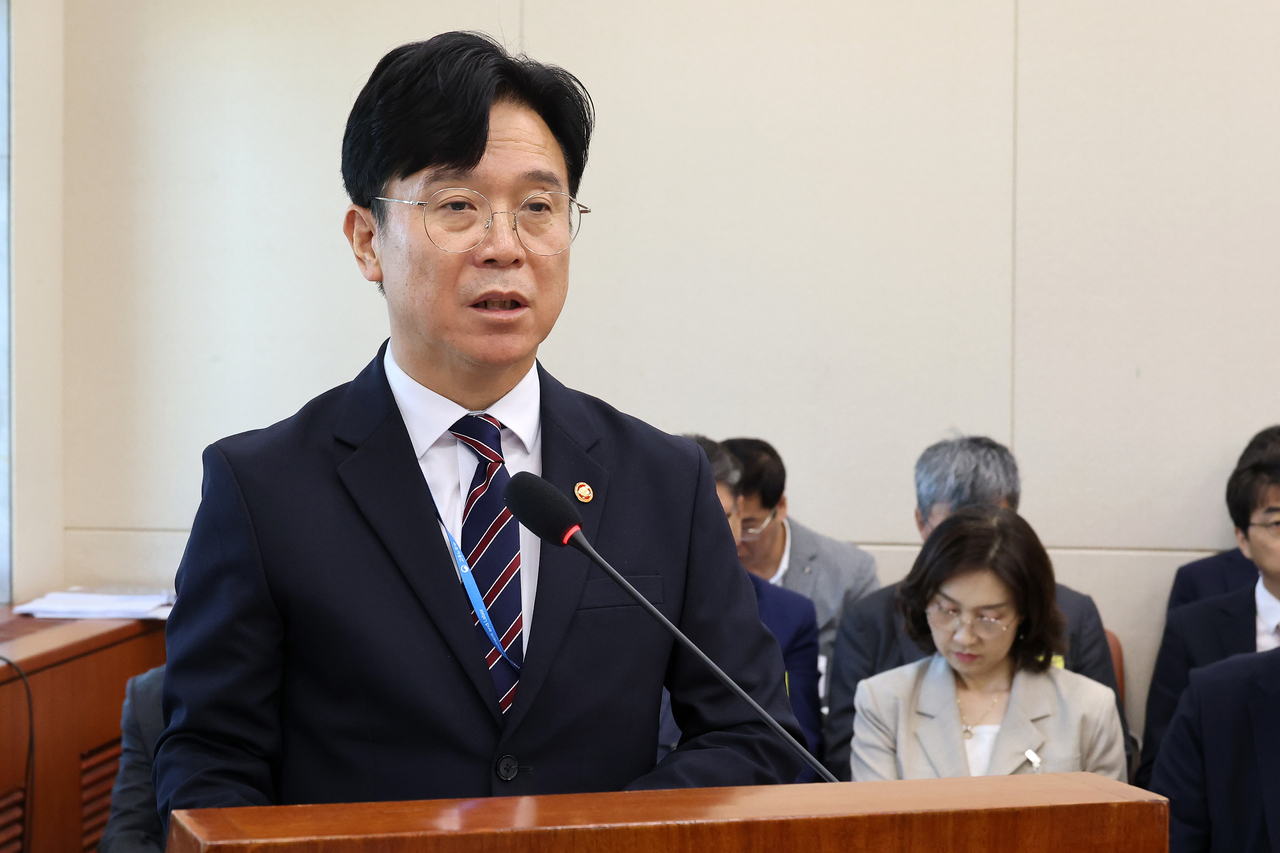
Trade Minister Kim Jung-kwan has backed greater flexibility.
At a discussion in Seoul on Aug. 6, Kim said the 52-hour rule should not constrain workers willing to work longer. He cited an anecdote about Chinese information technology workers asking their employer to permit them work more than 12 hours a day for six days a week to compete with rivals.
“The 52-hour rule should not weigh on those who are willing to work more,” Kim said. He also argued that working-hour regulations should be made more flexible not only for semiconductors but also for other cutting-edge industries, including R&D and startups.
The differing positions within the government became clearer at the National Assembly on Wednesday.
Kim told the parliamentary Trade, Industry, Energy, SMEs and Startups Committee that the government was discussing various options, including a “white-collar exemption” from the 52-hour limit and more flexible working-hour arrangements.
Labor Minister Kim Young-hoon, appearing before a separate parliamentary committee the same day, took a different position, arguing that companies should first focus on improving productivity rather than further relaxing working-hour rules.
The disagreement has fueled speculation about divisions within the government, but President Lee Jae Myung has urged caution in interpreting the differences.
A senior presidential official said Monday that an exception to the 52-hour workweek in the mega special zone would require discussions and agreement among regional businesses, labor groups and other stakeholders.
Lee later rejected suggestions of a split within the government.
“I believe coordinating different positions through reasonable debate should be regarded as part of the democratic process,” Lee said during a Cabinet meeting at the Government Complex Sejong on Tuesday. “It is not desirable to treat the fact that ministries have different views on pending issues itself as a problem.”