

 KB News Desk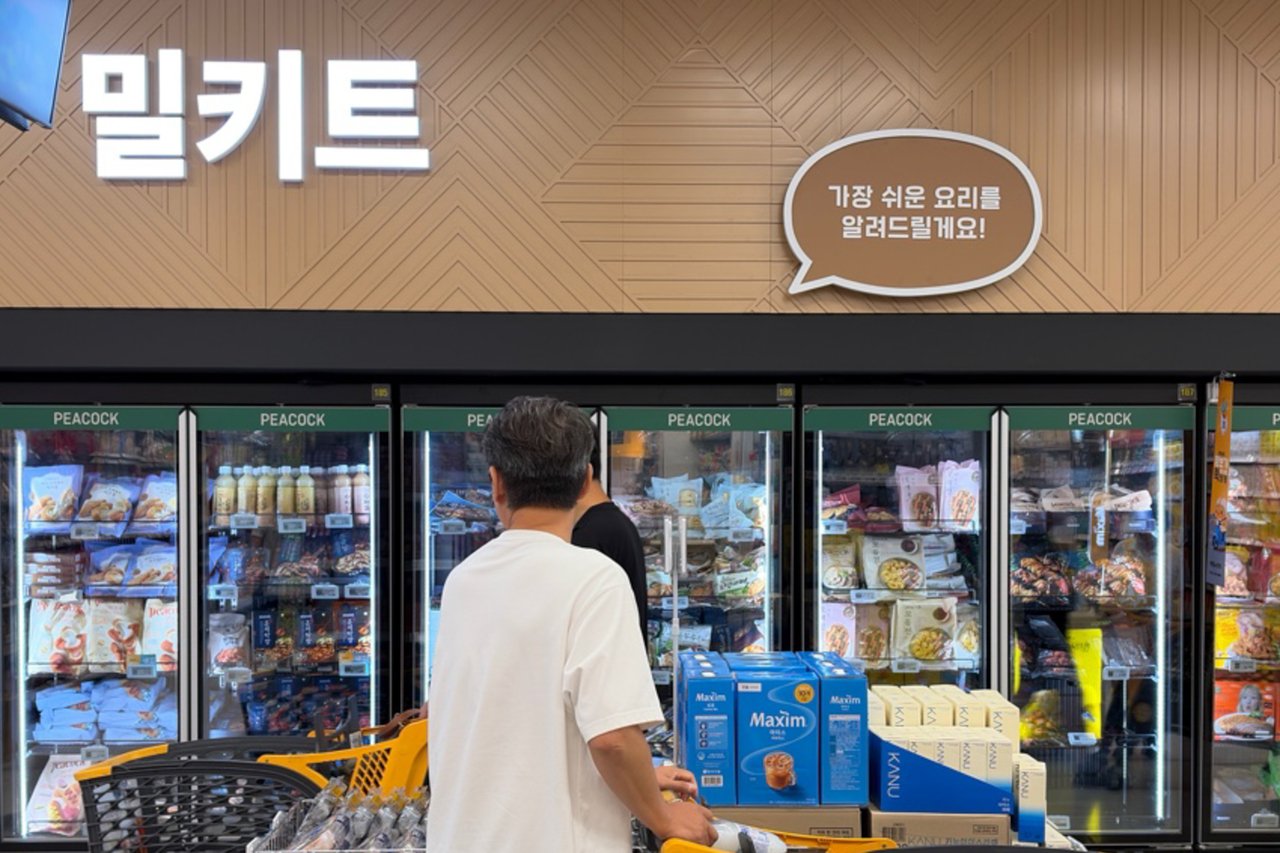
Fulfillment centers, supermarket stores under revised law could stoke competition
South Korea’s dawn delivery market has long belonged to a handful of e-commerce players, led by Coupang. Now some of the country’s biggest players are muscling into the category.
Most recently, Lotte Mart booted up its first automated fulfillment center in Busan. The 40,000-square-meter facility, built with British retail tech firm Ocado for roughly 200 billion won ($141 million), runs around the clock with robots and artificial intelligence managing inventory, selection, packing and delivery across the city.
The move builds on Lotte Mart’s investment in Korea’s growing online grocery market, aiming to keep products fresh while reducing misdeliveries and delays. Online grocery transactions rose from 17.2 trillion won in 2019 to about 52.3 trillion won last year, a 20.4 percent compound annual growth rate, government data show.
Portal giant Naver is set to enter dawn delivery in October, adding to a shopping platform already gaining ground through its partnership with Market Kurly.
According to CEO Choi Soo-yeon, Naver will launch dawn delivery exclusively for members of its loyalty program, alongside a dedicated returns center. Members’ purchase frequency rose after free shipping and returns benefits were expanded; members now account for over 70 percent of transactions. Naver’s own fulfillment service saw transaction volume rise 76 percent on-year in June, the company said.
“By expanding direct contracts, we will standardize the fragmented logistics conditions and operating standards, and offer competitive pricing and delivery quality,” Choi said during the company’s earnings call last week.
Industry officials are keeping a close eye on whether the moves will loosen Coupang’s grip on a market that has swelled from 2.5 trillion won in 2020 to nearly 15 trillion won today.
Coupang’s monthly active users reached 33.69 million in May, according to WiseApp Retail, ahead of Temu with 9.06 million and Naver Plus Store with 8.69 million. Its estimated payment volume hit a record monthly high of 6.11 trillion won in July.
A looming regulatory revision could pull more large retailers into the dawn delivery battle.
Under the Distribution Industry Development Act, South Korea bars large supermarket chains from offering early-morning delivery through their existing stores. Lawmakers are weighing an amendment to that rule, gathering industry input, though nothing has been finalized.
Though the revised law would let chains like Lotte Mart, Emart and Homeplus convert stores into dawn delivery hubs, some observers doubt it would instantly restore their competitiveness.
“Naver and Lotte Mart may erode Coupang’s grip to some extent, but another dawn delivery option alone is unlikely to shift consumers away from platforms they’re accustomed to,” one industry official said. “Pulling them over may take prolonged discounts or standout promotions.”