
 KB News Desk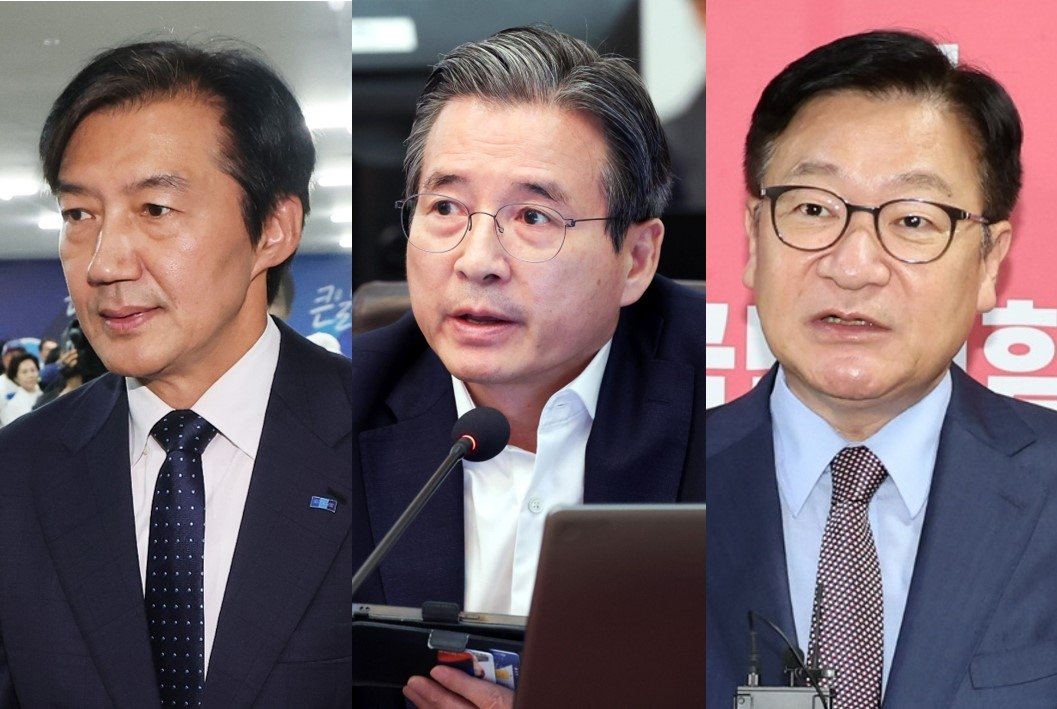
Single-stock leveraged exchange-traded funds tied to South Korea’s chip giants that have been blamed for stock market volatility are drawing heavy fire from both sides of the aisle.
Cho Kuk, former chair of the minor liberal Rebuilding Korea Party, said Wednesday that Cheong Wa Dae is to blame for the heightened market volatility, which posed “a serious crisis of trust.”
In a Facebook post, Cho, who was a close aide to former President Moon Jae-in, suspected that President Lee Jae Myung’s office had induced the financial firms to launch the controversial investment products.
“We cannot simply neglect the blatant failure of government-controlled finance,” Cho said.
Cho called for Cheong Wa Dae’s internal inspection of high-ranking figures including chief presidential secretary for policy Kim Yong-beom. Cho said Kim had masterminded financial authorities through a closed-door meeting in January to introduce a new law in April to allow single-stock leveraged ETFs to be listed in May. Cho described the process as “mysterious” and “unacceptable.”
Following a record bull run that extended to mid-June, the bourse has been on a roller-coaster ride, leading to the forced liquidation of stock accounts of those who made risky bets like investments in leveraged ETFs. Over 60 percent of such accounts were held by those in their 30s.
Sidecars to temporarily suspend stock trades in the event of a sharp surge or a rout in South Korea’s bourse were triggered over 70 times combined this year for the Korea Exchange’s main board Kospi and development board Kosdaq.
Cheong Wa Dae’s inspection to determine who is to be held accountable for the policy failure is “essential for the success of the Lee Jae Myung administration,” Cho said.
The main opposition People Power Party’s Floor Leader Rep. Jeong Jeom-sig renewed his call Wednesday for a parliamentary probe into the state’s decision-making process of introducing the risky financial products.
As Jeong had earlier proposed a parliamentary probe, the ruling Democratic Party of Korea’s senior spokesperson Rep. Kang Jun-hyeon said Monday the case is unlikely to be subject to a parliamentary probe.
“The ruling party seems to believe that conducting a parliamentary investigation would place an increased political burden on the ruling bloc,” Jeong said Wednesday.
“We aim to carefully document our lessons learned (from the botched introduction of risky financial products) and seek alternatives to ensure the healthy development of our stock market.”
A parliamentary investigation is the only chance to gather presidential aides including Kim and ministerial level officials to question how single-stock leverage ETFs were introduced, according to Jeong.
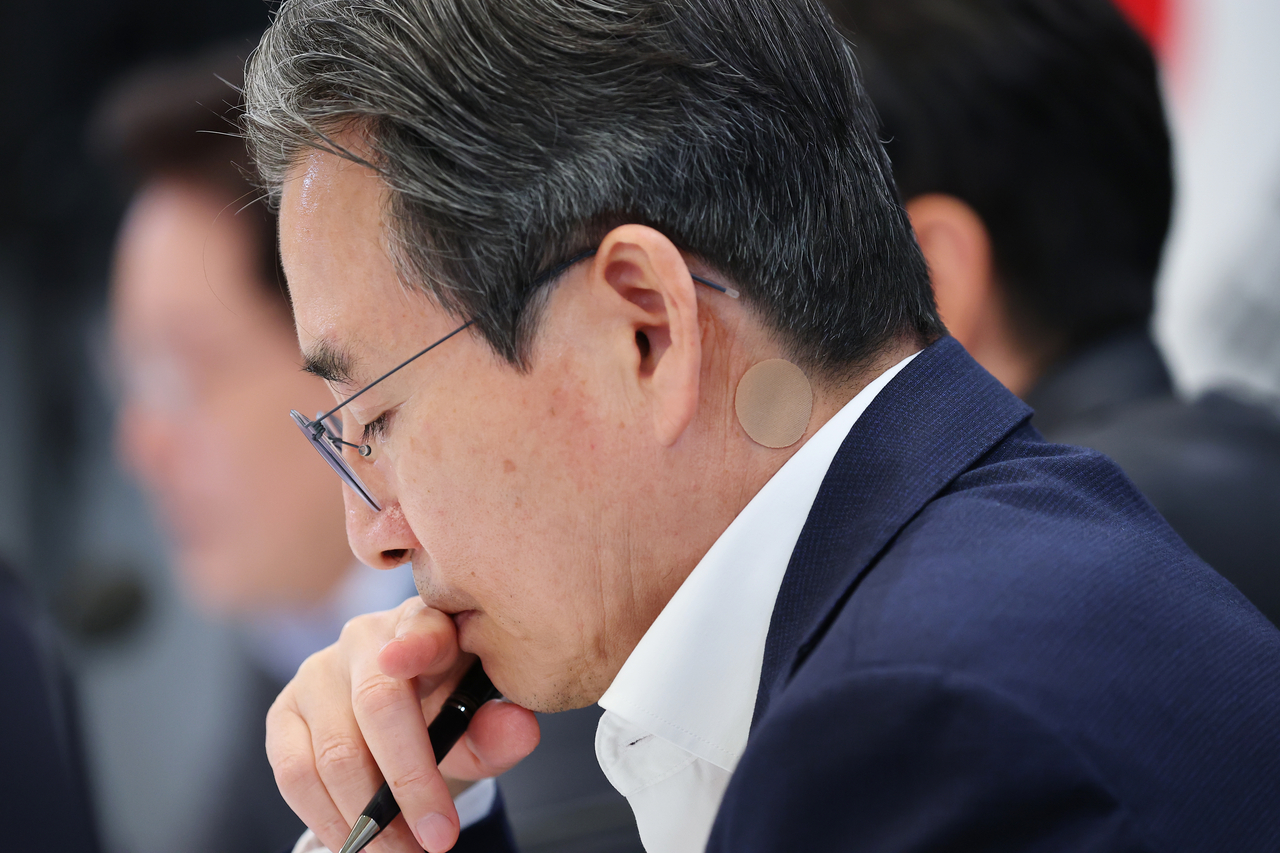
Meanwhile, an opinion poll by Hangil Research released Wednesday showed that 54.2 percent of 1,000 respondents expressed disapproval of South Korea’s stock market policy, while those who approved of the policy amounted to 38.3 percent of all respondents.
Especially among those in their 30s, nearly 70 percent disapproved of the stock market policy.
Alongside the stock market volatility, a new tax policy to increase homeowners’ taxes is piling pressure on the government. The Hangil Research opinion poll showed that 57.6 percent of respondents disapproved of the tax code revision, 22 percentage points higher than those who approved of the new tax scheme.
Over 70 percent of respondents in their 30s were unsatisfied with the tax code.