
 KB News Desk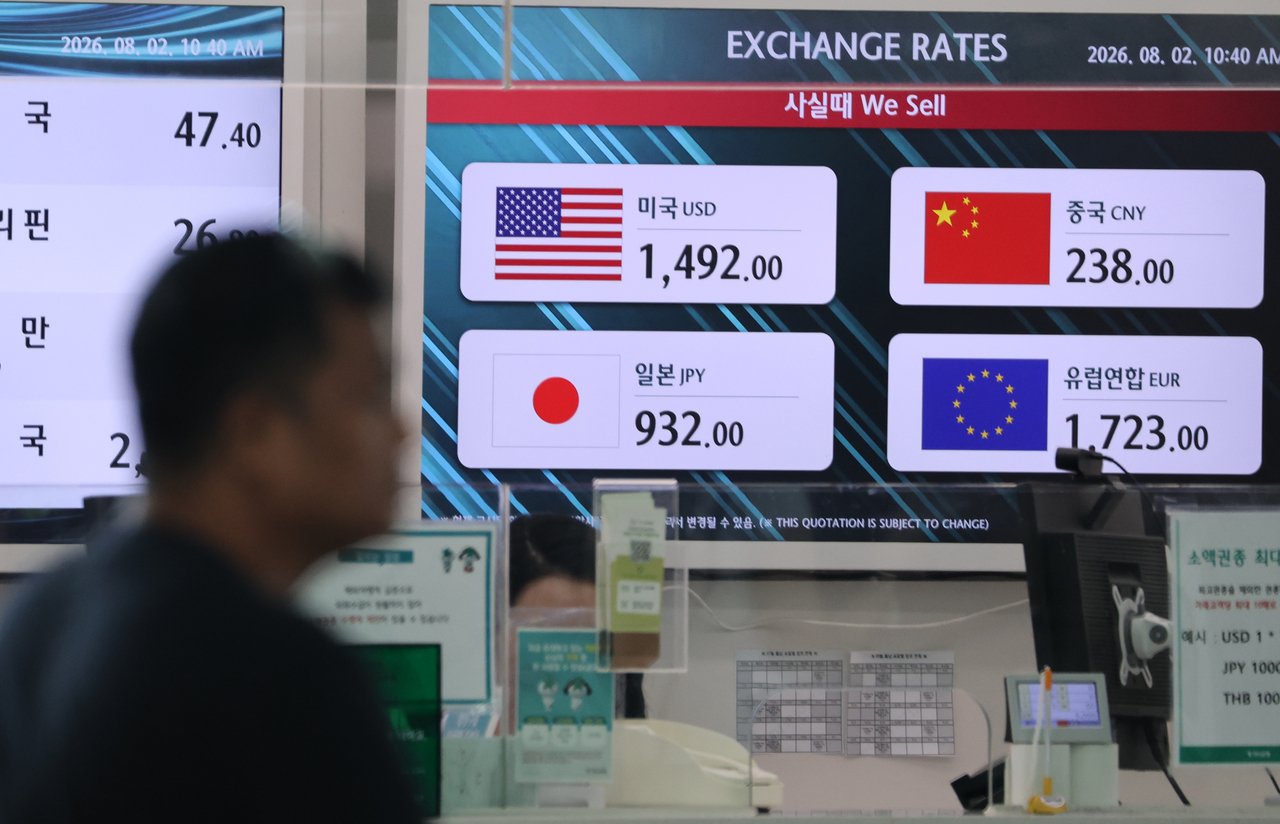
Analysts see return to W1,300 range, though carry-trade unwinding could fuel volatility
A rare instance of US-Japan intervention to support the battered yen is giving the Korean won renewed tailwind, raising hopes that the currency could strengthen beyond 1,400 won per dollar.
Policymakers confirmed Monday that the US Treasury bought yen in coordination with Japan’s Finance Ministry, marking the first joint intervention to support the Japanese currency since 1998.
The move quickly spilled over into the won, which investors often trade as a proxy for the yen because the two currencies tend to move in tandem.
Attention is now turning to whether the yen’s rebound — and possible behind-the-scenes coordination among Seoul, Washington and Tokyo — could push the won into the range of 1,300 won for the first time in nearly a year.
De facto three-way coordination
South Korean authorities have not announced any participation in the intervention, but their close consultations with Washington and Tokyo have fueled speculation that de facto trilateral currency coordination is already underway.
Seoul’s foreign exchange authorities confirmed they have been maintaining close communication with Washington and Tokyo over currency policy, fueling speculation that a de facto trilateral currency coordination among the three countries is already in place.
“We are maintaining close coordination with the US and Japan. We will continue to cooperate,” Moon Ji-sung, deputy finance minister for international affairs, told Reuters.
The de facto trilateral currency coordination has helped push the won higher. On Friday, as the dollar tumbled against the yen following the US-Japan intervention, the won strengthened sharply, with the won-dollar exchange rate falling to 1,418 won during intraday trading, its lowest level in nine months.
Since then, the won has traded in the low 1,400 won range against the dollar. On Tuesday, the exchange rate stood at 1,430.73 won per dollar at 1:30 p.m.
“Improved dollar funding conditions, coupled with coordinated forex policy efforts among Korea, the US and Japan, accelerated the won’s appreciation against the dollar,” said Park Sang-hyun, an analyst at IM Securities.
Won eyes return to 1,300 range
While the won has been gaining momentum against the greenback in recent weeks, the latest trilateral currency coordination is expected to provide an additional boost, potentially pushing the won below 1,400 won per dollar.
Just a month prior, the won was struggling near its weakest level in years. The currency slid to 1,559.2 won per dollar on July 1.
However, it staged a sharp turnaround, supported by the Bank of Korea’s rate hike on July 16, easing foreign selling pressure in the local stock market and inflows related to SK hynix’s American depositary receipt issuance. The won strengthened by 30.2 won to 1,525.6 per dollar on July 3, extending its gains thereafter.
Some market analysts now see the won strengthening into the 1,300s for the first time in nearly a year, dating to the third quarter of 2025.
“While the forecast range for the won-dollar exchange rate stands at 1,410-1,560 won for the second half of the year, the rate could potentially break into the 1,300 won range,” commented Moon Da-wun, an analyst at Korea Investment & Securities.
A sharp acceleration in the yen’s rebound, however, could trigger an unwinding of yen carry trades, leading to broader position cuts across risk assets, including the Korean won.
A yen carry trade involves investors borrowing in yen at low interest rates to invest in higher-yielding, dollar-denominated assets. As the yen strengthens, those positions can become less profitable, prompting investors to unwind them.
“If the yen’s rebound accelerates sharply, the unwinding of yen carry trades could trigger broader position reductions across risk assets,” said Shin Yoon-jung, an analyst at SK Securities.
“While further won appreciation remains possible in the near term, a rapid strengthening of the yen could also heighten volatility in the Korean currency.”