
 KB News Desk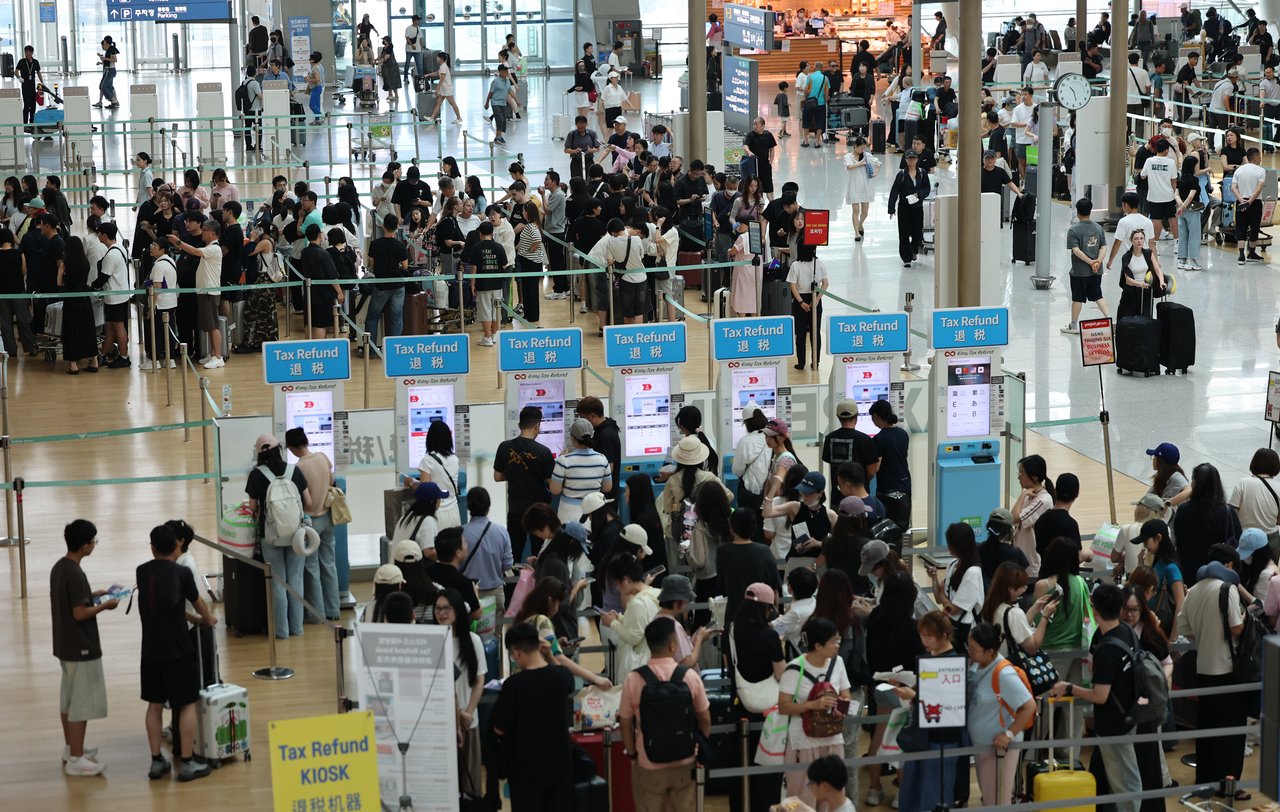
Incheon immigration waits stretch beyond an hour during arrival rush, local report says
South Korea’s summer tourism boom is straining operations at Incheon Airport, where a sharp increase in foreign arrivals has led to lengthy immigration queues and prompted authorities to expand staffing and congestion management measures.
According to the Ministry of Justice, 11.05 million foreign nationals entered South Korea during the first six months of the year, up 20.6 percent from the same period last year. The increase is expected to accelerate during July and August, when inbound travel to Korea typically peaks.
At the same time, Incheon Airport is bracing for one of its busiest summer travel seasons on record. The airport expects 3.77 million passengers to pass through its terminals between July 25 and Sept. 10, averaging about 222,000 travelers a day.
The influx has begun to show at immigration checkpoints.
At Terminal 1 on Friday, queues for foreign arrivals extended beyond designated waiting areas as several hundred passengers arrived within short periods, according to local media.
Some travelers who reached immigration around noon waited until after 1:20 p.m. to clear inspection, well above the International Civil Aviation Organization’s recommended processing time of 45 minutes.
Airport officials say the seasonal travel pattern has contributed to the congestion. While overseas travel by Koreans tends to be concentrated around the Lunar New Year and Chuseok holidays, foreign visitor arrivals typically surge during the summer vacation season.
Immigration staffing has also come under pressure.
Local reports said that only 11 of 20 foreign immigration counters were operating at one section of Terminal 1 during a busy period on Friday.
The Ministry of Justice plans to increase staffing at the Incheon Airport Immigration Office by 141 positions this month, raising the authorized workforce to 994. However, officials said newly hired personnel will require training before being assigned to frontline inspection duties, meaning additional staffing is unlikely to ease congestion immediately.
In the meantime, immigration authorities said they will maximize the number of operating inspection booths during peak arrival periods by deploying personnel from support departments.
The airport operator has also introduced temporary measures to handle the summer travel surge.
These include expanding waiting space in Terminal 2’s arrivals hall, adding multilingual wayfinding signs and information kiosks on the third floor of Terminal 1, increasing Smart Pass lanes for departing passengers and opening major security checkpoints 30 minutes earlier than usual.
Airport officials said the measures are intended to improve passenger flow while accommodating the continued growth in international travel.