
 KB News Desk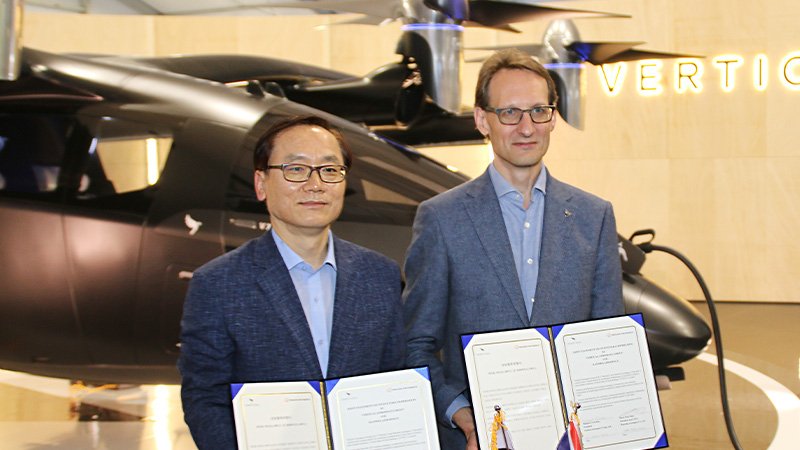
Hanwha Aerospace has terminated a 454.8 billion won ($319 million) contract with UK-based electric vertical takeoff and landing, or eVTOL, aircraft developer Vertical Aerospace, ending a four-year partnership that had been considered one of the former’s major urban air mobility projects.
According to Hanwha Aerospace’s regulatory filing on Monday, it had canceled its agreement with Vertical Aerospace covering the development and supply of electromechanical actuators, or EMAs, and tilting and blade pitch systems for the British company’s VX4 electric aircraft as of Friday.
The terminated contract was equivalent to 7.09 percent of Hanwha Aerospace’s total sales in 2021.
Hanwha Aerospace said both parties had faithfully fulfilled their contractual obligations since signing the deal, but agreed to end the contract following changes in market conditions and their respective business strategies compared with the project’s original objectives.
Despite terminating the agreement, the companies signed a separate memorandum of understanding to maintain their partnership and explore future collaboration. Under the MOU, Hanwha Aerospace said it laid the groundwork to cooperate with Vertical Aerospace on similar development programs and supply projects for potential mass production.
The Korean defense firm first signed a 219.2 billion won agreement with Vertical Aerospace in 2022 to develop and supply EMAs for the VX4. The partnership expanded a year later as the companies signed an additional agreement for Hanwha to supply tilt and blade pitch systems, bringing the total contract value to about 454.8 billion won.
Under the original plan, Hanwha Aerospace was on track to become the exclusive supplier of key flight control components for the four-passenger VX4 aircraft while participating in the aircraft’s certification and mass production process.
Vertical Aerospace, which was founded in 2016, has been developing the VX4 for commercial service but commercialization of the global UAM industry has been delayed by slower-than-expected aircraft certification and weaker investment across the globe, dampening the progress of the UK firm.