
 KB News Desk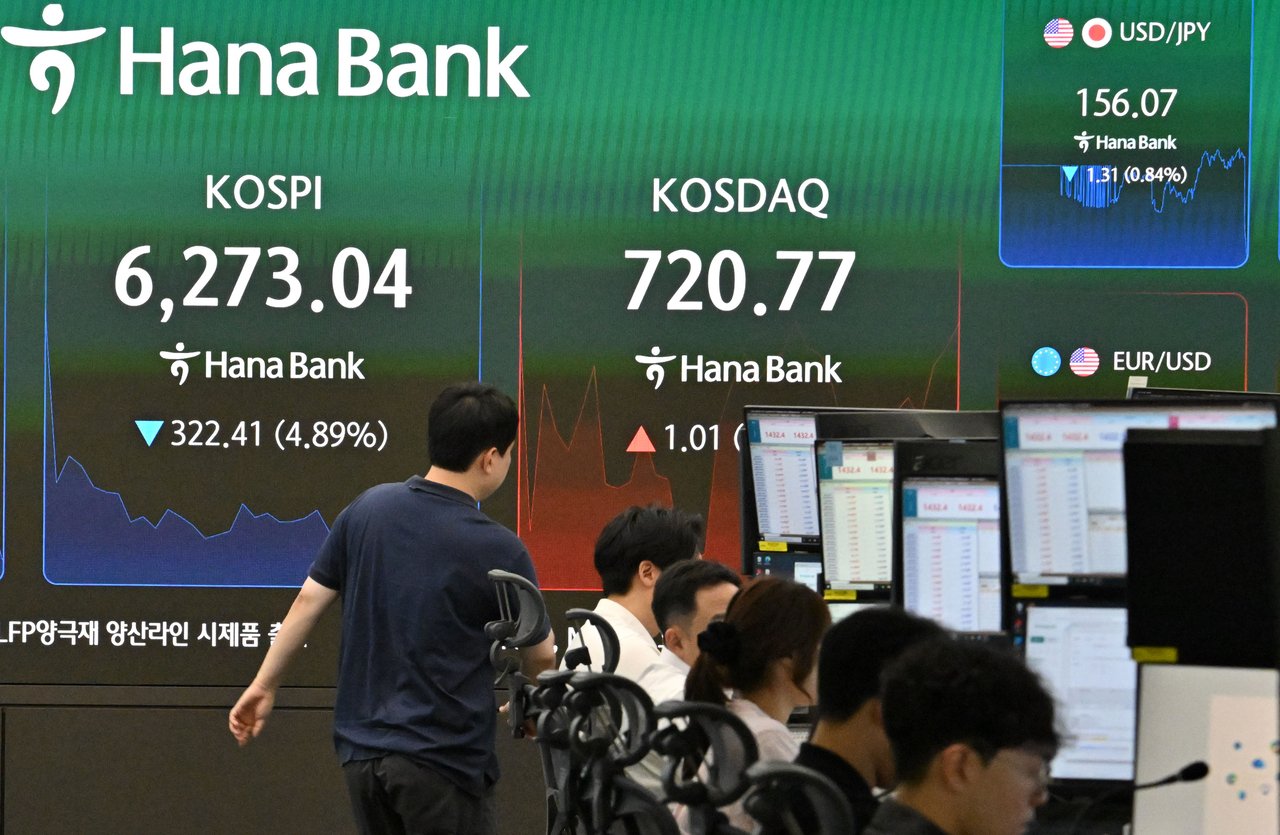
Leveraged-product turnover plunges under new deposit rules, shifting scrutiny to foreign algorithms and excessive order traffic
The Kospi remains vulnerable to sharp swings despite new deposit rules for single-stock leveraged products, as foreign high-frequency trading around Samsung Electronics and SK hynix exposes the limits of curbs focused primarily on retail investors.
Trading value in the five largest single-stock leveraged products by market capitalization plunged 74 percent Friday, the first day the new rules took effect, according to the Korea Exchange.
Retail investors sold a net 1 trillion won ($700 million) worth of the products as stricter deposit requirements and repurchase restrictions dampened activity. Financial investment firms serving as liquidity providers absorbed about 900 billion won of the selling.
The slowdown extended to foreign investors, even though they are exempt from the deposit requirements. Their share of total trading value fell to around 30 percent from about 38 percent.
Analysts said the retreat of retail speculators reduced arbitrage opportunities for foreign traders, who have generally used the leveraged products for rapid turnover rather than directional bets on the underlying stocks.
Foreign investors traded an average of 5.1 trillion won a day in single-stock leveraged products in July, accounting for 43 percent of the market’s total trading value, according to Shinhan Investment. Yet their net purchases amounted to only about one-tenth of retail investors’ buying, suggesting that most of their activity consisted of short-term round trips rather than longer-term positions.
The activity has drawn attention to the growing role of foreign high-frequency trading firms. HFT uses algorithms to identify and exploit price gaps within fractions of a second, with orders typically sent directly to exchanges through brokers’ direct market access systems.
HFT has expanded rapidly in South Korea since the COVID-19 pandemic. A Korean Securities Association paper published in March found that 2,490 HFT accounts were registered at the end of 2025. They accounted for 55 percent of ETF trading value, and more than 90 percent were linked to foreign investors.
The market impact became particularly visible during last week’s rebound.
Nonarbitrage program trading reached 5.1 trillion won in a single session, while foreign investors bought a net 7.28 trillion won worth of Kospi shares.
Samsung Electronics and SK hynix accounted for 5.77 trillion won, or 79 percent, of those net purchases. The concentrated buying helped fuel the rally, sending SK hynix to its daily price limit and Samsung up 26 percent — its largest one-day gain on record.
“Short covering and deleveraging coincided with the unwinding of leveraged positions,” an asset management official said. “Mechanical foreign buying linked to portfolio rebalancing also increased sharply.”
Market participants acknowledge that HFT can narrow bid-ask spreads, improve liquidity and make price discovery more efficient. But concerns persist that algorithmic trading can intensify price swings when markets are already under stress.
A Korean Securities Association study published two years ago warned that HFT could amplify volatility and disrupt orderly trading, calling for closer regulatory oversight.
The practice has faced heightened global scrutiny since the 2010 US flash crash, when major stock indexes briefly collapsed before rapidly recovering. Some market participants say tighter rules in developed markets have since pushed more HFT activity toward Asian markets.
Korean financial authorities are now reviewing how foreign HFT firms operate through domestic brokerages. The Korea Exchange has also begun assessing the practice’s market impact and possible regulatory responses.
The exchange already has safeguards in place, including mandatory registration for high-speed algorithmic traders and a kill switch that allows mass order cancellations in an emergency.
The Financial Services Commission is separately considering measures to discourage excessive trading in single-stock leveraged products by raising transaction costs for the most active participants.
One option under review is imposing higher fees on traders who submit unusually large numbers of orders. The measure would seek to curb excessive activity without explicitly singling out foreign investors.
“HFT is largely the domain of foreign firms rather than retail investors or domestic asset managers,” an industry official said. “Some foreign traders appear to flood the market with orders that are not intended to be executed, creating temporary price distortions and arbitrage opportunities.”
“Raising fees on excessive order submissions could help curb the activity without explicitly targeting foreign investors,” the official added.