

 KB News Desk
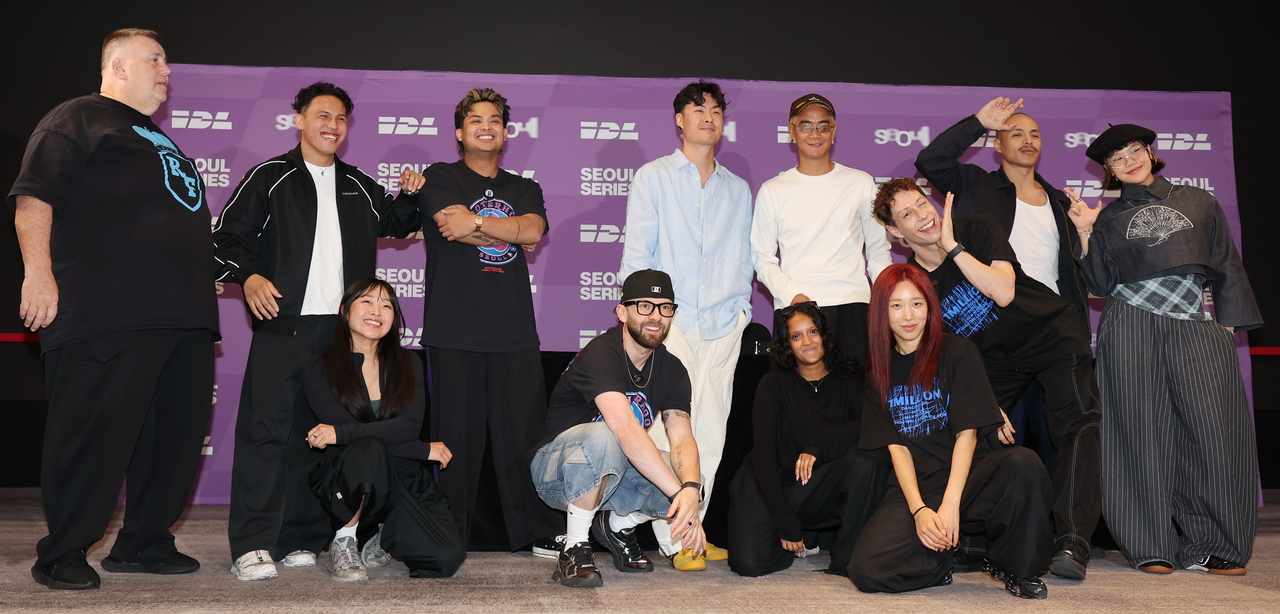
The International Dance League, the world’s first dance competition modeled after major sports leagues, sees South Korea as a key hub for its expansion into Asia, its co-founder and CEO Connor Lim said Friday.
Speaking at a press conference in Seoul a day before IDL’s Seoul event, Lim said the city’s location, strong dance and K-pop scenes, and tourism appeal make it an ideal base for fans from across the region. He said attendees have already traveled from countries including Japan and Hong Kong.
“We believe Korea is a really good jumping-off point and a really good place to set our roots,” he said. “This is somewhere that we have a franchise team that we plan on continually investing in year over year and growing with the community out here.”
IDL bills itself as the world’s first professional dance league, introducing a seasonlong format in which teams compete for points, rankings and a championship title. Seoul is the fourth of six stops in its inaugural season, following events in New York, Vancouver and Sydney.
The Seoul round will take place Saturday at Kyung Hee University’s Grand Peace Palace. Six teams, including Korea’s 1Million, will vie for points ahead of the September championship event in Los Angeles.
Speaking with The Korea Herald after the press conference, Lim said IDL’s ambitions extend beyond staging dance competitions. Rather, he said, the league aims to create a long-term professional ecosystem where audiences can follow the same teams, rivalries and performers over multiple seasons.
He contrasted IDL’s vision with reality television competitions like Mnet’s successful “Street Woman Fighter” franchise, saying that while both seek to elevate dancers, they pursue that goal in fundamentally different ways.
“Reality TV has done such a great job of promoting amazing dance teams,” Lim said, “But the problem with reality TV shows is they’re run by producers in unscripted departments. … And so that’s like the biggest flaw of these reality TV shows is that they keep changing out talent.”
Asked whether dance could ever be judged objectively enough to be recognized as a sport, Lim said the debate is not unique to dance, pointing to disciplines such as figure skating, surfing and skateboarding.
“We’ve been doing this for 20 to 30 years for competitive dance,” he said. “Our format is … built to be more of a spectator sport, but it’s still as objective as any of those other sports that already exist.”
Lim also stressed that IDL is not trying to represent every form of dance. Rather, he described it as a league specifically designed for choreographed team dance, distinguishing it from one-on-one freestyle and all-style battle competitions. Rather than competing with local dance communities, Lim said the league hopes to complement them by supporting existing events as it expands into new cities.
“It is not an or, it is an and,” he said. “We can exist and build dance from a competitive team choreographed base, and that doesn’t take away from people going to local competitions. Those will always exist.”