
 KB News Desk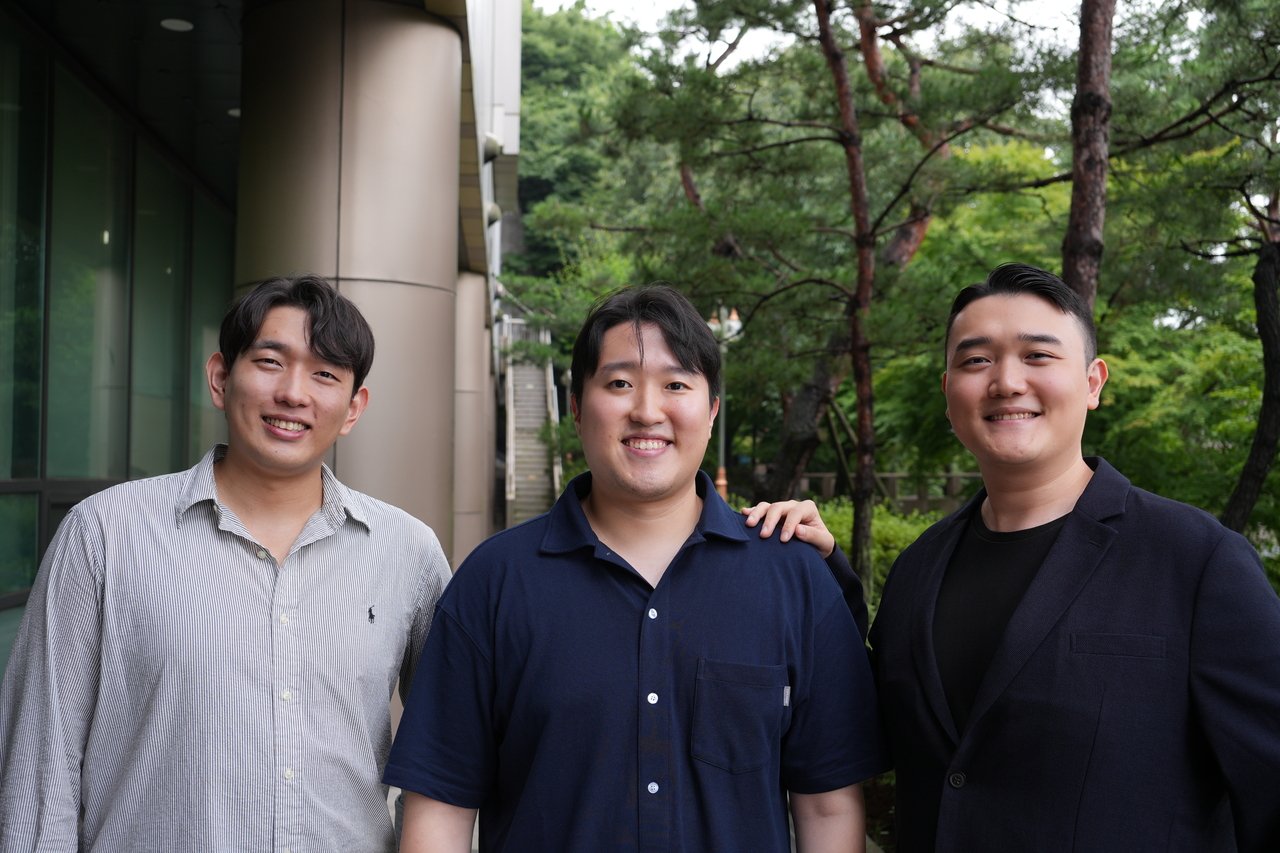
Three young baritones and basses took an unusual route from Korea National Opera’s training program to one of Europe’s busiest houses
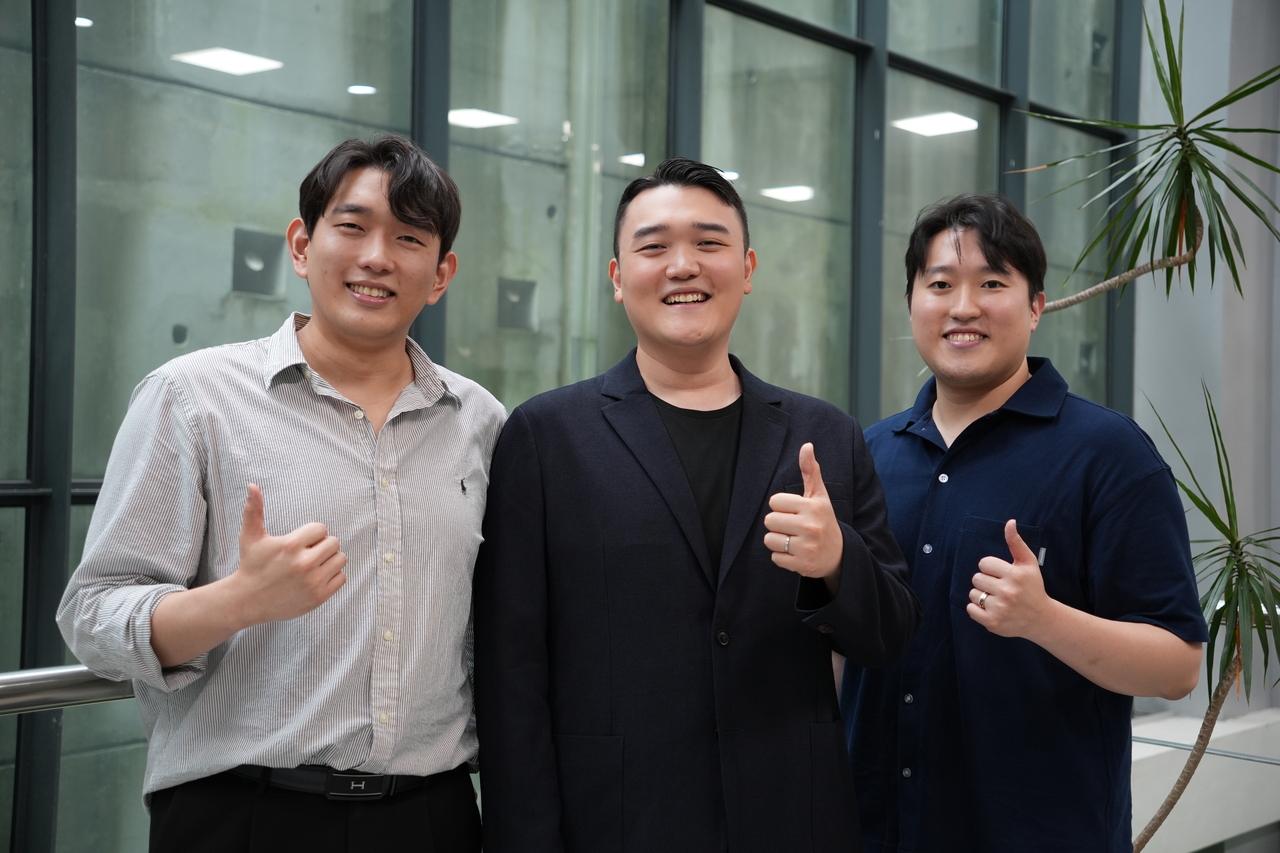
Kim Geon, Choi Young and Roh Min-hyung have a lot in common. Kim is a baritone. Roh and Choi are basses. All three stand over 180 centimeters, all three are around 30 years old — and all three, at some point, concluded they were not good enough.
Kim graduated from Seoul National University without having sung a paid operatic role. Studying abroad was the assumed next step, but when he added up rent, utilities and a phone bill in a foreign city, he could not see how it would work — so he spent a year and a half training as a musical theater actor instead. Choi, who studied at Kyung Hee University, assumed a chorus seat was as far as he would go. Roh sat the college entrance exam five times before Hanyang University took him, passing only while he was serving out his military duty.
Then each of them was accepted into KNO Studio, a Korea National Opera program that trains recent graduates for careers in opera — as singers, conductors, opera coaches, directors or stage artists — through one-on-one lessons, master classes, a graduation concert and supporting roles in the company’s own productions.
That they were found at all is, by their own account, the point of the program. KNO Studio draws 200 to 300 applicants a year for roughly 25 to 30 singing places, and Roh, who applied four times before he was accepted, said the audition rewarded something other than a resume.
“Everyone coming up that year applies,” Roh said in a joint interview with Kim and Choi on July 22 at the Seoul Arts Center. “Applicants do list competition placings and performance credits. But they seem to look not just at whether you’re good, but at your potential. Judging comprehensively like that is fair — it felt closer to how the system works abroad.”
For Choi, who had no competition record when he applied, that was the only door available.
To one of Europe’s busiest houses
Now the three KNO Studio alumni share one more thing: each auditioned successfully for a scholarship post at Deutsche Oper Berlin, under a partnership in which the Korea National Opera and the German company each cover half of a singer’s salary. Since 2024, one singer has been selected from the program each year and sent to one of Europe’s busiest repertory houses. Kim and Roh have finished their contracts. Choi flies out in August.
Choi said Deutsche Oper Berlin is, without much exaggeration, the mainstream of German opera. Meeting singers he had watched on YouTube and called masters, he said, feels like being called up to the Premier League. Roh, who spent a season there, described being cast in small parts in large productions and standing beside voices he had not thought a human could produce.
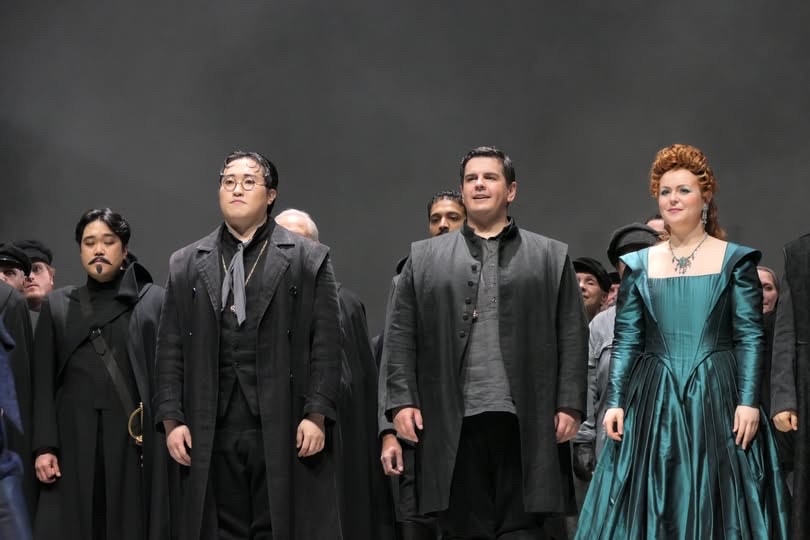
Kim was more measured. Fastening the first button at a top-tier house is the hardest thing in the profession, he said, and many working singers he knows did not.
The scarcity that kept them off Korean stages does not exist at Deutsche Oper Berlin. In Korea there are not enough stages to begin with — the Korea National Opera mounts four regular productions a year — and across Korean opera in general, the roles tend to go to established singers. Kim said the squeeze falls hardest on baritones: small parts usually go to tenors and basses, while the baritone roles that do appear are mostly leads, and leads belong to senior figures. There is not much room left for a young baritone, he said.
Deutsche Oper Berlin needs those voices nightly. It is a repertory house — a different work most nights, sets for several productions standing backstage at once. “Tomorrow’s is on the left, the day after’s on the right, and four days from now is behind it,” Kim said. “It just keeps rotating.”
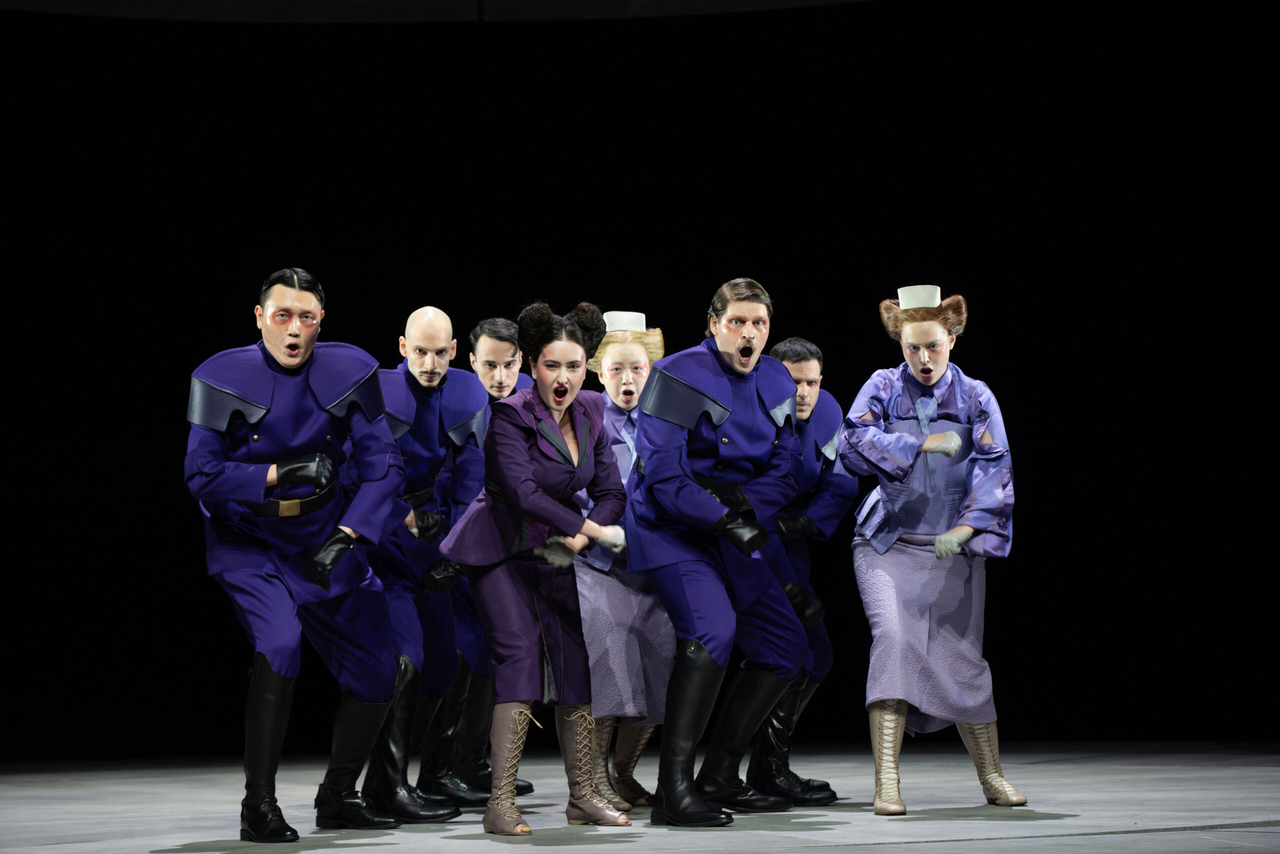
Scholarship singers are normally cast in small parts. Kim knew his roles before he moved, and they were not small ones. In emails with the house, he had been given two leads: Marcello in “La boheme” and a principal part in Janacek’s “The Cunning Little Vixen.” He emailed back to ask whether there had been a mistake. “From a foreign house’s perspective, I was unverified — a genuine risk,” he said. “So I replied, ‘Are you sure it’s me?'” He was told he was trusted completely.
Kim said he cleared his throat compulsively in the wings on opening night. Then the curtain went up. “The moment I heard the first line, I was just gone,” he said. “I was playing up there.”
Roh’s season was built from exactly the parts Korea has few of: Doctor Grenvil in “La traviata,” one of the six Flemish deputies in “Don Carlo,” a small role in “Andrea Chenier.” He said the company mounted 21 performances across December and January.
Roh took every cover assignment he was offered. He finished the season having sung or covered 15 to 16 roles, and said he was grateful for all of it.
What Korean singers lack, by the account of the people who hire them, is not sound. A senior music coach from Deutsche Oper Berlin who came to Seoul to work with the program’s members told them their voices were already world-class, Choi said. What was weaker was expression: diction, nuance, the business of inhabiting a role on stage.

Roh found that out at close range. He had prepared his German carefully for a Wagner premiere and was still corrected in rehearsal, told the word he was singing did not exist as he was pronouncing it. Korean has no schwa, he pointed out, and no equivalent for some consonants German asks for.
Kim arrived in Berlin with an unlikely advantage. The year and a half he spent training as a musical theater actor, when he thought he was leaving classical singing, had included ballet, contemporary dance and acting coaching. What he had called wandering turned out to be preparation.
Shifting dreams
With a year at Deutsche Oper Berlin behind them, both are still in Berlin. Kim’s contract ended and the house called him back. In January, he jumped into Rodrigo in “Don Carlo.”
Roh’s contract ended early in July with “La boheme.” He is finishing his master’s at the School of Music Hanns Eisler Berlin, having been admitted there and offered the Deutsche Oper post at the same time and chosen to keep both in the same city. Auditions come by email now, sometimes from houses he had not approached.
For Kim, KNO Studio changed more than his career. He met his wife, the soprano Oh Hyun-ah, in the program, and they had a child a month ago. He called it an organization that had been like a benefactor to him. The arithmetic that nearly ended his career now supports a family, and he said the baby has given him a new reason to push.
What he wants in the end is smaller than what he is building toward. He described stacking layers, and wanting eventually to reduce them to one — to sing the ordinary life he has lived. He prays to become an artist who sings life, he said.
Choi’s dream has grown since he got accepted to KNO Studio. He arrived from a founding season with the Asan City Chorus, having never pictured himself as a soloist, and said the environment did the rest — that a position makes the person. He wants the next singer chosen for Berlin to arrive with a reputation already waiting: for the house to hear “Korea National Opera scholarship” and expect someone good.
Roh’s went the other way. He used to want to be a Kammersanger, he said, to win the big competitions, to be spoken of the way the singers he grew up admiring are. He has not given that up. But what he wants now is to stand on a stage for a long time, and to be worth what an audience gives up to sit in front of it.
“Giving you their time means giving away part of their life,” he said. He wants that time to be well spent.