
 KB News Desk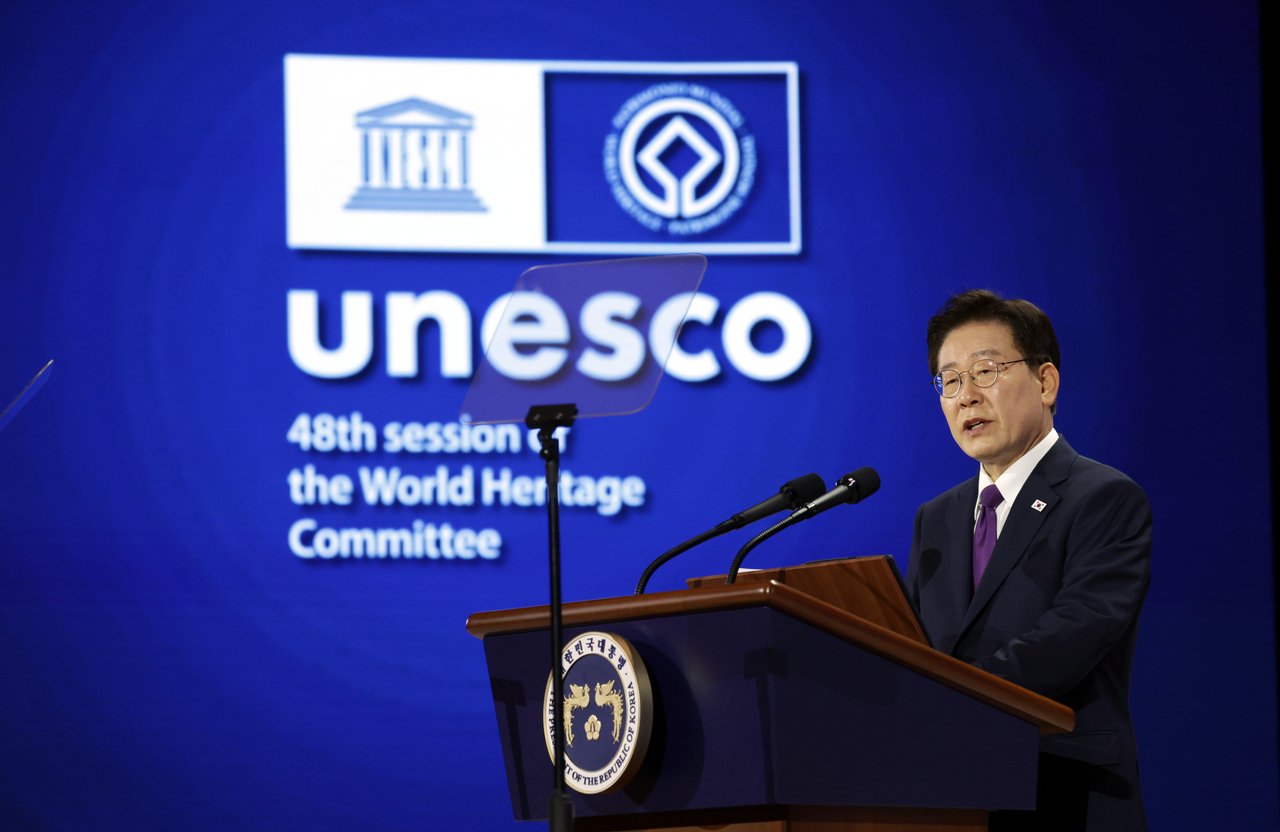
The first UNESCO World Heritage Committee meeting held in South Korea wrapped up Wednesday after a 10-day session that added 25 new sites to the global heritage list, including Japan’s ancient Asuka-Fujiwara capitals and France’s Normandy D-Day landing beaches.
The 48th session at the BEXCO convention center in the southeastern port city of Busan brought the total number of World Heritage properties to 1,273 across 173 countries, the committee said.
Among the new inscriptions were the “Asuka-Fujiwara: Archaeological sites of Japan’s Ancient Capitals and Related Properties,” a collection of Asuka-period ruins in the Asian country, and the “Beaches of the D-Day Landings, Normandy, 1944” in northwestern France, which groups together the beaches where the Allied landings that helped turn the tide of World War II took place.
South Korea secured an extension of the boundaries of its 2021-listed “Getbol, Korean Tidal Flats” to include additional tidal flat areas on the western and southern coasts. Including the Korean tidal flats, two sites had their boundaries expanded during the session and a separate case involved a change of criteria.
The committee reviewed the conservation status of 148 properties and placed six on the List of World Heritage in Danger, including Lebanon’s ancient port city of Tyre and the historic inner city of Paramaribo in Suriname, citing threats to their integrity.
In a controversial move, delegates voted to remove “Vienna’s historic centre” from the List of World Heritage in Danger after protracted debates over tensions between urban development and the protection of the city’s historic and cultural landscape. The decision drew sharp criticism from some heritage experts and delegations.
Delegates also discussed ways to boost representation for Africa and Small Island Developing States (SIDS), a group of low-lying island nations that are extremely vulnerable to the impacts of climate change.
Lee Byong-hyun, chair of the 48th session, thanked delegations from around the world for their work, saying the session had reaffirmed that “our firm will to protect humanity’s outstanding universal value is united as one despite differing perspectives.”
The next World Heritage Committee session is scheduled to take place in Istanbul.
Turkey will also take the chair next year by custom, while Armenia, Grenada, Vietnam, Tanzania and Kuwait were elected as vice-chairs.
Turkey previously hosted the 40th meeting in Istanbul in July 2016, but the session was disrupted by a military coup attempt before being resumed at UNESCO headquarters in Paris three months later. (Yonhap)