
 KB News Desk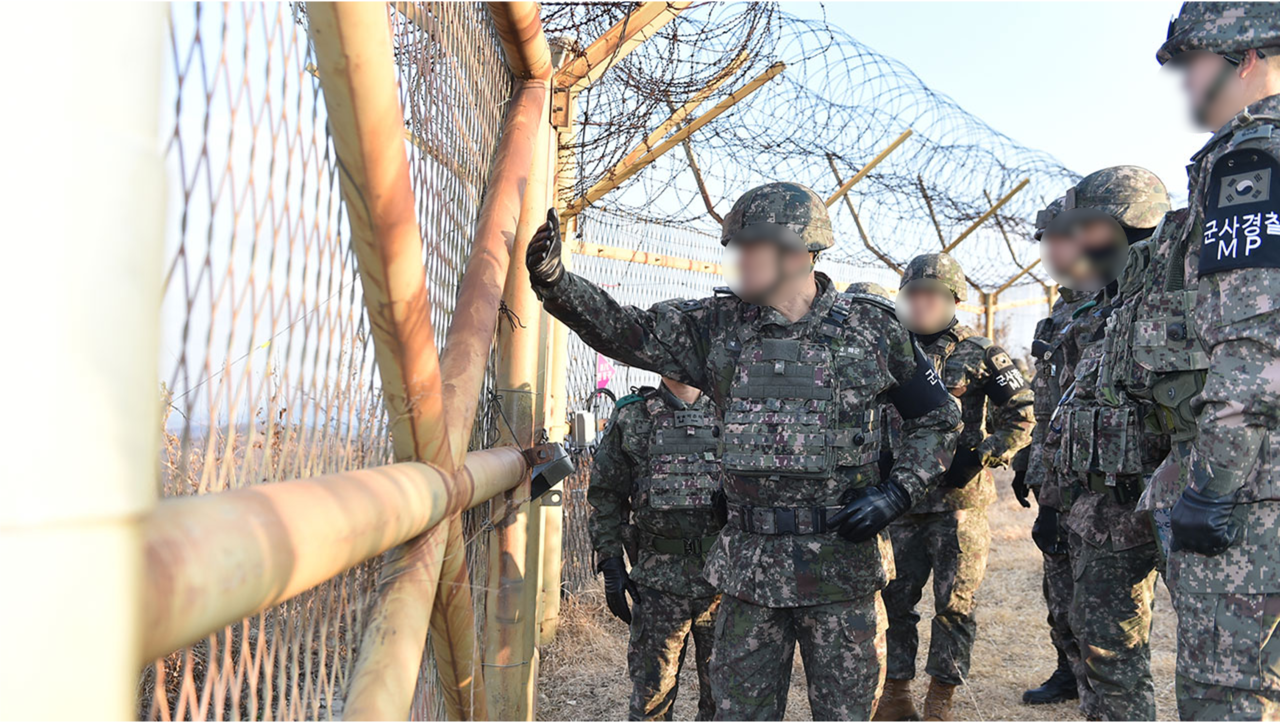
South Korea’s Army is facing criticism after a frontline corps was found to have kept ammunition separate from heavy machine guns during guard operations against North Korea, raising concerns that troops could be unable to respond immediately in an emergency.
According to military officials Wednesday, the Army’s 1st Corps, responsible for defending the western front and the northern approaches to Seoul, revised its guard duty procedures during the first half of the year.
Under the revised procedures, K6 heavy machine guns deployed at guard posts inside the Demilitarized Zone and along the General Outpost line were operated without ammunition belts attached. Instead, the belts were stored in ammunition boxes placed next to the weapons.
The military’s existing principle has been to keep ammunition belts attached to heavy machine guns at frontline posts to allow troops to immediately respond to North Korean gunfire, border incursions or other unexpected situations.
The K6, which fires 12.7-millimeter rounds, is the largest-caliber machine gun operated by the South Korean military. It has an effective range of about 1.8 kilometers and can fire approximately 600 rounds per minute.
Military officials have not publicly explained why the 1st Corps changed the procedures, but speculation has emerged that the measure was intended to prevent accidental firing toward North Korea.
In May 2025, a K6 machine gun at a GOP battalion under the Army’s 25th Infantry Division accidentally fired a round toward North Korea during an inspection. The South Korean military immediately broadcast a message informing the North that the shot had been fired by mistake.
Critics, however, said keeping ammunition belts separate could weaken the military’s readiness, as soldiers would first have to remove a belt from its box and attach it to the weapon before firing.
The Joint Chiefs of Staff said it had neither been informed of nor approved the procedural change.
“The principle is that firearms operated in frontline areas, including GPs and GOPs, are kept loaded with ammunition,” a JCS official said.
“We will inspect the situation on the ground and take necessary measures regarding units that have been operating differently.”
The Ground Operations Command, which oversees the Army’s frontline corps, was aware of the change but did not report it to the JCS, according to local reports.
Military officials said other frontline corps, including the 2nd, 3rd and 5th Corps, have continued to keep ammunition belts attached to their heavy machine guns.
Shin Jong-woo, secretary-general of the Korea Defense and Security Forum, said the measure raised questions about whether troops could respond promptly to a North Korean provocation.
“North Korea is fortifying the Military Demarcation Line and raising tensions, but a frontline unit has been conducting guard operations without ammunition loaded into its machine guns,” Shin said.
“It is inevitable to question whether an immediate response would be possible in an emergency.”