
 KB News Desk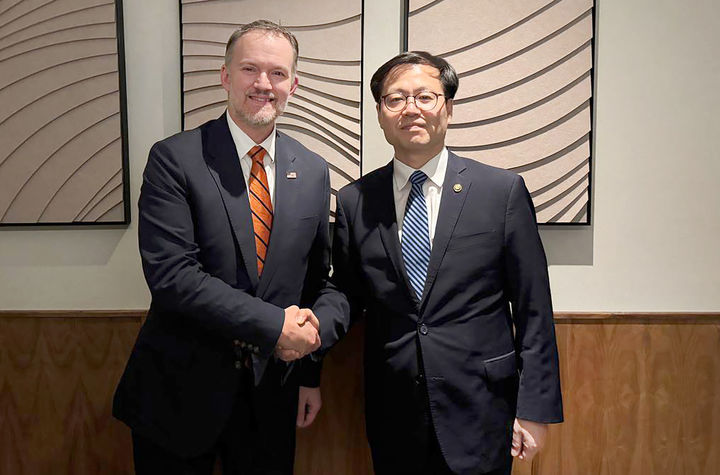
Section 301 replaces reciprocal tariffs as Washington’s latest pressure tool
South Korea is stepping up negotiations with Washington to prevent another rise in US tariffs as the Trump administration increasingly turns to Section 301 of the Trade Act to pursue targeted trade action.
The US last week finalized tariffs of up to 12.5 percent on goods from Korea and dozens of other economies over their controls on imports made with forced labor. Seoul is also subject to a separate investigation into structural overcapacity that could lead to additional duties.
Korean trade experts say the second probe could push tariffs back toward the 15 percent ceiling agreed by Seoul and Washington last year — or give the US leverage to demand faster implementation of Korea’s $350 billion investment commitments.
What is Section 301?
Section 301 of the Trade Act of 1974 allows the US trade representative to investigate foreign policies or practices deemed unreasonable, discriminatory or burdensome to US commerce.
If USTR finds a violation, it can impose tariffs or other trade restrictions. But an investigation does not automatically result in penalties: Washington may instead reach a negotiated settlement, suspend action or monitor policy changes.
The provision has taken on greater importance since the US Supreme Court struck down Trump’s broad reciprocal tariffs in February. A temporary 10 percent global tariff imposed under Section 122 expired on July 24, leaving the administration to rely more heavily on other trade laws.
Why was Korea hit with a forced-labor tariff?
USTR launched investigations into 60 economies in March to assess whether they had adequate rules to block imports produced with forced labor.
The action does not accuse Korea of using forced labor. Instead, Washington concluded that Seoul lacked sufficiently comprehensive measures to prevent such goods from entering the Korean market.
The resulting duties are set at either 10 percent or 12.5 percent, subject to product exemptions and adjustments for existing most-favored-nation tariffs. Korea received the higher rate, while the EU and Taiwan qualified for 10 percent treatment on certain goods.
For Korean products that previously entered the US duty-free, the measure effectively raises the tariff to 12.5 percent.
Could another tariff follow?
The more immediate concern is USTR’s separate Section 301 investigation into structural excess capacity in Korea and 15 other economies.
Washington is examining whether government policies encourage production beyond domestic demand, depressing prices, displacing US output or discouraging investment in American manufacturing.
No decision has been announced. But if USTR concludes that Korea’s policies are a burden to US commerce, it could impose another layer of tariffs or other restrictions.
What happens to last year’s Korea-US deal?
Under last year’s agreement, Korea pledged $350 billion in US investments in return for Washington lowering its planned reciprocal tariff from 25 percent to 15 percent.
If new Section 301 duties push the effective rate above 15 percent, Seoul could argue that the outcome violates the spirit of the agreement. Washington, however, may use the unresolved overcapacity investigation to press Korea to accelerate its investment projects.
Shin Won-kyu, a research fellow at the Korea Economic Research Institute, said pursuing the forced-labor and overcapacity cases separately may give Washington more time and leverage.
“It increasingly looks like a game where the outcome is largely set,” Shin said. “With the midterm elections approaching in November, Trump needs to show that the US investment deals he promoted are actually being implemented.”
“The overcapacity probe could become part of that implementation game.”
Can Korea avoid further duties?
Section 301 action is not inevitable. Of 10 investigations completed since 2017, five resulted in enforcement, while the others ended through negotiations, suspensions, monitoring or policy changes, according to the Korea International Trade Association.
“That makes continued negotiations all the more important to keep Korea from becoming a target,” Shin said.
Trade Minister Yeo Han-koo visited Washington from July 21 through Friday for talks with US officials, lawmakers and business representatives on Section 301 and other bilateral trade issues.
“Korea and the US have vast potential for cooperation in strategic industries and are indispensable partners,” Yeo said. “We will work to ensure tariff and non-tariff issues do not disrupt the broader bilateral economic and trade relationship.”
The forced-labor action and overcapacity investigation are detailed by the US Trade Representative.