
 KB News Desk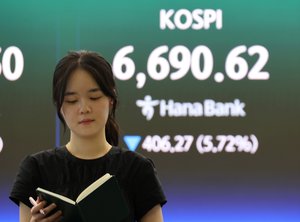
Margin lending balance drops below 33 trillion won, signaling retreat in leveraged investing
South Korea’s outstanding margin loans, a key gauge of leveraged stock investment by retail investors, fell to their lowest level in more than three months as the prolonged market correction prompted investors to scale back leveraged bets.
According to the Korea Financial Investment Association on Friday, outstanding margin loans stood at 32.75 trillion won ($22.4 billion) as of Wednesday, coming down to its lowest level since April 9.
Margin loans have been on a steady decline alongside the Kospi since reaching a record high of 38.63 trillion won on June 24. The balance fell below 35 trillion won on July 13 and has now dropped below 33 trillion won.
Margin loans typically rise when investors expect stocks to advance, but the recent increase in market volatility and the subsequent correction have reduced demand for leveraged trading.
Outstanding customer receivables from delayed payment stock purchases, another form of short-term leveraged trading, fell below 1 trillion won to 945.4 billion won on Wednesday.
It marked the first time the balance had fallen below 1 trillion won since April 23, when it stood at 996.6 billion won, and the lowest level since Jan. 6.
The balance had exceeded 2 trillion won at one point in March and June, but has since fallen by more than half.
Forced liquidations of stocks due to unpaid receivables by retail investors totaled 7.2 billion won, down sharply from 14.9 billion won a day earlier. The ratio of forced selling to outstanding receivables also declined to 0.7 percent.
Meanwhile, investor deposits, which had come under pressure to fall below the 100 trillion won mark, increased by 420.9 billion won from the previous session to 104.3 trillion won.