
 KB News Desk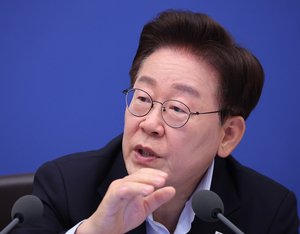
President says operating-profit distribution falls outside scope of labor disputes
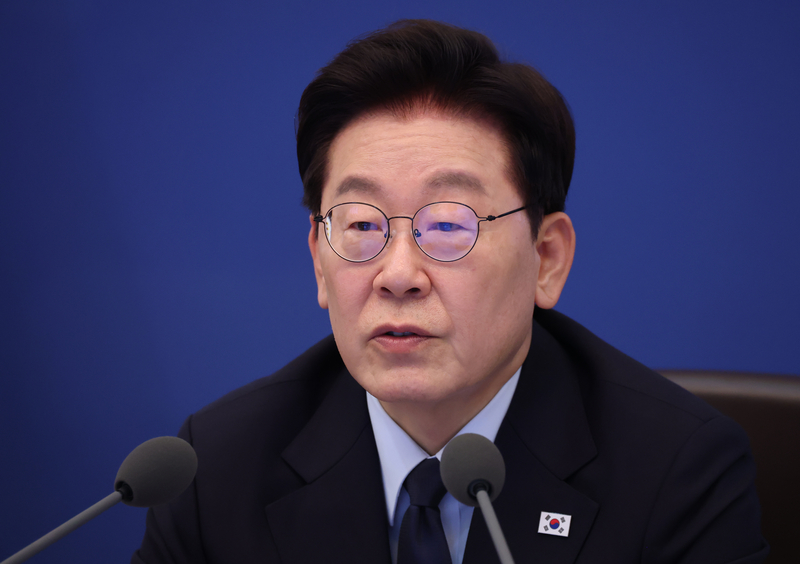
President Lee Jae Myung rejected the Samsung Electronics labor union’s claim that the company’s decision to build a semiconductor plant in Gwangju should be subject to a labor dispute, directing the Labor Ministry to clearly define the boundaries of such disputes.
Lee raised the issue, which wasn’t on the official agenda, near the end of the live-broadcast portion of the weekly Cabinet meeting on Tuesday.
Though the president did not directly name the company, his remarks came after Samsung Electronics’ union announced it would include the company’s plan to build two semiconductor fabrication plants at the Gwangju military airport site in its bargaining agenda for 2027. The plan forms part of the Lee administration’s recently announced megaproject initiative.
“The union’s position could be taken, at its most extreme, to mean, ‘Negotiate with us, and if we don’t agree, the project cannot proceed,’” Lee said during the meeting. “That has startled the public and raises several problems.”
Lee said the scope of labor disputes “appears to be expanding too broadly.”
“Take the sale of a company, for example. A union could argue that a prospective buyer might be an abusive employer who could worsen working conditions, and that the transfer of management control should therefore also be subject to a labor dispute,” Lee said. “If we go down that road, there will be no end to it.”
He also questioned whether union demands for a fixed share of a company’s operating profit could be a legitimate subject of a labor dispute.
“In particular, when it comes to whether the allocation of a certain percentage of operating profit can be subject to a labor dispute, I am more inclined to believe that it cannot,” Lee said.
Lee called on the Ministry of Employment and Labor to draw a clear line, saying, “Ultimately, I think we need to establish a set of clear standards.”
Lee underlined the need for clear standards as the revision to the Trade Union and Labor Relations Adjustment Act, which took effect in March, has sparked workplace disputes over the permissible scope of labor disputes.
The revision removed the word “determination” from the statutory definition of a labor dispute, changing it from “a disagreement over claims concerning the determination of working conditions” to “a disagreement over claims concerning working conditions.”
Setting limits on labor disputes
Lee stressed that “the government must have a position on these matters,” rather than leaving every dispute to the courts or waiting for the National Assembly to pass more detailed legislation.
“We are not mere errand runners,” Lee said. “The executive branch is a major state institution on an equal footing with the legislature, not simply an agent that implements legislation.”
Lee criticized government ministries for relying too heavily on legislation. New legislation, he explained, should be sought only when a measure would restrict people’s rights or impose new obligations.
“As one of the three coequal branches of government, the executive should exercise the authority granted to it under the Constitution and establish clear standards in advance through enforcement decrees, ministerial ordinances and Labor Ministry guidelines,” he added.
Lee said clearer government guidance was necessary to prevent ambiguities in the revised law from escalating into broader social conflict, and again urged the Labor Ministry to “quickly draw the line at a reasonable point.”
During the meeting, Employment and Labor Minister Kim Young-hoon said, “Allowing a labor union to challenge Samsung Electronics’ business decision to make a large investment would run counter to the intent of the revised Trade Union and Labor Relations Adjustment Act.”
In materials released last week, the ministry explained that the government’s interpretive guidelines for the revised law explicitly state that business decisions themselves, including corporate investment, mergers, corporate divisions and transfers, are not subject to collective bargaining.
Swift, bold action on leveraged chip products
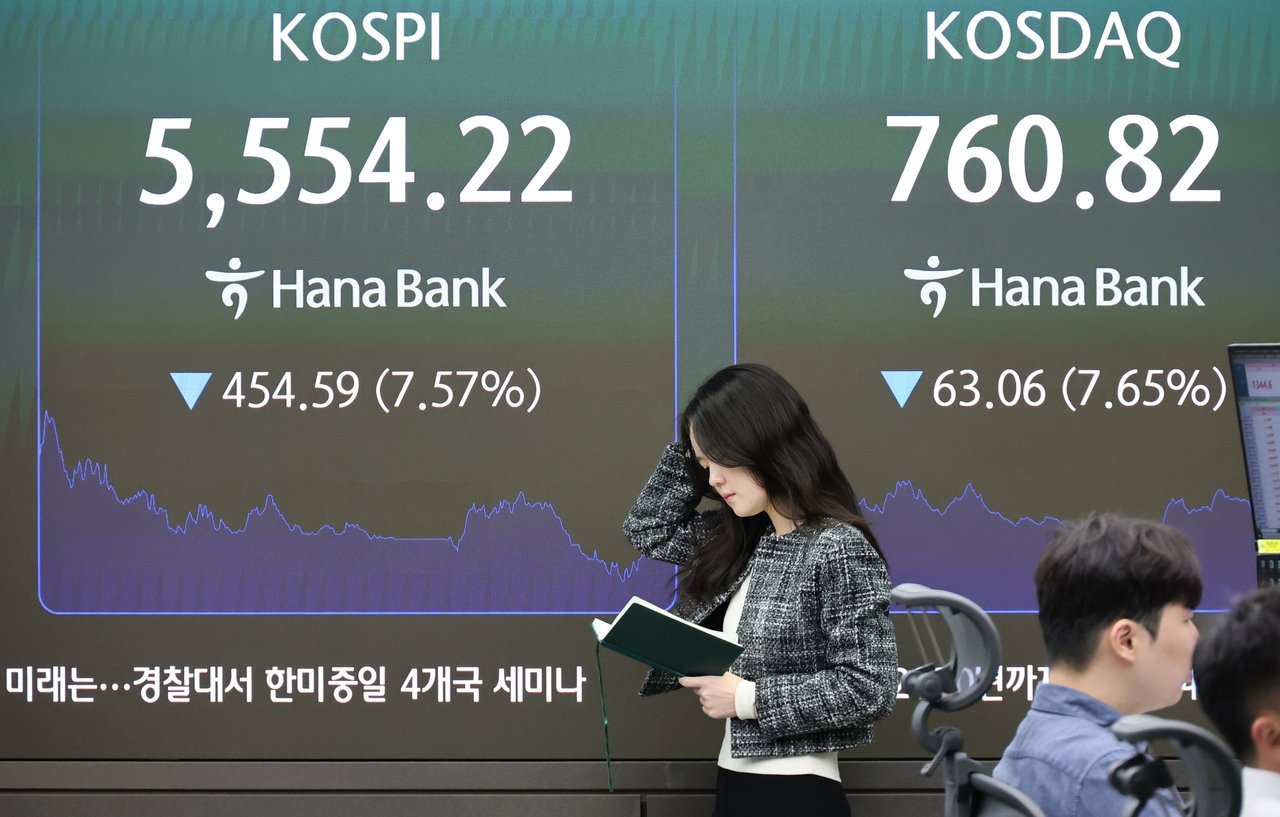
During the Cabinet meeting, Lee also called for swift and decisive action to address concerns that leveraged investment products tied to chip giants Samsung Electronics and SK hynix are amplifying volatility in the domestic stock market.
His remarks came as retail investors who piled into products offering twice the daily returns of the country’s leading AI chipmakers suffered steep losses following a sharp reversal in semiconductor shares.
“There are two opposing views: that the products helped curb capital outflows and that they intensified instability in the stock market,” Lee said.
Lee instructed financial authorities to “continue monitoring their impact on the market and introduce additional measures if necessary.”
“While it may be difficult for policymakers to devise a perfect response, they should act swiftly and boldly to implement the necessary measures,” he said.