
 KB News Desk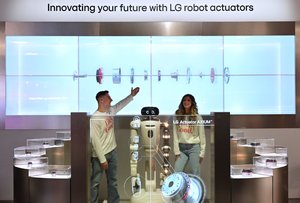
Hiring across R&D, quality and global sales signals LG’s push toward external actuator supply
LG Electronics is filling out its robot-actuator organization from research to sales, opening six mid-career positions as it works toward a 2027 target for supplying the motorized joints that will power other companies’ humanoid robots.
Actuators are the motorized joint modules that combine a motor, gearing and control electronics to move a humanoid’s limbs. They typically account for 40 to 60 percent of a humanoid’s total cost, and a single machine can use 30 to more than 50 — which is why component supply is where much of the near-term sector revenue is expected to sit.
The postings, listed on the company’s careers portal and closing between July 22 and July 26, cover driver development, quality management, systems engineering, overseas sales and team-lead roles in both R&D and global sales. The R&D leader will need at least 10 years of experience developing robot actuators. The sales lead is expected to run key-account work with “domestic and overseas robot makers, global Big Tech firms and robotics startups,” according to the job description.
The spread is the point. Together, the roles describe the full path a component must travel to become a business: designed, validated, moved into mass production, written into a customer’s design, then priced, shipped and invoiced.
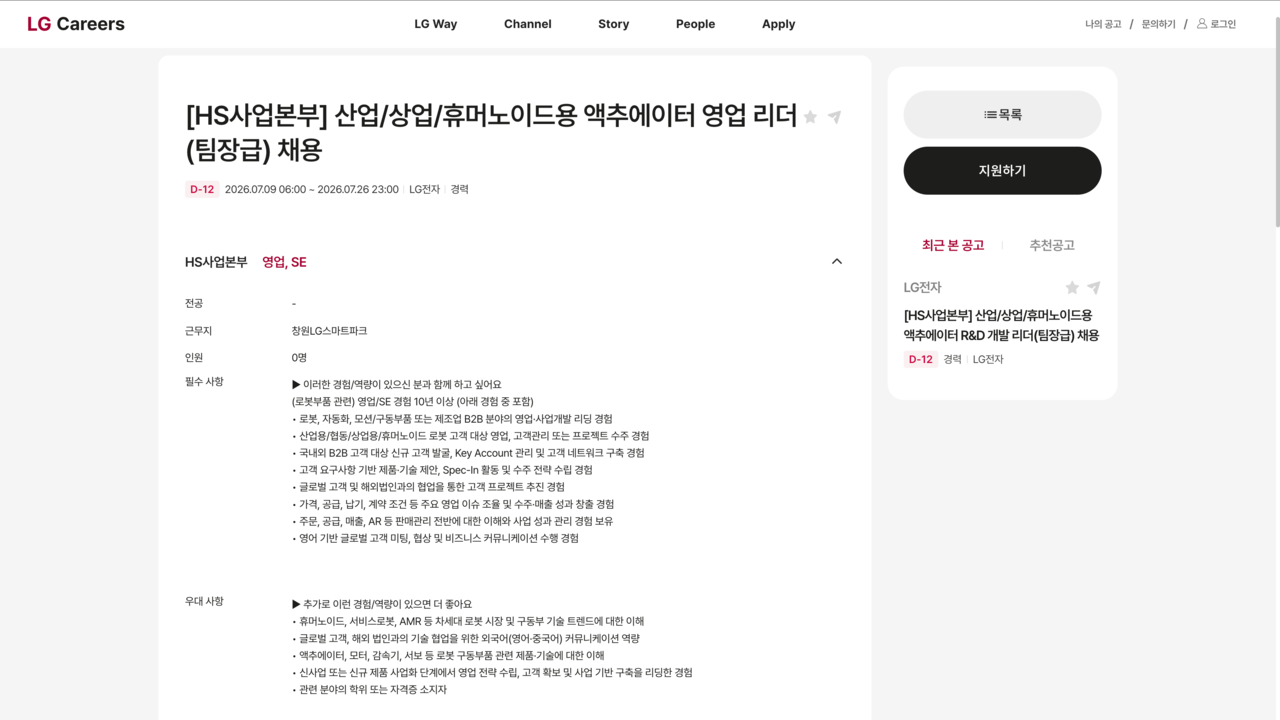
Two of the sales-side postings require “business-level North American English” and readiness for extended stays in the US for client meetings — a hint as to where LG expects to find its first outside customers. The systems-engineer role is built around winning “spec-in”: the moment a customer locks LG’s part into its own robot design. Once made, the decision is expensive for the buyer to reverse and typically secures years of orders for the supplier.
All six roles are based at LG Smart Park, the company’s manufacturing complex in Changwon, South Gyeongsang Province, and sit within the Home Appliance Solution division, the appliance-making unit that also houses LG’s motor and actuator business. The company confirmed they do not report to the separate Robotics Business Center that CEO Ryu Jae-cheol set up under his direct command on July 1 to oversee finished-robot strategy.
LG unveiled its actuator brand, Axium, at CES 2026 in January. In an April post on LinkedIn, Ryu said LG would complete a mass-production system this year and use the parts first in its own home robot CLOiD, before supplying “global partners” in 2027 and expanding into industrial high-torque applications by 2030. The plan leans on a manufacturing base of roughly 45 million motors a year across seven sites in five countries, which LG is now trying to convert into a components business.
That conversion is not going it alone. LG has a technology tie-up with reducer specialist SPG and, in June, agreed to consider taking an equity stake in a robot-actuator factory being built in Uzbekistan by Robotis, a Korean maker whose customers include Tesla and China’s Unitree. LG holds about a 6.56 percent stake in Robotis.