
 KB News Desk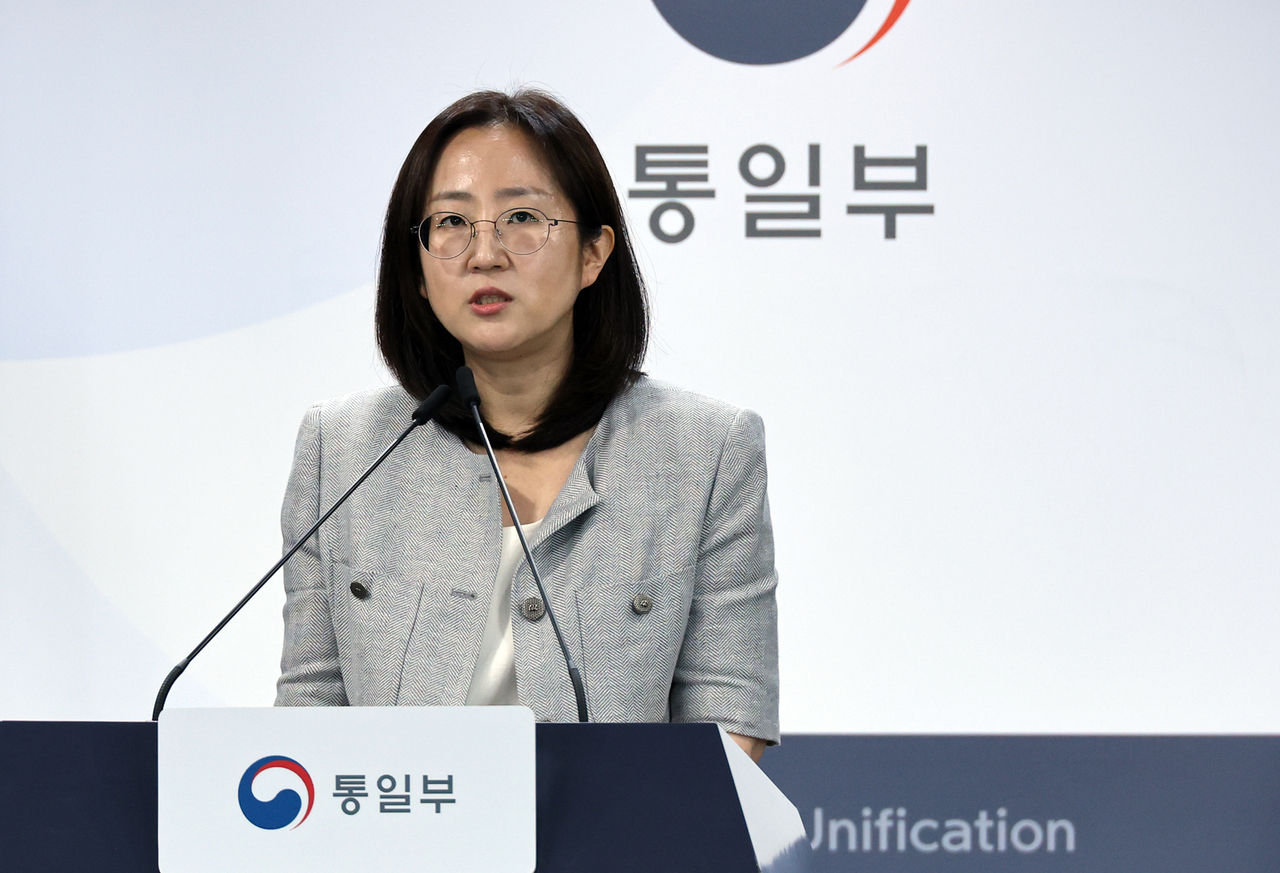
The South Korean government is moving to abolish a requirement that citizens report contacts with members of Chongryon, a pro-Pyongyang organization of Korean residents in Japan, as part of an effort to ease regulations on inter-Korean exchanges.
A Unification Ministry official said Friday that the government would actively support a pending legislative proposal to remove a provision that legally treats Chongryon members as North Korean residents.
“A bill proposed by a lawmaker to repeal the provision in the Inter-Korean Exchange and Cooperation Act that legally deems certain individuals to be North Korean residents is currently pending before the National Assembly’s Foreign Affairs and Unification Committee,” the official, requesting anonymity, told The Korea Herald.
“The government agrees that the law needs to be revised and plans to support the National Assembly’s legislative process,” the official added.
The amendment to the Inter-Korean Exchange and Cooperation Act was introduced in October by Rep. Lee Yong-sun of the ruling Democratic Party of Korea. It is currently pending before a subcommittee of the National Assembly’s Foreign Affairs and Unification Committee, where it must be approved before advancing to the full committee, the plenary session and a final vote.
The bill seeks to ease the reporting system for contacts with North Korean residents and delete a clause under which members of overseas organizations operating in accordance with North Korean policies are regarded as North Korean residents.
Under Article 30 of the current law, South Koreans who meet Chongryon officials or conduct cooperative projects with them are generally required to notify the Unification Ministry in advance under procedures governing contact with North Korean residents. If advance notification is not possible, they must file a report afterward. Failure to comply can result in an administrative fine of up to 3 million won ($1,996).
More serious violations of the act, such as conducting inter-Korean cooperation projects without the required approval, are punishable by up to one year in prison or a fine of up to 10 million won. Certain approval-related violations carry penalties of up to three years in prison or a 30 million won fine.
The proposed revision would remove the provision applying North Korean resident status to Chongryon members. It would also take away the unification minister’s authority to reject contact reports and instead require applicants to provide basic information, including the purpose of the contact, the person involved, and the time and place.
The clause classifying Chongryon members as North Korean residents has been part of the Inter-Korean Exchange and Cooperation Act since its enactment in August 1990. According to the Unification Ministry, the provision was originally intended as a safeguard to allow lawful exchanges and cooperation with Chongryon without exposing participants to prosecution under the National Security Act.
The ministry now believes the provision no longer reflects changes in Chongryon’s size, membership and character.
A considerable number of Chongryon members hold South Korean passports, and ideological affinities toward North Korea vary, according to the ministry. It therefore views the blanket classification of all members as North Korean residents as excessive.
The ministry in 2024 imposed a fine on Mongdangyeonpil, a civic group supporting Korean schools affiliated with Chongryon, for allegedly contacting the organization without filing the required report. Actor Kwon Hae-hyo serves as the group’s representative.
In 2023, film director Kim Jee-woon was also investigated and issued a warning over alleged unreported contact with Chongryon members while producing a film addressing discrimination against ethnic Koreans in Japan.
The proposed removal could nevertheless draw criticism, as Chongryon is regarded under South Korean law as an anti-state organization and is officially recognized by North Korea as its overseas representative body.
Responding to such concerns, the Unification Ministry official said the change would be “separate from any determination over whether the National Security Act has been violated.”