
 KB News Desk
South Korea aims to establish a low-Earth orbit satellite communications network composed of hundreds of satellites by 2035 and accelerate the country’s first lunar landing to 2030, the state-run space agency said Friday.
The Korea AeroSpace Administration unveiled the plan during a public briefing on advanced industry development held in the southeastern city of Jinju. The strategy was approved earlier in the day by the National Space Council, chaired by President Lee Jae Myung.
KASA said building the network will help strengthen South Korea’s domestic satellite and launch vehicle development and manufacturing ecosystem as the country pushes to build its own version of SpaceX’s Starlink network.
“Leading space nations are making all-out efforts to build low-Earth orbit satellite communications networks, which are critical infrastructure for safeguarding national security and communications sovereignty, as well as a strategic foundation for the 6G era,” KASA Administrator Oh Tae-seok said.
The agency said it plans to launch between 128 and 512 satellites, which cost at least 4 trillion won (US$2.62 billion) and up to 13.2 trillion won every five years.
The government also said it plans to set up a special purpose company (SPC) along with private firms for the sale of information amassed through satellites.
The SPC, to be more than 70 percent owned by private firms, is expected to generate over $1.7 billion in sales by 2034, the agency said.
KASA also aims to bring forward South Korea’s first lunar landing to 2030, two years ahead of schedule.
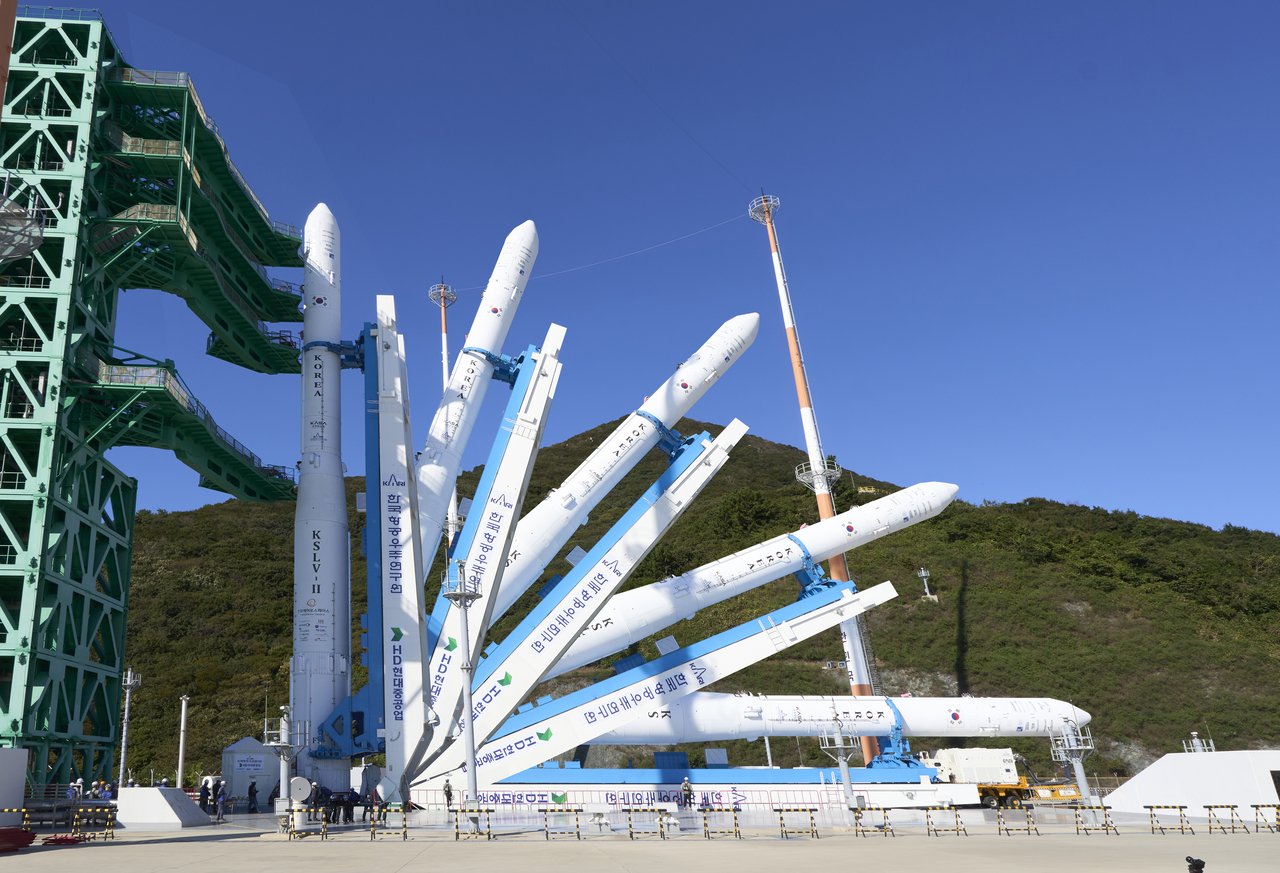
Instead of waiting for the next-generation launch vehicle, which is scheduled to debut in 2032, the government plans to send a privately developed small lunar lander aboard the three-stage Nuri rocket in 2030.
Oh also said South Korea plans to launch a lunar communications orbiter in 2029 and an Earth-moon scientific exploration probe in 2031 to lay the groundwork for an expanded lunar exploration program. (Yonhap)