
 KB News Desk
CHEONGJU, North Chungcheong Province — As the countdown begins, the cockpit-shaped simulator spins faster, and the body sinks deeper into the seat as the force surges to six times the pull of gravity.
Cheeks are pulled back, legs locked in place and short, guttural breaths come out every few seconds. Breathing is no longer taken for granted.
“Keep your head back. Keep your lower body and abdomen tight,” an instructor tells me.
I have to inhale and exhale forcefully with the abdomen, hips and legs locked to keep blood from pooling in the lower body. The view on the screen ahead begins to blur.
Twenty seconds later, the instructor gives the signal: “You passed.”
The G-tolerance test was part of a flight environment adaptation training held Wednesday at the Air Force Aerospace Medical Center in Cheongju, North Chungcheong Province.
The program also included emergency egress training, spatial disorientation training and high-altitude low-pressure training — a set of exercises designed to expose pilots and aircrew to the physical and cognitive stresses they may face in flight.
The training offered a rare look into what it takes to prepare pilots for military aviation at a time when the Air Force grapples with the difficult question of how to keep enough of them in uniform.
When the body gives false signals
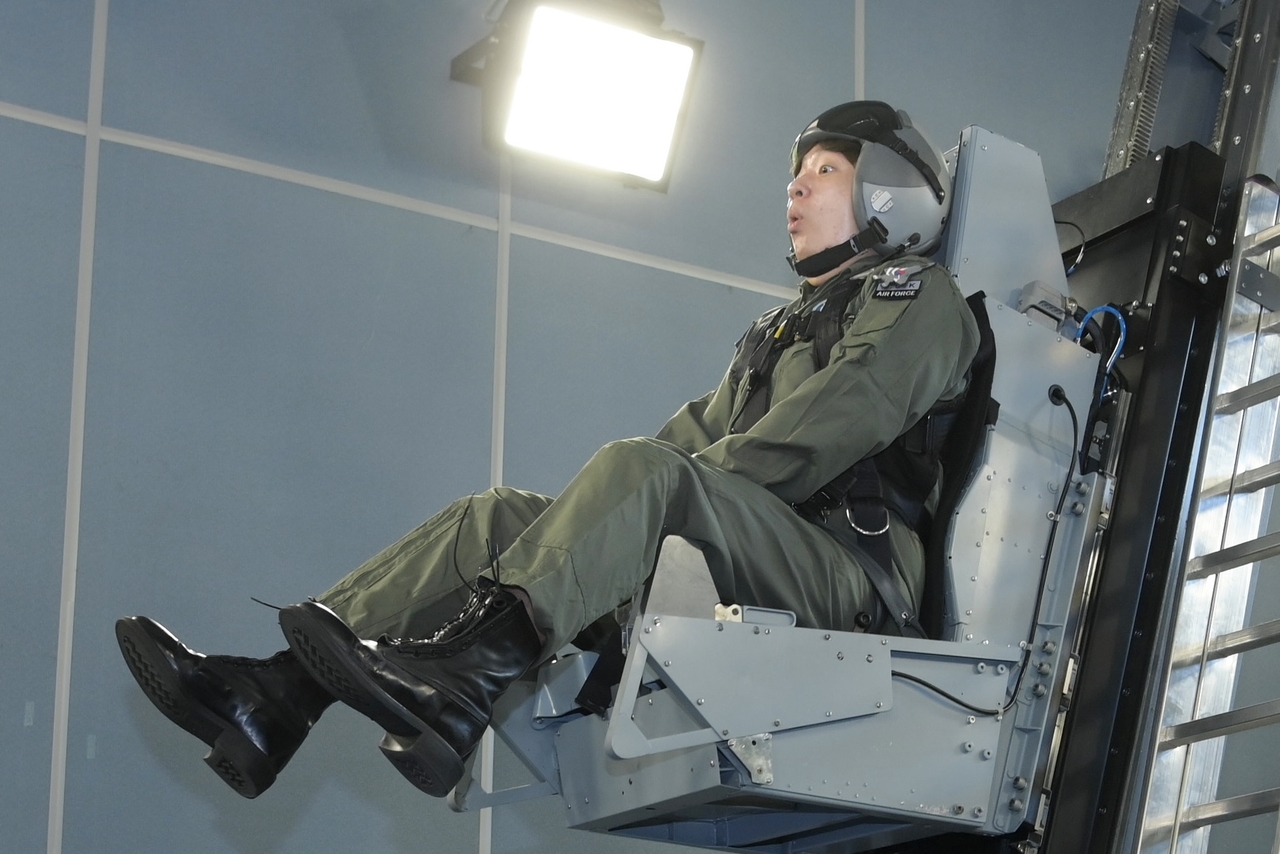
The next drill was emergency egress training, a procedure pilots rely on if an aircraft can no longer be controlled.
The movement was brief, but violent. Once the ejection handle was pulled, the seat shot upward, forcing the body to absorb the sudden jolt. In a real emergency, the impact can injure the neck, spine or limbs if the pilot’s posture is wrong.
That is why the posture is drilled repeatedly: head against the headrest, elbows close to the body and hands pulling the handle without letting the arms fly outward.
The spatial disorientation training that followed was quieter but more unsettling.
Inside a simulator resembling an F-15K cockpit, the instruments showed the aircraft’s attitude, altitude, speed and bank angle. But the body kept sending different signals.
A 10-degree climb felt steeper than it was. When the aircraft slowed after takeoff, it felt as if it were descending. When the aircraft banked and the head turned to the side, the sense of rotation became stronger.
The point was not dizziness itself. It was the realization that in flight, the body can be wrong. When sensation and instruments conflict, pilots are trained to trust the instruments.
The final session took place inside an altitude chamber, where air pressure was lowered to simulate conditions at 25,000 feet, or about 7,620 meters.
As the simulated altitude rose, a red balloon hanging inside the chamber gradually expanded. Fog filled the room, and the temperature fell. The pressure change was visible before it became physical.
Once the chamber reached the target altitude, trainees removed their oxygen masks to see how quickly hypoxia could affect judgment and coordination.
The oxygen saturation monitor on a finger read 99 percent at first, then began dropping rapidly.
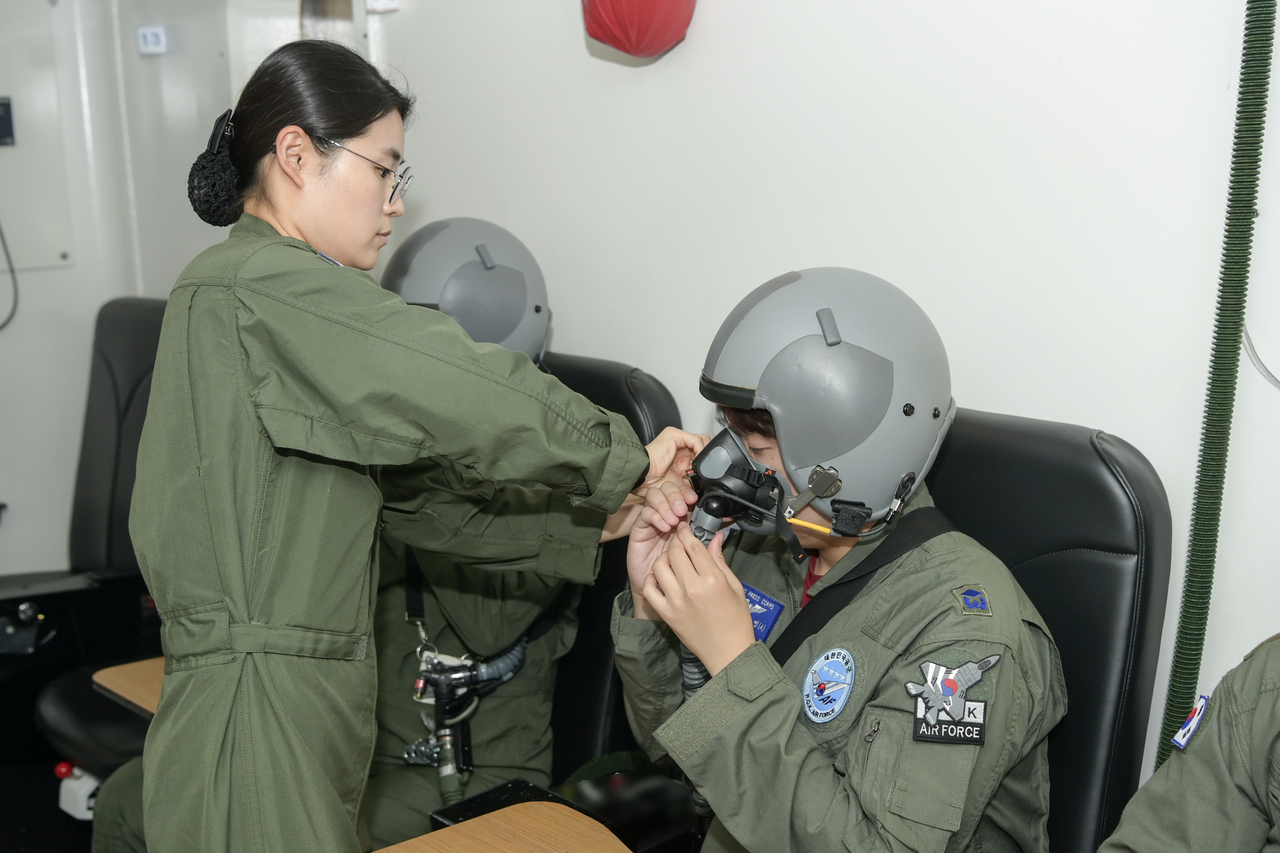
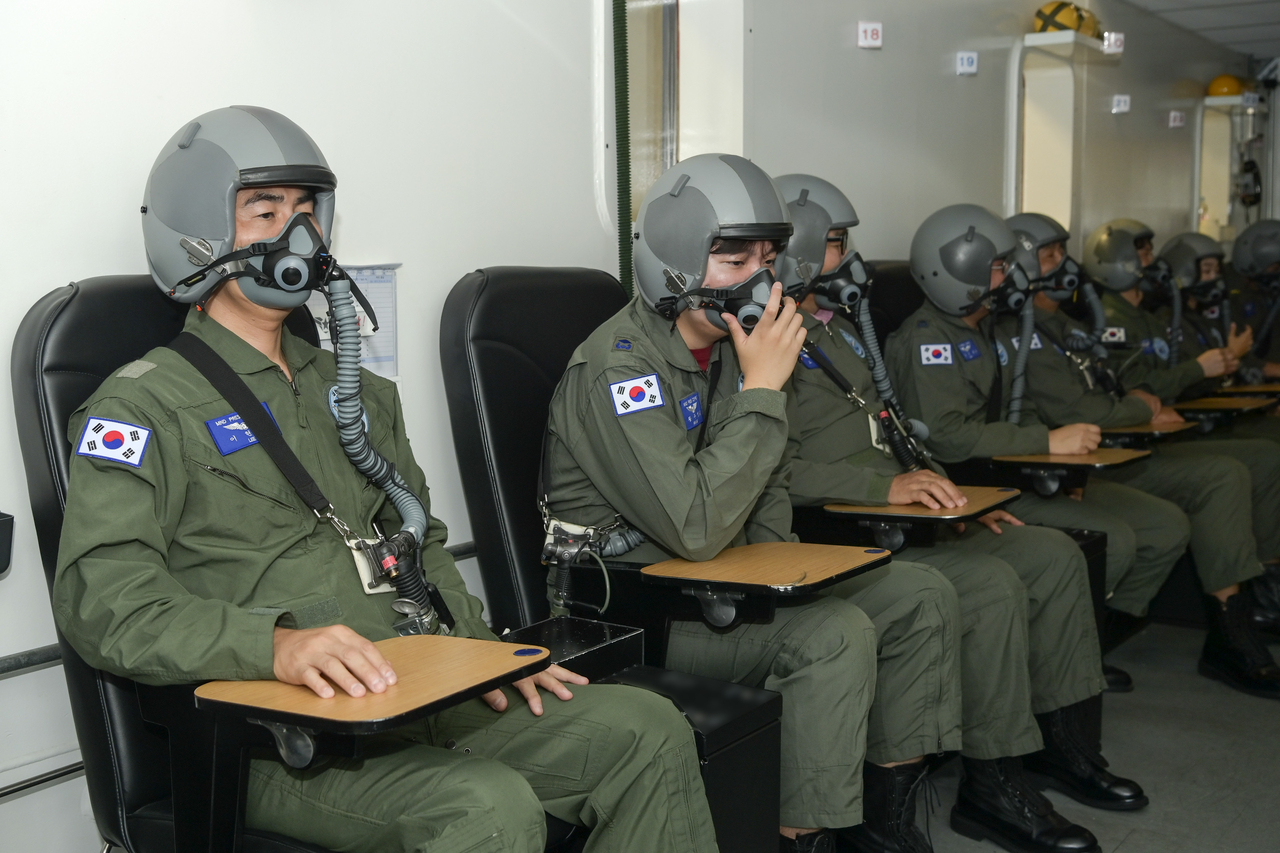
The task was simple: write down letters and symbols from a sheet. But as oxygen levels fell, even writing became clumsy. Lines came out unevenly. Letters that should have been easy to follow no longer landed where they were supposed to. The hand moved, but not quite as intended.
Around three minutes after the mask was removed, the monitor showed 67 percent. An instructor quickly placed the oxygen mask back on.
There was mild dizziness and a sense of heat, but the more striking part was how quietly judgment and coordination had deteriorated.
Wednesday’s training came as the Air Force, marking its 77th anniversary this year, is preparing to offer Seoul-based reporters a chance to fly aboard an F-5 fighter jet before the aging aircraft’s retirement in 2027.
A shrinking pool of skilled pilots
The exercises are just one indication of the immense cost the military has to bear to train pilots. But it struggles to retain operational pilots, who are often attracted to high-paying jobs once they gain experience.
The outflow of military pilots has continued in recent years, with civilian airlines often offering higher pay and more favorable working conditions.
Between 2017 and March this year, 896 skilled Air Force pilots voluntarily left the service, including 730 fighter pilots, according to Air Force data submitted to People Power Party Rep. Kang Dae-sik of the National Assembly’s National Defense Committee.
In the first quarter of this year alone, 47 pilots had left for civilian airlines.
According to the Air Force, it takes eight to 17 years to train skilled pilots capable of conducting operations independently and training junior pilots.
To slow the outflow, the Air Force said it is improving incentives and working conditions, including raising and adjusting incentive payments for pilots who extend their service.
The Air Force said its pilot manning rate remains above 90 percent, but declined to disclose the exact number of pilots for security reasons.
Rebuilding trust
But retaining pilots is only part of the challenge. The Air Force also faces pressure to rebuild public confidence in aviation safety and pilot professionalism after last year’s accidental bombing in Pocheon, Gyeonggi Province, drew intense scrutiny.
In the incident, two KF-16 fighter jets mistakenly dropped eight MK-82 bombs on a civilian area in Pocheon during a training exercise, injuring 29 people, including 15 civilians and 14 soldiers.
Military investigators later found that incorrect target coordinates had been entered and charged two pilots with professional negligence.
Air Force Chief of Staff Gen. Son Sug-rag acknowledged pilot outflow as one of his core concerns, while emphasizing the need to strengthen professionalism among pilots and related personnel.
The Air Force’s latest move to expand its use of unmanned systems also appears to have sparked doubts about the importance of human pilots in modern combat. But Son played down such concerns.
“The introduction of unmanned systems does not mean we will place less importance on pilots,” Son said at a press dinner in May, adding that human judgment must remain reliable as missions become more complex across manned and unmanned platforms.
“As technology advances, we will work to enhance the expertise of pilots and related personnel so that human judgment can also be trusted,” he said.