
 KB News Desk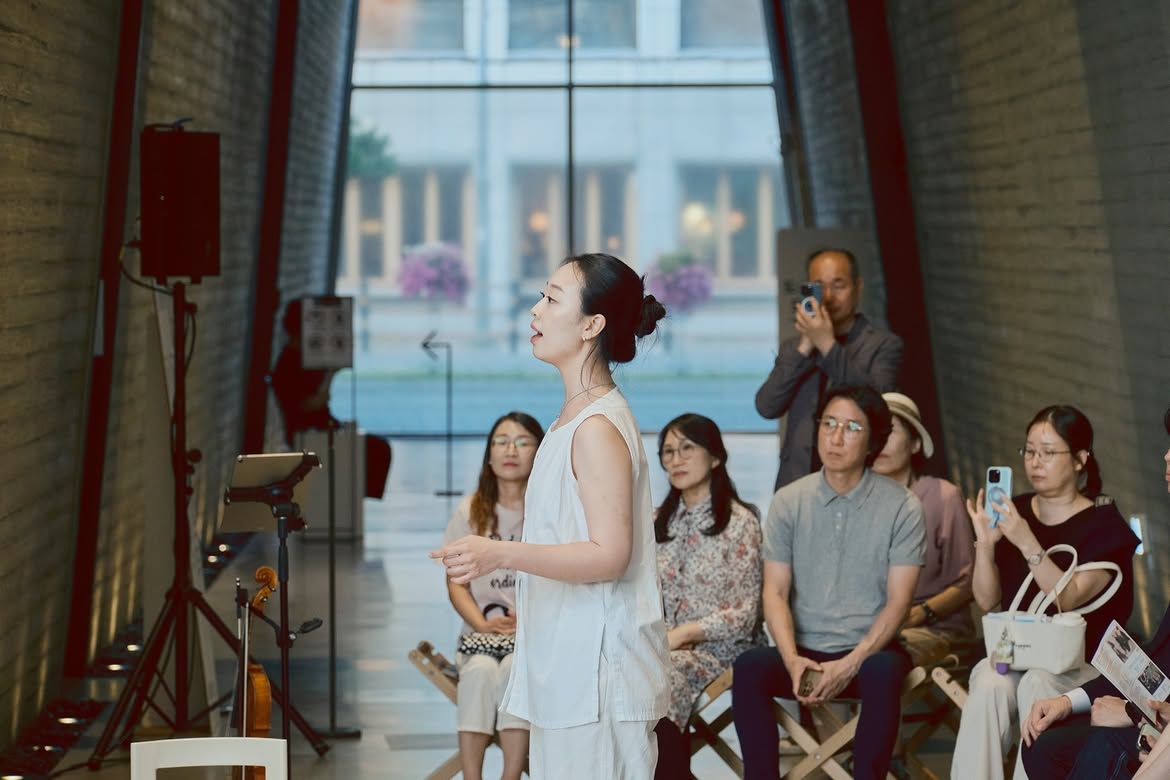
French sound artist Remi Klemensiewicz sees the differences between Korean and French in their vowels.
Ah, eh, ee, oh, oo — the same basic sounds exist in nearly every language, yet they are never quite the same. And to Klemensiewicz, they are also music.
Klemensiewicz is one of six musicians behind the Korean-French collaboration “The Wind & Sand Tour — A Sonic Collection,” which premieres this weekend at the Sejong Center for the Performing Arts in Seoul.
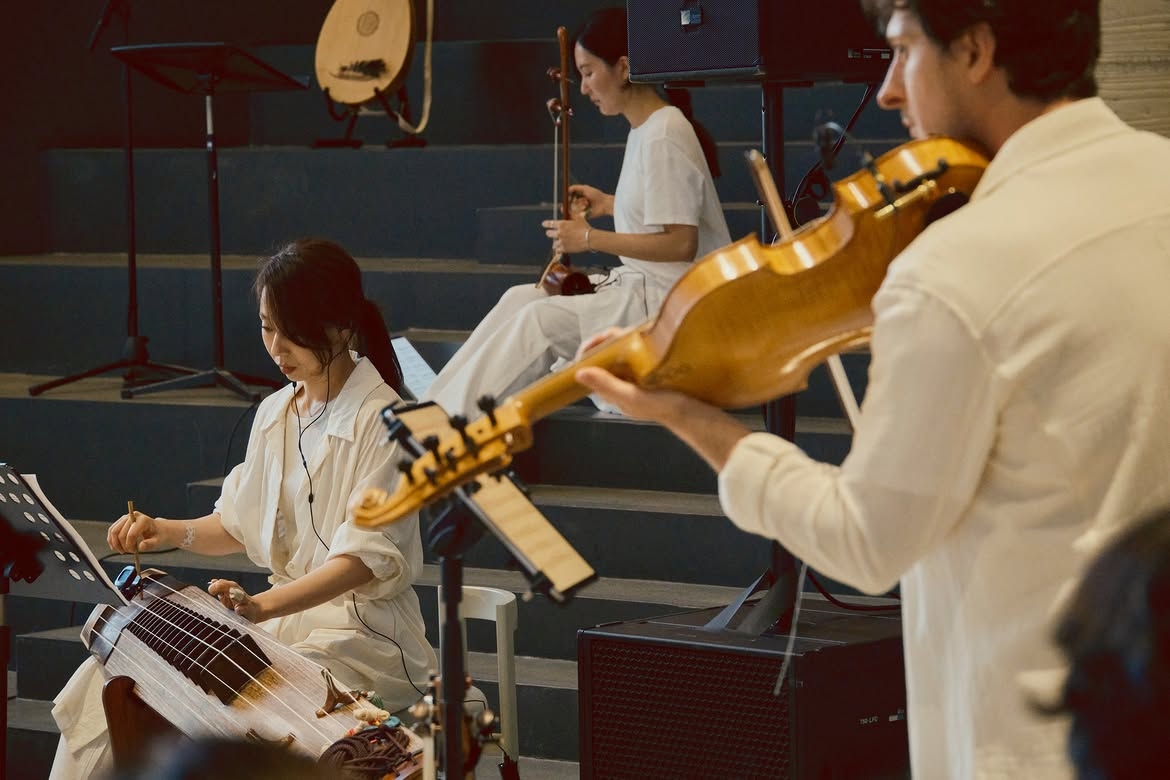
Joining them are haegeum player Kim Ye-ji and viola d’amore specialist Olivier Marin, who lead the project together.
“Vowels exist in every language. What fascinated us was that each language uses them a little differently,” Kim said during a recent group interview. “The shape of the mouth and the way the sounds are produced are subtly different.”
Klemensiewicz said the idea naturally led the artists toward jeongga, Korea’s refined tradition of court vocal music, in which long, resonant vowels unfold with extraordinary patience. To complement it, they turned to medieval European chant, another musical tradition built on sustained vocal resonance.
They invited Korean court vocal music performer Cho Yoon-young, geomungo player Sim Eun-yong — an instrument closely associated with jeongga — and medieval chant vocalist Christian Ploix.
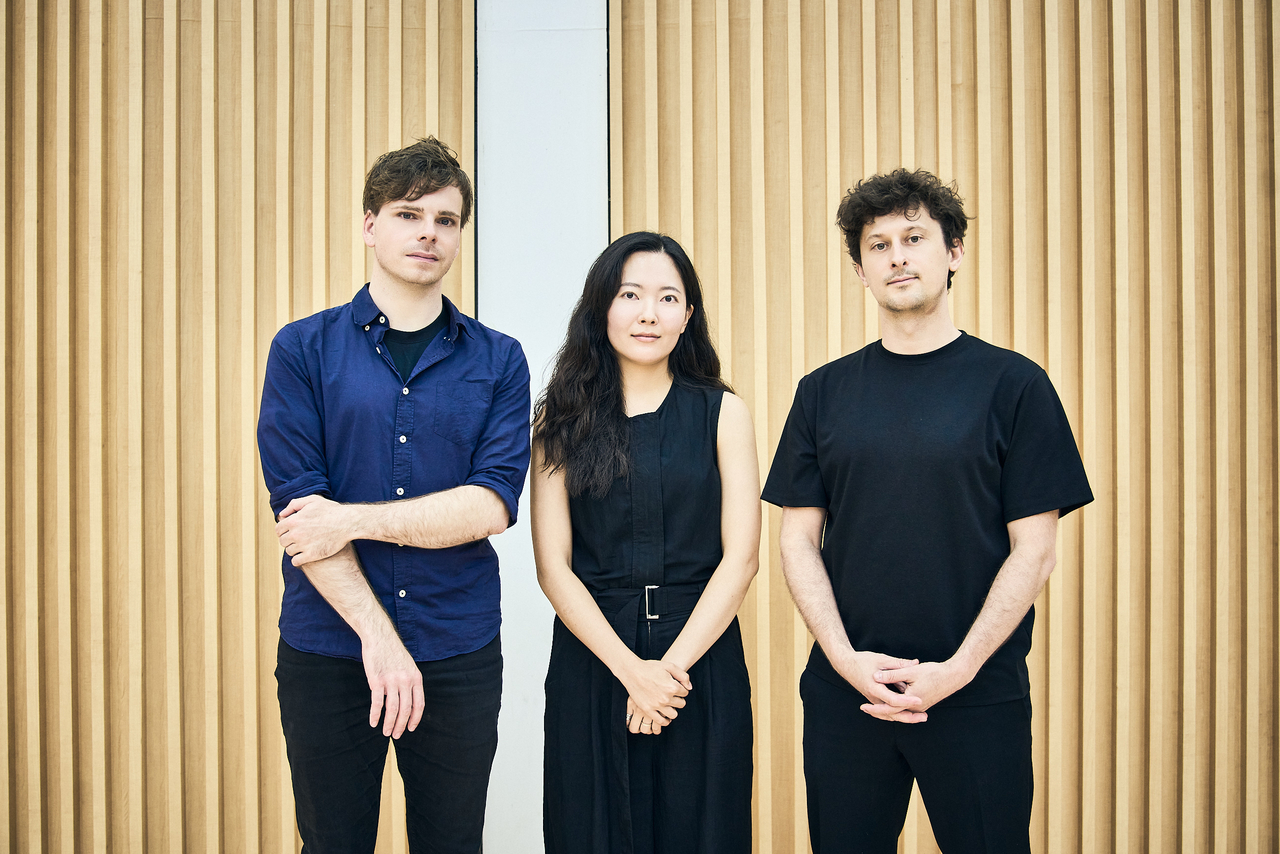
The program is a delicate balance: traditional instruments from Korea and France (or more broadly, Europe) are placed side by side, while electronic sound connects past and present. On the Korean side are the haegeum (a two-stringed vertical fiddle) and the plucked zither geomungo. On the French side are the viola d’amore and electronic sound.
The viola d’amore dates to the 17th and 18th centuries and has sympathetic strings beneath its main strings that produce shimmering overtones.
“That unique resonance blends remarkably well with the haegeum,” Kim said. She added that she experimented with “nonghyeon,” the expressive ornamentation technique characteristic of Korean string instruments, to create a contemporary sound without sacrificing the instrument’s traditional identity.
Electronic sound provides another axis of dialogue.
“If France and Korea form one line,” Klemensiewicz said, “then another line exists between traditional acoustic sound and contemporary electronic textures. I’m trying to find the balance where those lines intersect.”
The production, jointly commissioned by the Sejong Center and the Guimet Museum in Paris, will continue as an international tour. Following performances in Seoul from Friday to Sunday, it will have a showcase at the Ilmin Museum of Art on July 7, before stops at the Guimet Museum on Oct. 1 and London’s Stone Nest on Oct. 3.
“The Wind & Sand Tour — A Sonic Collection” kicks off Sejong Center’s contemporary summer performing arts festival, Sync Next 26, which runs through Sept. 5 and features 16 artists presenting 10 programs.