

 KB News Desk
Ratings analyst warns reversal in AI expectations could ripple through chips, exports, tax revenues
S&P Global Ratings said South Korea’s government-backed artificial intelligence push is likely to support economic growth over the next few years, but warned that the long-term payoff depends on whether demand ultimately matches expectations.
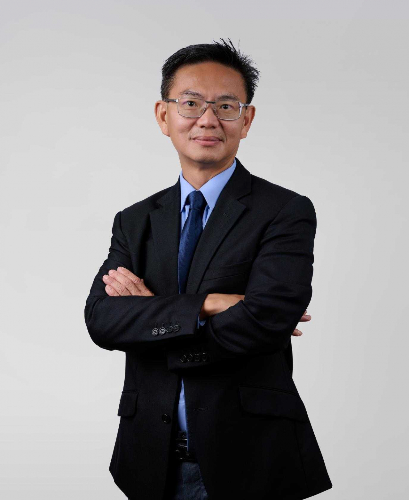
“The near-term impact is clearly positive because today’s investment translates into capital spending and economic growth,” said Kim Eng Tan, managing director of S&P Global Ratings’ Asia-Pacific sovereign ratings team, in an interview with The Korea Herald in Seoul on Wednesday.
“But beyond that, everything depends on actual demand for AI services,” he said.
Tan warned that the consequences of poor demand could spread well beyond the technology sector.
“If AI service demand disappoints, corporate earnings and government tax revenues will weaken, and growth will slow,” he said.
He said the current AI investment cycle remains firmly intact, supported by rapid data center construction around the world.
“Many companies have already committed to building data centers, which is one reason semiconductor prices have risen sharply,” Tan said. “Related investment activity is likely to remain strong over the next one to two years.”
He pointed to rising chip prices as evidence that demand is materializing rather than being driven purely by speculation.
“The fact that semiconductor prices have increased so much this year suggests customers need those chips now,” he said. “If projects were being delayed, companies would simply postpone purchases until next year.”
Tan noted that large-scale data center projects are underway across the US, Asia and Australia.
However, he warned that a reversal in AI expectations could trigger what he described as a “second shock” for Korea’s economy.
“The more important question is what happens if the AI bubble bursts or expectations weaken,” he said.
“If valuations fall sharply, data center investment could contract very quickly, creating a chain reaction across semiconductors, exports, consumption and tax revenues.”
Because South Korea sits near the center of the global AI supply chain, companies such as Samsung Electronics and SK hynix would likely be among the first to feel the impact, Tan said.
“Ultimately, the biggest risk is a scenario in which the entire AI value chain slows simultaneously.”
Tan said current investment is being supported by strong market valuations, but that dynamic could reverse quickly if investors begin to doubt future AI demand.
On Korea’s large-scale AI investment plans, Tan rejected suggestions that the government’s involvement amounts to market distortion.
“The government is trying to mobilize private-sector investment so Korea does not fall behind in the global AI race,” he said. “Market principles are still functioning.”
Tan also said AI investment is unlikely to have a major effect on interest rates or the won in the near term, given Korea’s strong current account surplus.
He attributed the won’s weakness primarily to capital outflows as Korean investors continue to seek higher returns in US assets.
“Currently, Korean overseas investment exceeds foreign inflows into Korea,” he said.
Tan cautioned policymakers against treating the AI boom as a permanent source of growth.
“It would be risky to base permanent tax cuts or large spending increases on the assumption that AI will continue to drive growth indefinitely,” he said.
“If the cycle turns, governments could face fiscal pressure.”