

 KB News Desk
AI-driven memory supercycle expected to extend through 2028, powering earnings at Samsung, SK hynix
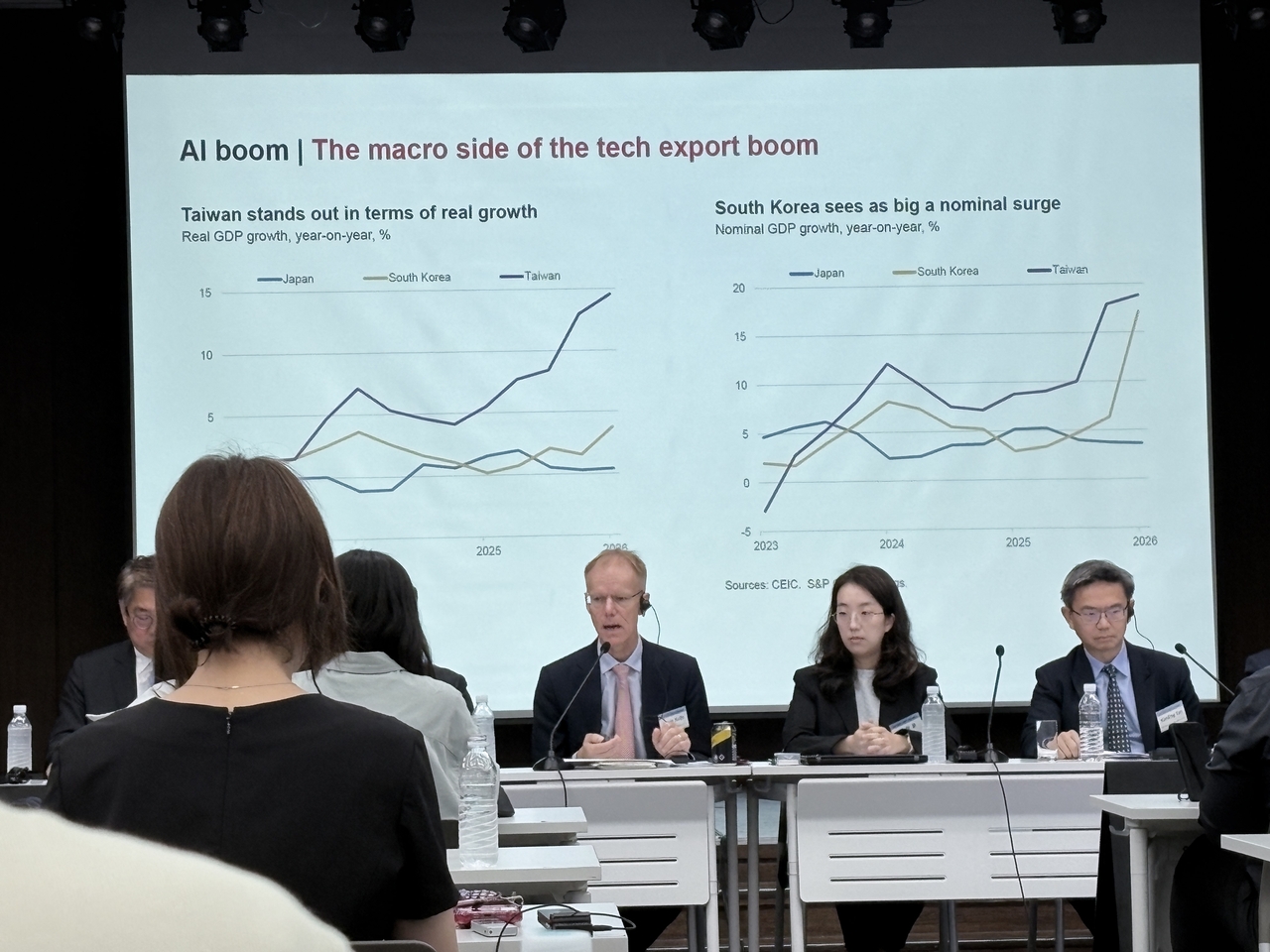
South Korea’s corporate earnings are becoming increasingly dependent on semiconductors, even as the AI-driven chip boom is expected to continue through at least 2028, S&P Global Ratings said Tuesday.
“Corporate earnings have been very strong this year, but the picture varies significantly across sectors,” said Jeremy Kim at a Seoul briefing.
“Growth is concentrated in semiconductors, while most other sectors are either growing modestly or remain under external pressure,” he said, describing this year’s earnings story as one of “imbalanced growth.”
According to S&P, the combined operating profit of Korea’s 100 largest companies rose to nearly 140 trillion won ($90 billion) in the first quarter, with most of the increase driven by technology firms.
“The strong earnings growth we are seeing in Korea is heavily concentrated in a single sector,” Kim said.
S&P expects the AI-driven semiconductor supercycle to continue until at least 2028, supporting strong earnings for memory makers — including SK hynix, Samsung Electronics and Micron Technology — through 2027.
“We believe the AI supercycle will continue at least until 2028,” Kim said, while cautioning that aggressive capacity expansion could eventually rebalance supply and demand beyond that point.
Asked about the government’s latest semiconductor investment plans, Kim said it was too early to assess their impact because project locations and investment schedules have yet to be finalized.
“Investment is necessary, but companies should maintain financial discipline as they expand capacity, given the cyclical nature of the industry,” he said.
Separately, Louis Kuijs said the Korean won is likely to remain under pressure despite strong exports and a current account surplus, as investment capital continues to flow into US assets.
S&P recently raised its forecast for South Korea’s economic growth this year to 3 percent, saying AI-led exports have offset the impact of higher energy prices.
The ratings agency now expects the Bank of Korea to raise interest rates by 25 basis points this year, down from its previous forecast of 50 basis points, after easing concerns over global oil prices.
“We are now slightly less negative on the outlook for the global oil market and its impact on inflation,” Kuijs said.